
Science
WASHINGTON : US tornadoes Is climate change to blame?

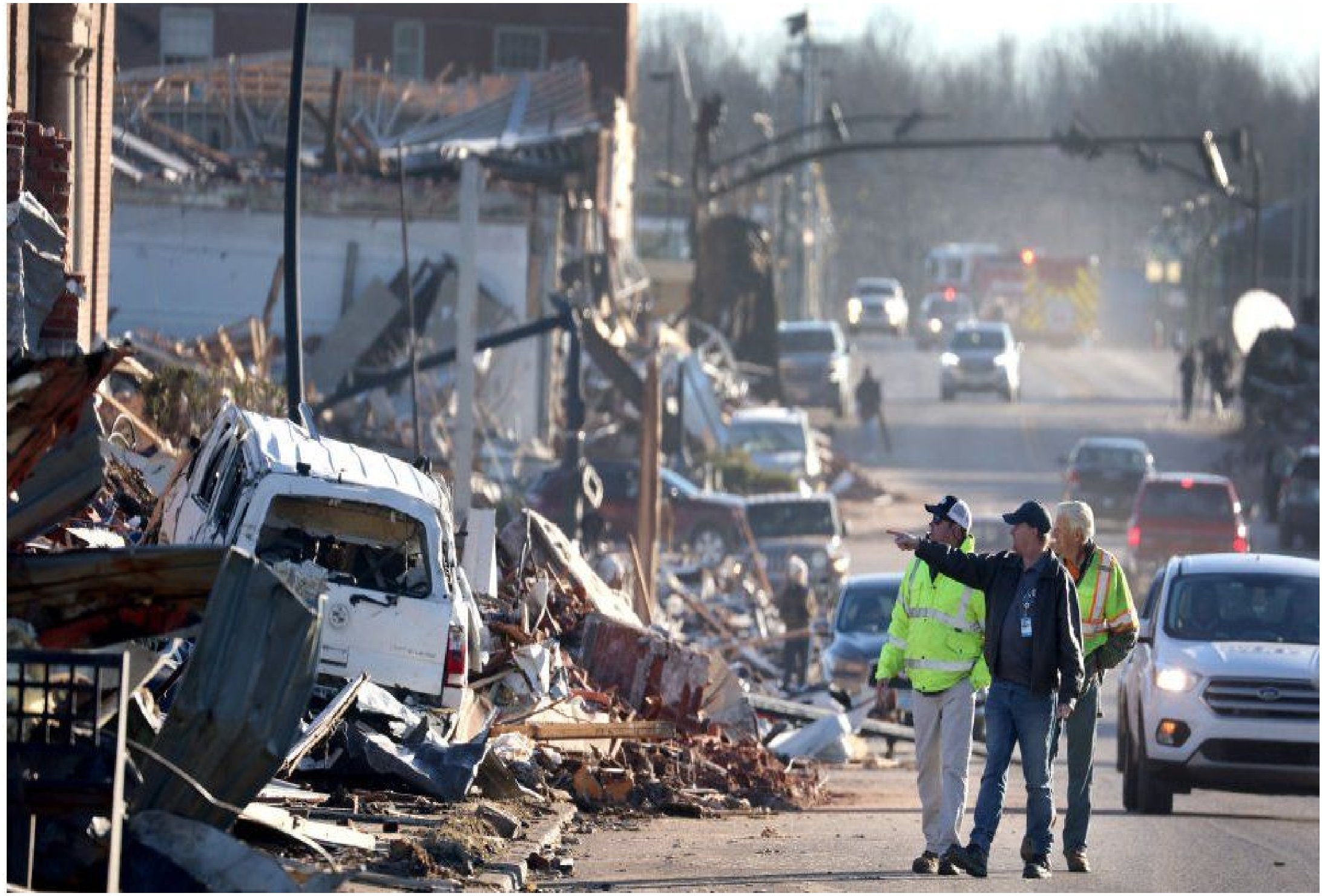
WASHINGTON : Several US states have been hit by a devastating series of tornadoes, with an expected death toll of more than 100.
These are extremely rare outside the spring and summer, in the US, but this December there has been a record number of tornado warnings.
So is climate change causing more frequent and stronger tornadoes?
How are tornadoes formed?
When warm moist air is trapped by cooler air, it causes thunder clouds to form.
The warm air rises, creating an updraft.
And if there are also strong winds moving in different directions, the air column starts to rotate.
Increasing amounts of warm air are drawn in, speeding up the wind spiral, which then extends out of the bottom of the thunder clouds.
And once this touches the ground, it is a tornado.
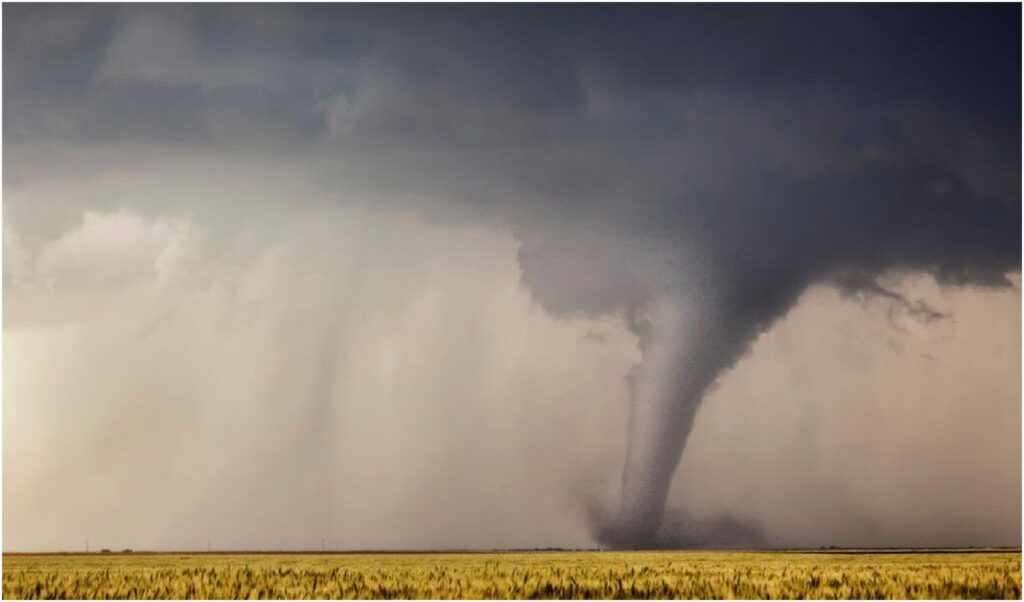
There is more warm moist air in the hotter months.
And a cluster of tornadoes of this size and power in December is extremely unusual in the US.
Are tornadoes becoming more common?
Far more tornadoes have been recorded in the past 20 years than the previous 20 – but some of this is due to improved tracking.

As data-collecting methods have improved, less severe tornadoes have been recorded more consistently.
“To an untrained eye, it may look like we are having more of these events happening – but in reality what is happening is we have much better tools for identifying relatively weaker tornadoes,” Dr Jana Houser, professor of meteorology, at the University of Ohio, says.
But clusters of tornadoes – when six or more start within six hours of each other – are becoming more likely.
And though there are now fewer days with tornadoes – on average about 100 compared with 150 in the 1970s – there are more tornadoes on those days.
Is there a link to climate change?
No single weather event can be put down to climate change alone.
The increasing amount of tornado clusters “clearly implies that the patterns of the atmosphere have changed”, meteorologist Harold Brooks, at the US National Oceanic and Atmospheric Administration (NOAA), says.
“That may be related to climate change – but we cannot make a full conclusion,” he adds.
Warmer temperatures make extreme weather events more likely and potentially more destructive.
But “there is no scientific consensus” on tornadoes, Mr Brooks says.
“It is not like the consensus on the increase in heatwaves or heavy rain at all.”
Wind speed and energy in the atmosphere are two of the main drivers of tornadoes – but there is a lack of definitive evidence on how they may change with a warming climate.
At a briefing following the tornadoes, US President Joe Biden said he would “be asking the Environmental Protection Agency and others to take a look at [the role of climate change].
“The fact is that we know everything is more intense when the climate is warming,” he added.
In 2018, the Intergovernmental Panel on Climate Change found some “conditions conducive to tornadoes such as atmospheric instability [will] increase due to increasing temperature and humidity”.
But other conditions, which may lessen the likelihood of tornadoes, also exist.
Are tornadoes becoming more intense?
There is no evidence tornadoes are becoming stronger, according to National Geographic Society research.
In fact, the US had had a “tornado drought”, with no highest-category tornado since 2013.

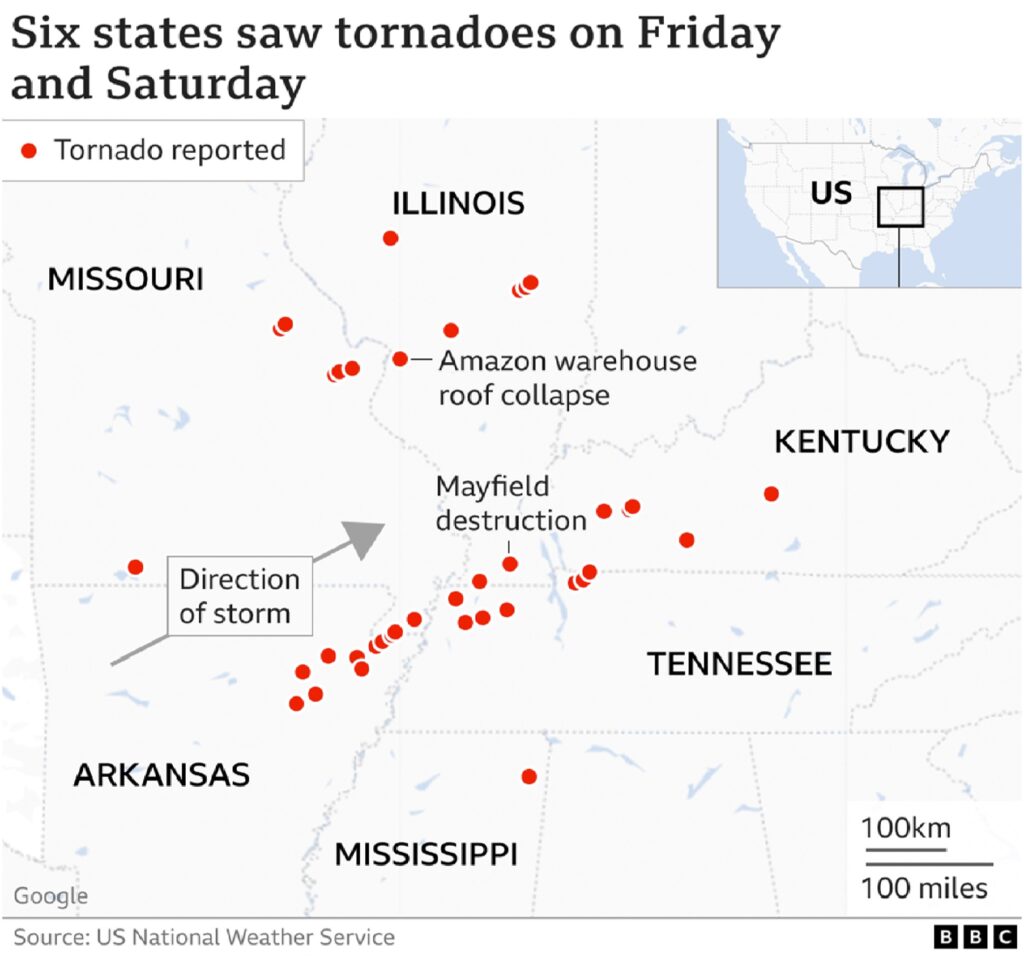
The Quad-State tornado travelled 220 miles, from Arkansas to Kentucky, where it inflicted terrible damage on homes
The most devastating of this weekend’s tornadoes has become known as the Quad-State – cutting a swathe through Arkansas, Missouri, Tennessee and Kentucky.
It is not the wind speeds, though, that were record-breaking but its size.
It was reportedly three-quarters of a mile (1.2km) wide and travelled for more than 220 miles – considerably further than the distance from London to Paris.
On average, tornadoes are 50 yards wide and travel only a few miles, according to the National US Weather Service.
Is a bigger area at risk?
The most frequent tornadoes have traditionally been in a strip through the central US known as Tornado Alley.
This includes areas of Texas, Louisiana, Arkansas, Oklahoma, Kansas, South Dakota, Iowa and Nebraska.
But some evidence points towards a shift to having more tornadoes in the southern US.
Mr. Brooks says: “Tornado Alley is not well defined, so that is hard to say – if there is a definite shift.
“We have seen an increase in tornadoes of about 10% over 40 years in the mid-South region and a decrease in the Texas, Kansas sort of region.
“It has shifted – but it is not a huge shift.”








Science
SAN FRANCISCO: Indian-Origin Founder Unveils Wearable Device That Records Every Moment Of Your Life
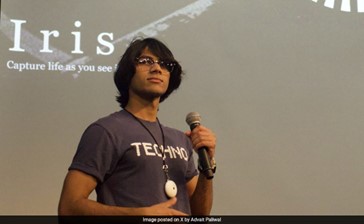
SAN FRANCISCO: Advait Paliwal, an Indian-origin entrepreneur, has recently introduced a wearable AI device called Iris, designed to provide users with “infinite memory.” According to Paliwal, the device captures “pictures every minute,” which are stored either on the device or in the cloud, allowing users to preserve life’s small moments and recognize patterns often overlooked.
In a series of tweets, Mr Paliwal, who is based in San Francisco, explained that Iris not only organises the photos into a timeline but also uses AI to generate captions and help users recall forgotten details. Additionally, the device features a “focus mode,” which detects when the wearer is distracted and offers reminders to refocus.
Mr. Paliwal shared that the design of Iris is inspired by the evil eye symbol. He developed the device over the summer at the Augmentation Lab in Cambridge, part of a two-month AI and hardware talent accelerator program. After the program, Mr Paliwal presented Iris to over 250 attendees at the MIT Media Lab, where he received positive feedback, with many expressing interest in owning the device.
Highlighting its potential, Mr Paliwal suggested that Iris could offer safety and health benefits, such as aiding doctors in understanding patients’ daily habits or ensuring workplace safety compliance. In elderly care, the device could help caregivers monitor patients without being intrusive.
However, after Mr Paliwal shared his post on X (formerly Twitter), reactions were mixed. While some users expressed excitement, others raised privacy concerns. One person commented, “It’s an interesting concept, but I wouldn’t want to interact with someone wearing this, taking a photo every minute.” Paliwal responded by pointing out that people are already “constantly taking mental photos.”
Others were more enthusiastic, with one user noting, “I’ve been searching for a device like this for years! A picture every minute should be enough if it archives, organizes, labels, and retrieves them.” Another user praised the concept, saying, “Love the idea. The design and name are perfect. Great work!”
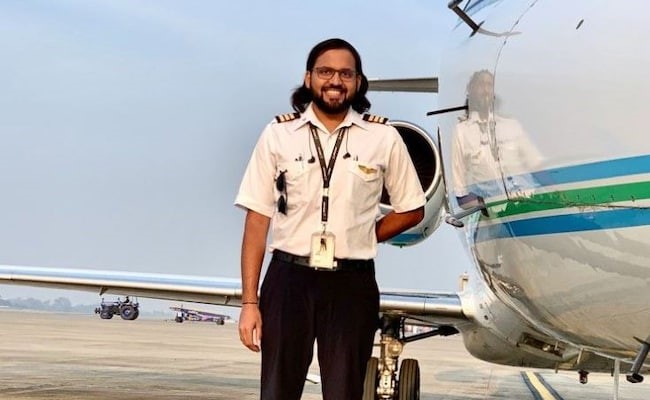
TEXAS: In an unprecedented leap towards the stars, pilot Gopichand Thotakura is set to become the first Indian to venture into space as a tourist. Selected as part of the elite crew for Blue Origin’s New Shephard-25 (NS-25) mission, Mr Thotakura will make a journey beyond the Earth’s atmosphere along with five other candidates.
Gopichand Thotakura, an entrepreneur and pilot, joins a distinguished lineup of 31 candidates who have flown beyond the Karman line, the boundary between Earth’s atmosphere and outer space.
A connoisseur of the skies since his youth, Mr Thotakura’s passion for flight saw him defy conventional norms, learning to pilot aircraft before mastering the art of driving. To further his passion, he graduated from Embry-Riddle Aeronautical University with a Bachelor of Science in Aeronautical Science.
Describing him, Blue Origins wrote, “Gopi is a pilot and aviator who learned how to fly before he could drive. Gopi pilots bush, aerobatic, and seaplanes, as well as gliders and hot air balloons, and has served as an international medical jet pilot. A lifelong traveler, his most recent adventure took him to the summit of Mt. Kilimanjaro.”
Born in Vijayawada, the 30-year-old currently runs Preserve Life Corp, a global center for holistic wellness and applied health located near Hartsfield-Jackson Atlanta International Airport
Each member of the NS-25 mission will carry a postcard on behalf of Blue Origin’s foundation, Club for the Future, symbolizing the collective dreams and aspirations of young minds worldwide.
From an environmental standpoint, the NS-25 mission heralds a new era of sustainability in space exploration.
“Nearly 99% of New Shepard’s dry mass is reused, including the booster, capsule, engine, landing gear, and parachutes. New Shepard’s engine is fueled by highly efficient liquid oxygen and hydrogen. During flight, the only byproduct is water vapor with no carbon emissions,” Blue Origins said in their statement.
The launch date for the mission is yet to be announced.
The mission also includes former Air Force Captain Ed Dwight, who was selected by US President John F Kennedy in 1961 as the country’s first Black astronaut candidate but was never granted the opportunity to fly to space.
Blue Origin has carried out six crewed flights — some passengers were paying customers and others were guests — since July 2021, when CEO Jeff Bezos himself took part in the first.
The company is also developing a heavy rocket for commercial purposes called New Glenn, with the maiden flight planned for next year.
This rocket, which measures 98 meters (320 feet) high, is designed to carry payloads of as much as 45 metric tons into low Earth orbit.
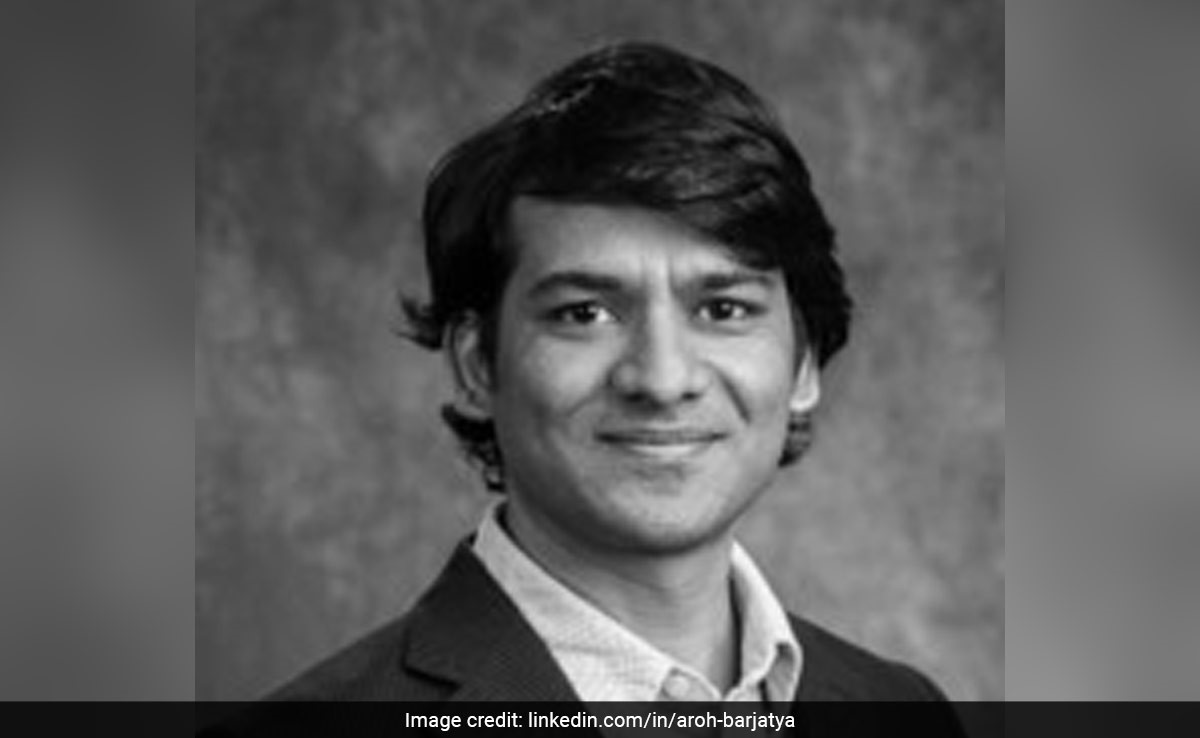
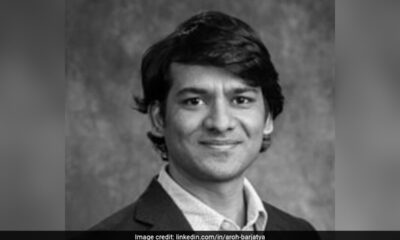
WASHINGTON: Aroh Barjatya, an India-born researcher, led NASA’s mission that launched sounding rockets during the recent total solar eclipse.
The US space agency launched three sounding rockets during the total solar eclipse on April 8 to study what happens to the Earth’s upper atmosphere when sunlight dims momentarily over a part of the planet.
Who Is Aroh Barjatya?
A professor of engineering physics, Aroh Barjatya directs the Space and Atmospheric Instrumentation Lab at the Embry-Riddle Aeronautical University in Florida.
Born to a chemical engineer, Ashok Kumar Barjatya, and his wife Rajeshwari, Aroh Barjatya went to schools across India, including in Patalganga near Mumbai, Hyderabad, Jaipur, Pilani, and Solapur.
He went on to get a degree in electronics engineering from Solapur’s Walchand Institute of Technology.
In 2021, he moved to the US for a master’s degree in electrical engineering at Utah State University. He later did his PhD in spacecraft instrumentation from the same university.
“In addition to leading an externally funded research enterprise, as a tenured faculty I have mentored and engaged young minds through inquiry-based learning tactics, created a new area of concentration within the Engineering Physics programme at ERAU… My mission is to advance the state of the art in space research and education and to inspire the next generation of space engineers and scientists,” he wrote on his LinkedIn profile.


MELBOURNE: Fourth India-Australia 2+2 Secretary-level Consultations

TORONTO: India’s response to diplomatic communication from Canada

NGERULMUD: Shri Harsh Kumar Jain concurrently accredited as the next Ambassador of India to the Republic of Palau

STOCKHOLM: Dr. Neena Malhotra appointed as the next Ambassador of India to the Kingdom of Sweden
2020 will be remembered as time of the pandemic. The fallout will be felt for years

KINGSTON: Shri Subhash Prasad Gupta concurrently accredited as the next High Commissioner of India to St.Vincent and the Grenadines
-
 Diplomatic News2 years ago
STOCKHOLM: Dr. Neena Malhotra appointed as the next Ambassador of India to the Kingdom of Sweden
-
Opinions5 years ago
2020 will be remembered as time of the pandemic. The fallout will be felt for years
-
 Diplomatic News2 years ago
KINGSTON: Shri Subhash Prasad Gupta concurrently accredited as the next High Commissioner of India to St.Vincent and the Grenadines
-

 Politcs2 years ago
LONDON: Indian-Origin Candidate On How He Plans To Win London Mayoral Polls
-
 Technology2 years ago
MARYLAND: All About Pavan Davuluri, New Head Of Microsoft Windows
-

 Sports2 years ago
DODOMA: Milind Soman At “Friendship” Marathon Organised By India, Tanzania
-
 Business2 years ago
LONDON: UK Court Allows Sale Of Nirav Modi’s Luxury London Apartment
-
 Science2 years ago
WASHINGTON: Who Is Aroh Barjatya, Indian-Origin Researcher Who Led Recent NASA Mission