
Science
MELBOURNE : World’s Largest Radio Telescope Captures Glowing Aftermath of Stars Colliding

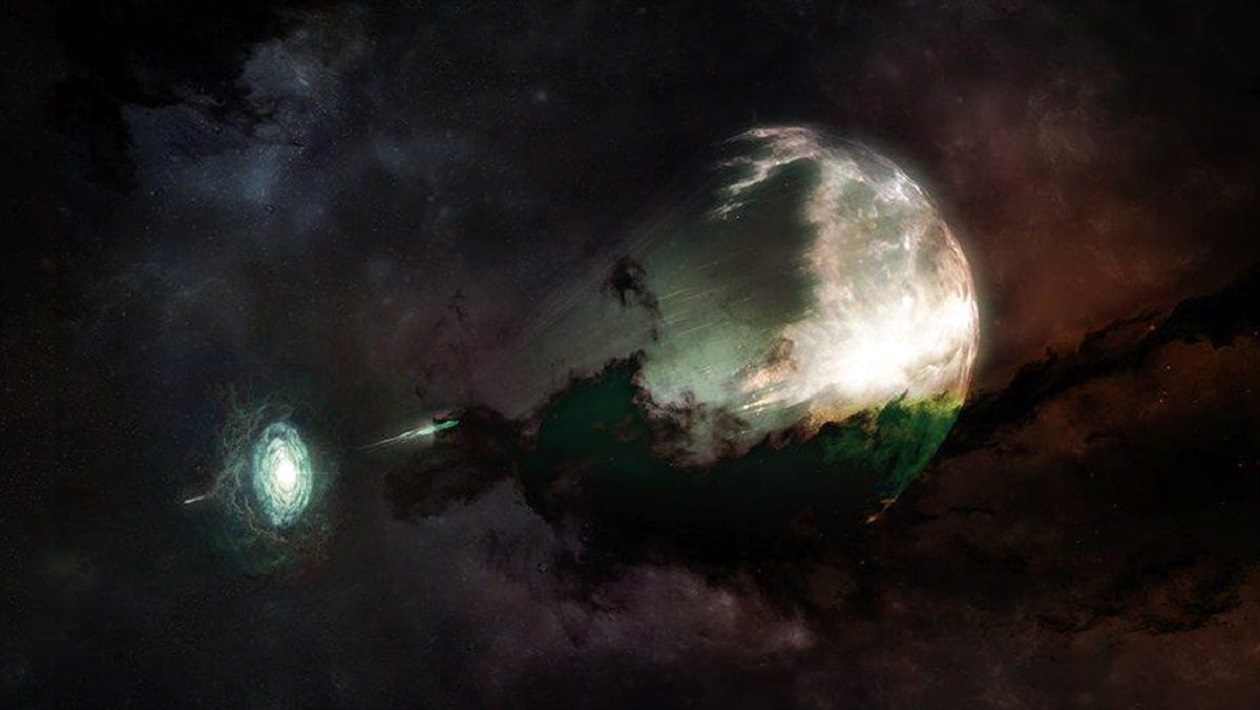
MELBOURNE : On Wednesday, astronomers presented us with a mysterious video: footage decked with lime green smudges steadily evolving on a dark background. But right at the center of this recording, one smudge isn’t like the others. It’s the brightest neon blob of all, and it enhances with each frame.
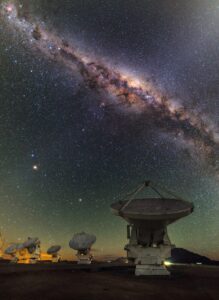
What you’re seeing is proof that some 20 billion years ago an ultrapowerful neutron star collided with a weaker star, spitting out an explosive, short-lived gamma ray burst, rippling gravitational waves across the cosmos and diffusing surrounding space with a potent afterglow. It was a shattering merger that occurred when the universe was at just 40% its current age, and our remarkable view of its incident is courtesy of the world’s largest radio telescope, the Atacama Large Millimeter/submillimeter Array situated in Chile.
More specifically, ALMA is a combination of 66 radio telescopes spread out across the high-altitude Chilean Andes. And they work together to bring us data about our universe’s violent side.
“Afterglows for short bursts are very difficult to come by, so it was spectacular to catch this event shining so brightly,” Wen-fai Fong, an astronomer at Northwestern University and principal investigator of the ALMA program, said in a statement. “This surprising discovery opens up a new area of study, as it motivates us to observe many more of these with ALMA and other telescope arrays in the future.”
The first-ever time-lapse footage of a short gamma ray burst’s afterglow captured in millimeter wavelengths by ALMA
Details of Fong and fellow researchers’ findings are soon to be published in an upcoming issue of The Astrophysical Journal Letters. For now, a preprint is available to view on arXiv.
An incomprehensible force of nature
Short-lived gamma ray bursts, like this one formally dubbed GRB 211106A, are some of the most intense, mind-bendingly strong explosions known to science. But in contrast to longer-lived ones, they remained a mystery due to their fleeting nature, until 2005, when NASA’s Neil Gehrels Swift Observatory collected data about one for the first time.
In a matter of seconds, these cosmic spurts can emit more energy than our sun will emit in its entire lifetime. Though such extremity makes sense for them, because these phenomena stem from binary star collisions that involve at least one neutron star, a hyperdense ball of gas that rivals even black holes in gravitational monstrosity.
Just one tablespoon of a neutron star would equal something like the weight of Mount Everest.

“These mergers occur because of gravitational wave radiation that removes energy from the orbit of the binary stars, causing the stars to spiral in toward each other,” Tanmoy Laskar, lead author of the study and an astronomer at Radboud University, said in a statement. “The resulting explosion is accompanied by jets moving at close to the speed of light. When one of these jets is pointed at Earth, we observe a short pulse of gamma-ray radiation or a short-duration GRB.”
That’s the vivid green blip we see in the recent burst’s recording.
ALMA’s expertise
The fact that the study team used ALMA to locate this particular burst marks the very first time such an event has been captured in millimeter wavelengths, the Chilean ‘scope’s specialty.
Although this dramatic collision had already been studied with NASA’s Hubble Space Telescope, it was seen only under the guise of optical and infrared light wavelengths. With those wavelengths, Hubble could basically only estimate information about the faraway galaxy this merger happened within, but not too much about afterglow that followed. Even if the agency’s groundbreaking James Webb Space Telescope one day embarks on a mission to investigate GRB 21106A, it’ll be restricted to infrared light wavelengths too, though on a much wider spectrum.
ALMA, on the other hand, could see something different than what Hubble did with its millimeter wavelengths — it indeed captured GRB 21106A’s afterglow. And after some deliberation, the new study’s team recognized that this short gamma ray burst’s afterglow is among the most luminescent ever seen.
“What makes GRB 211106A so special is it’s not only the first short-duration GRB that we detected in this wavelength, but also, thanks to the millimeter and radio detection, we could measure the opening angle of the jet,” Rouco Escorial, study co-author and an astronomer at Northwestern University, said in a statement.
Down the line, such information could prove essential to inferring rates of such GRBs in our universe and comparing them with the rates of double neutron star mergers and perhaps even black hole mergers.
“ALMA shatters the playing field in terms of its capabilities at millimeter wavelengths and has enabled us to see the faint, dynamic universe in this type of light for the first time,” Fong said. “After a decade of observing short GRBs, it is truly amazing to witness the power of using these new technologies to unwrap surprise gifts from the universe.”









Science
SAN FRANCISCO: Indian-Origin Founder Unveils Wearable Device That Records Every Moment Of Your Life
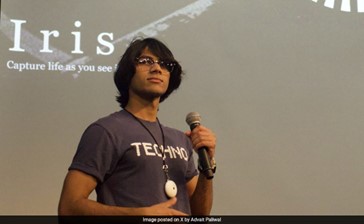
SAN FRANCISCO: Advait Paliwal, an Indian-origin entrepreneur, has recently introduced a wearable AI device called Iris, designed to provide users with “infinite memory.” According to Paliwal, the device captures “pictures every minute,” which are stored either on the device or in the cloud, allowing users to preserve life’s small moments and recognize patterns often overlooked.
In a series of tweets, Mr Paliwal, who is based in San Francisco, explained that Iris not only organises the photos into a timeline but also uses AI to generate captions and help users recall forgotten details. Additionally, the device features a “focus mode,” which detects when the wearer is distracted and offers reminders to refocus.
Mr. Paliwal shared that the design of Iris is inspired by the evil eye symbol. He developed the device over the summer at the Augmentation Lab in Cambridge, part of a two-month AI and hardware talent accelerator program. After the program, Mr Paliwal presented Iris to over 250 attendees at the MIT Media Lab, where he received positive feedback, with many expressing interest in owning the device.
Highlighting its potential, Mr Paliwal suggested that Iris could offer safety and health benefits, such as aiding doctors in understanding patients’ daily habits or ensuring workplace safety compliance. In elderly care, the device could help caregivers monitor patients without being intrusive.
However, after Mr Paliwal shared his post on X (formerly Twitter), reactions were mixed. While some users expressed excitement, others raised privacy concerns. One person commented, “It’s an interesting concept, but I wouldn’t want to interact with someone wearing this, taking a photo every minute.” Paliwal responded by pointing out that people are already “constantly taking mental photos.”
Others were more enthusiastic, with one user noting, “I’ve been searching for a device like this for years! A picture every minute should be enough if it archives, organizes, labels, and retrieves them.” Another user praised the concept, saying, “Love the idea. The design and name are perfect. Great work!”

TEXAS: In an unprecedented leap towards the stars, pilot Gopichand Thotakura is set to become the first Indian to venture into space as a tourist. Selected as part of the elite crew for Blue Origin’s New Shephard-25 (NS-25) mission, Mr Thotakura will make a journey beyond the Earth’s atmosphere along with five other candidates.
Gopichand Thotakura, an entrepreneur and pilot, joins a distinguished lineup of 31 candidates who have flown beyond the Karman line, the boundary between Earth’s atmosphere and outer space.
A connoisseur of the skies since his youth, Mr Thotakura’s passion for flight saw him defy conventional norms, learning to pilot aircraft before mastering the art of driving. To further his passion, he graduated from Embry-Riddle Aeronautical University with a Bachelor of Science in Aeronautical Science.
Describing him, Blue Origins wrote, “Gopi is a pilot and aviator who learned how to fly before he could drive. Gopi pilots bush, aerobatic, and seaplanes, as well as gliders and hot air balloons, and has served as an international medical jet pilot. A lifelong traveler, his most recent adventure took him to the summit of Mt. Kilimanjaro.”
Born in Vijayawada, the 30-year-old currently runs Preserve Life Corp, a global center for holistic wellness and applied health located near Hartsfield-Jackson Atlanta International Airport
Each member of the NS-25 mission will carry a postcard on behalf of Blue Origin’s foundation, Club for the Future, symbolizing the collective dreams and aspirations of young minds worldwide.
From an environmental standpoint, the NS-25 mission heralds a new era of sustainability in space exploration.
“Nearly 99% of New Shepard’s dry mass is reused, including the booster, capsule, engine, landing gear, and parachutes. New Shepard’s engine is fueled by highly efficient liquid oxygen and hydrogen. During flight, the only byproduct is water vapor with no carbon emissions,” Blue Origins said in their statement.
The launch date for the mission is yet to be announced.
The mission also includes former Air Force Captain Ed Dwight, who was selected by US President John F Kennedy in 1961 as the country’s first Black astronaut candidate but was never granted the opportunity to fly to space.
Blue Origin has carried out six crewed flights — some passengers were paying customers and others were guests — since July 2021, when CEO Jeff Bezos himself took part in the first.
The company is also developing a heavy rocket for commercial purposes called New Glenn, with the maiden flight planned for next year.
This rocket, which measures 98 meters (320 feet) high, is designed to carry payloads of as much as 45 metric tons into low Earth orbit.
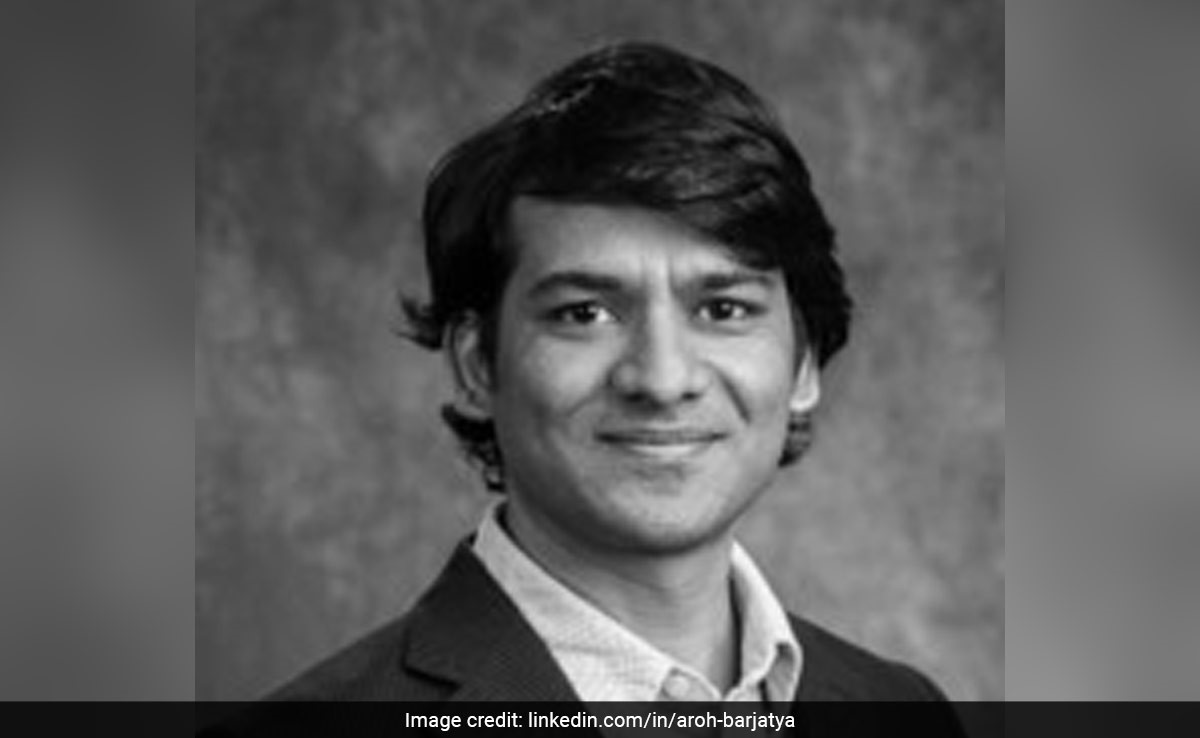
WASHINGTON: Aroh Barjatya, an India-born researcher, led NASA’s mission that launched sounding rockets during the recent total solar eclipse.
The US space agency launched three sounding rockets during the total solar eclipse on April 8 to study what happens to the Earth’s upper atmosphere when sunlight dims momentarily over a part of the planet.
Who Is Aroh Barjatya?
A professor of engineering physics, Aroh Barjatya directs the Space and Atmospheric Instrumentation Lab at the Embry-Riddle Aeronautical University in Florida.
Born to a chemical engineer, Ashok Kumar Barjatya, and his wife Rajeshwari, Aroh Barjatya went to schools across India, including in Patalganga near Mumbai, Hyderabad, Jaipur, Pilani, and Solapur.
He went on to get a degree in electronics engineering from Solapur’s Walchand Institute of Technology.
In 2021, he moved to the US for a master’s degree in electrical engineering at Utah State University. He later did his PhD in spacecraft instrumentation from the same university.
“In addition to leading an externally funded research enterprise, as a tenured faculty I have mentored and engaged young minds through inquiry-based learning tactics, created a new area of concentration within the Engineering Physics programme at ERAU… My mission is to advance the state of the art in space research and education and to inspire the next generation of space engineers and scientists,” he wrote on his LinkedIn profile.


MELBOURNE: Fourth India-Australia 2+2 Secretary-level Consultations

TORONTO: India’s response to diplomatic communication from Canada

NGERULMUD: Shri Harsh Kumar Jain concurrently accredited as the next Ambassador of India to the Republic of Palau

STOCKHOLM: Dr. Neena Malhotra appointed as the next Ambassador of India to the Kingdom of Sweden
2020 will be remembered as time of the pandemic. The fallout will be felt for years

KINGSTON: Shri Subhash Prasad Gupta concurrently accredited as the next High Commissioner of India to St.Vincent and the Grenadines
-
 Diplomatic News2 years ago
STOCKHOLM: Dr. Neena Malhotra appointed as the next Ambassador of India to the Kingdom of Sweden
-
Opinions5 years ago
2020 will be remembered as time of the pandemic. The fallout will be felt for years
-
 Diplomatic News2 years ago
KINGSTON: Shri Subhash Prasad Gupta concurrently accredited as the next High Commissioner of India to St.Vincent and the Grenadines
-

 Politcs2 years ago
LONDON: Indian-Origin Candidate On How He Plans To Win London Mayoral Polls
-

 Technology2 years ago
MARYLAND: All About Pavan Davuluri, New Head Of Microsoft Windows
-

 Sports2 years ago
DODOMA: Milind Soman At “Friendship” Marathon Organised By India, Tanzania
-

 Business2 years ago
LONDON: UK Court Allows Sale Of Nirav Modi’s Luxury London Apartment
-
 Science2 years ago
WASHINGTON: Who Is Aroh Barjatya, Indian-Origin Researcher Who Led Recent NASA Mission