
Sports
MELBOURNE: Virat Kohli and Ajinkya Rahane: Contrasting captains, effective results

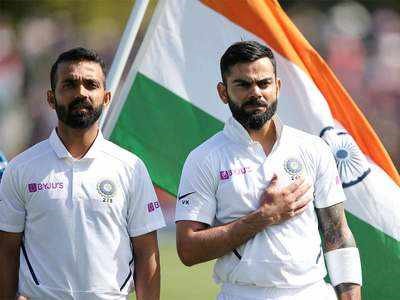
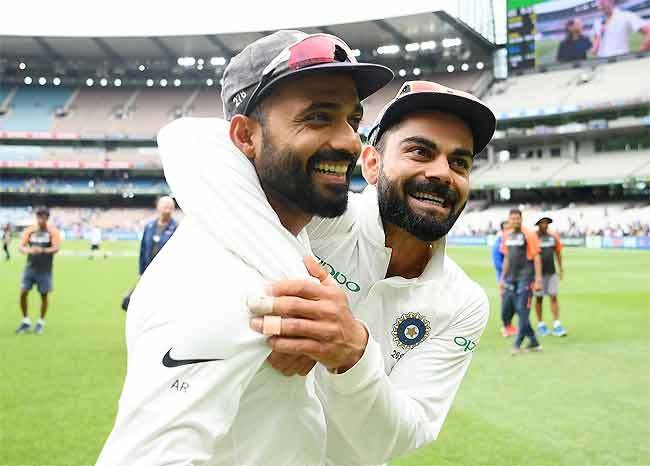
MELBOURNE: ‘Should Virat Kohli step down as India’s Test captain?’ This was the top trending question on social media and various online media platforms after Ajinkya Rahane led India to a phenomenal win in the Melbourne Test. Is it justified to have a go at captain Kohli, who has won 14 Test series out of the 18 he has captained in for the country? Isn’t it good for India that the team has two brilliant minds who can complement each other?
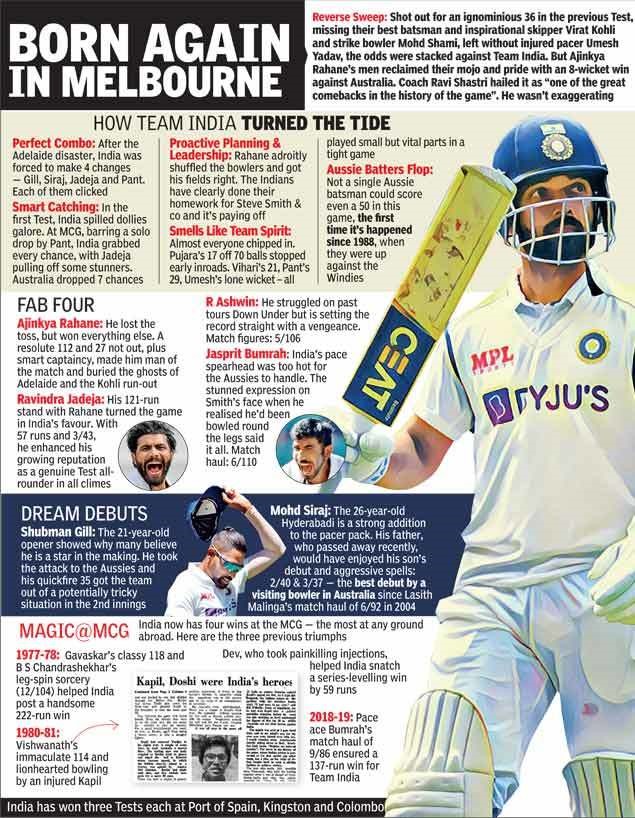
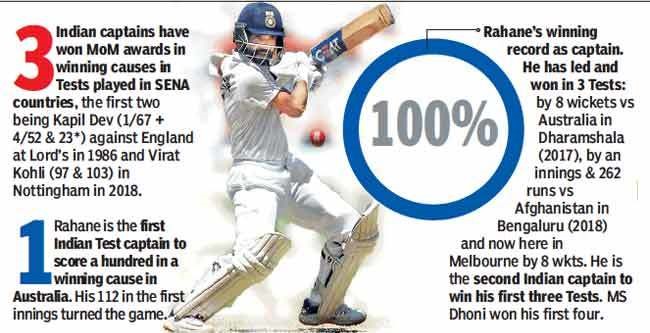
Rahane has shown in his short
captaincy career at the international level that he is an astute leader and an
instinctive captain. He exhibited those qualities in Dharamshala in 2017, when
India defeated Australia in the final Test with the series on the line, and
again during the Melbourne Test.
Both Kohli and Rahane have demonstrated they are shrewd leaders. It is not for
nothing India won the 2018-19 Test series in Australia under Kohli’s
leadership.
Their approach towards captaincy, on-field decision making and demeanour is
totally different. While Kohli wears his heart on his sleeve, Rahane is
unflappable. Kohli brings aggression and an in-your-face attitude on the field
while Rahane is phlegmatic. Kohli’s intensity is quite apparent. Rahane is
quietly determined.
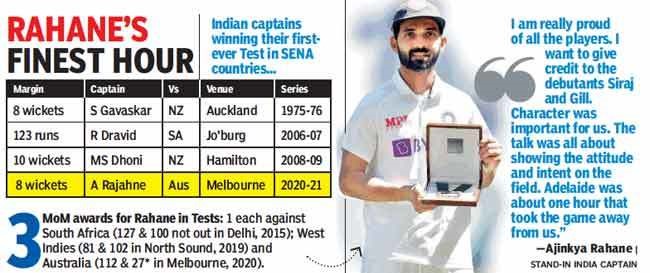
“See, both are good readers of
the game. Virat is very passionate, Ajinkya, on the other hand, is very calm
and composed. Virat is more in your face, while Ajinkya is quite prepared to
sit back in a very calm and composed manner, but deep inside he knows what he
wants,” said coach Ravi Shastri about the two leaders.
Batting legend Sunil Gavaskar’s opinion is no different. “Virat is a lot
more passionate and in your face. Rahane is calm and composed. He lacks
aggression in his body language but not in his tactics. He is quite aggressive
with his tactics as captain. We saw that (aggression in field placings) with
the leg-gully, slip and forward short leg,” he said.
There are some major differences in tactical approach too. Kohli is someone who
wants to pepper the opposition with pace. His aggressive nature has made him rely
more on the fast bowlers in order to take the 20 wickets required to win a Test
match.
Rahane, on the other hand, is more intuitive and approaches a match with an
open mind. Case in point: Rahane introducing R Ashwin on Day 1 of the Melbourne
Test in the 11th over itself. There was moisture on the surface and Rahane’s
decision turned out to be a tactical masterstroke as Ashwin sent back Matthew
Wade and Steve Smith in his first spell. Outside the subcontinent, Kohli rarely
goes to his spinner so early; that too on the first day of a Test match.
Another noticeable difference
between the two is that Rahane loves to give his bowlers longish spells, as was
evident in Melbourne. Jasprit Bumrah started off with a six-over opening spell
on Day 1, Umesh bowled seven. And in one of his spells, Ashwin delivered 12
overs on the trot. Kohli, in contrast, resorts to shorter spells for his
bowlers. Sometimes one or two overs when wickets aren’t falling.
The team huddles are also different. When Kohli is the captain, it is mostly
him who does all the talking and motivates the team. Under Rahane, there were a
lot more voices. While Rahane spoke from time to time, Ashwin and Pujara were
also seen addressing the team.
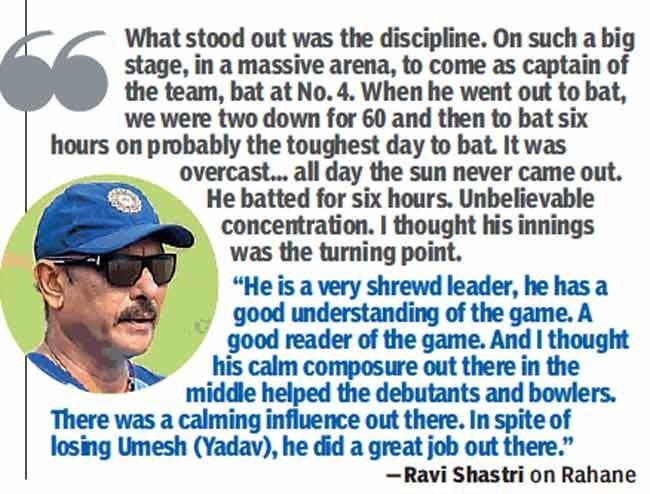
One thing that stood out was Rahane’s calmness on the field. When Tim Paine survived a clear run out due to the third umpire’s largesse or when the reviews didn’t go in favour of India because of the ‘umpire’s call’ clause in DRS, Rahane remained level-headed and didn’t allow the team to get affected. Kohli, contrastingly, is an emotional and excitable personality.
“Jinks’ (Rahane) calmness really provided us that stability to express ourselves,” Ashwin said later.
“His calm composure helped the debutants as well as the bowlers. There was a calming influence out there in spite of losing Umesh (Yadav),” added Shastri.







LONDON: Travel is on the rise again. According to the UN’s tourism agency, international travel for all purposes reached 97% of its pre-pandemic level in the first quarter of 2024. In some regions such as Africa and Europe, arrivals are already surpassing these levels.
Indian travellers, in particular, are adding to this growing trend – no nation’s outbound tourism market is growing faster. In response to this rapidly expanding travel boom, Indian airlines ordered record numbers of new planes in 2024.
The Indian travel market is gigantic, with its middle class now representing 31% of the country’s population. This figure is expected to increase to 60% by 2047, meaning there will be more than 1 billion middle-class Indians by the middle of the century.
For budding Indian tourists, the future of travel looks exciting. But for the many destinations already besieged by overtourism, this new market may be viewed through a more sceptical lense.
Nonetheless, Indian tourists spent US$33.3 billion (£25.3 billion) in 2023, and many destinations are recognising their potential. In April, for example, Japan introduced a new e-visa system for Indian tourists in the hopes of increasing arrivals.
Two months earlier, Dubai created a five-year, multiple-entry tourist visa tailored to Indian visitors. South Africa’s simplified visa scheme will also start in 2025, while other nations including Malaysia, Kenya, Thailand and Iran have scrapped visa requirements for Indian tourists entirely.
The evidence suggests these schemes work. Tour operator Thomas Cook reported in May that Indian demand for holidays in Georgia has surged by a staggering 600% year-on-year since the country launched its e-visa system for Indian tourists in 2015.
Other European markets have been slower to adjust. Europe’s border-free Schengen zone has introduced a new “cascade” system, which will allow Indian visitors who have used a short-stay visa twice in the last three years to now apply for a two-year, multiple-entry tourist visa.
But, while this is a positive step towards easier travel for some Indian tourists, it will have no effect on new travellers. The Schengen visa process can also still take months, requires significant paperwork, and appointments are notoriously difficult to find.
The story is similar for British visas. Many people in India, as well as other applicants, feel the process is too harsh and can be humiliating. Endless amounts of paperwork are required, including bank statements and invitation letters, and rejections are often not explained.
In a study of travel trends in India, online travel platform Booking.com also found that Indian tourists typically book their trip at the last minute. They spend just 30 days planning a holiday on average, compared with 63 days for Americans and 90 days for Brits. Many simply cannot be bothered with time-consuming visa requirements, and are opting for easier and more welcoming destinations instead.
So, where are they going?
Budget airlines flying to relatively nearby destinations have contributed to India’s tourism rush, with south-east Asia increasingly popular. According to Google Trends, Vietnam was the most-researched destination by Indians in 2023.
That year, the Vietnam National Authority of Tourism reported a 231% increase in visitors from India compared with 2019. Other south-east Asian countries such as Thailand, Singapore and Indonesia are seeing similarly huge jumps in arrivals.
Indian travellers are hugely influenced by television and movies, often opting to visit the places they have seen in Bollywood. Despite visa restrictions, the number of Indian tourists visiting Spain jumped by 40% in 2011 after the La Tomatina festival – where participants throw tomatoes at each other – was featured in the popular Hindi movie Zindagi Na Milegi Dobara.
It has been a similar story for Switzerland. Several Bollywood movies filmed there over the past 50 years have resulted in an Indian tourism love affair with the country. The Swiss tourist board even offers Bollywood tours to the various sites featured in Indian cinema.
While only 9% of Indian travellers focus on long-haul destinations in western Europe, Switzerland has been a top-20 destination for Indian tourists for over a decade.
Hundreds of Indian movies and music videos have been filmed in Switzerland.
Other destinations have started using Bollywood actors in their promotional campaigns. Dubai, for example, is promoted by the Indian acting superstar and film producer Shah Rukh Khan. And the heartthrob actor Siddharth Malhotra has been New Zealand’s brand ambassador since 2015.
By 2040, the number of international tourist departures from India could hit 90 million, not far from the 104 million Chinese tourists who travelled in 2019. However, research suggests that Chinese holidaymakers are increasingly deciding to travel at home, meaning Indian tourists may soon overtake them.
As more people in India flock to airport departure lounges, tourist destinations around the world are jostling for position in the race to take their share.

DODOMA: India and Tanzania organised a marathon of 120 km on sunday under ‘India-Tanzania Friendship Run’ initiative. The marathon was organised in Tanzania between Dar es Salaam city and the historic city of Bagamoyo. Indian actor and fitness icon Milind Soman participated in the run alog with over 4,000 people from Indian and Tanzanian communities.
Milind Soman participated in the run alog with over 4,000 people
The event was organised by Indian High Commission in Tanzania and Tanzania’s Ministry of Culture, Sports & Arts. Pindi Chana, Tanzania’s Minister of Legal & Constitutional Affairs, flagged off the marathon and appreciated the initiative for bringing the two countries together.
The event was organised by Indian High Commission in Tanzania and Tanzania’s Ministry of Culture, Sports & Arts.
Binaya S Pradhan, Commissioner of India, said that the event was organised to internationalise the spirit of ‘Fit India Movement’.
India and Tanzania boast a longstanding history of people to people and trade relations.
India and Tanzania share a history of people to people and trade relations and this year, the India-Tanzania ties was elevated to the status of a strategic partnership.
Milind Soman is an Indian actor, model and fitness icon
The first offshore campus of IIT Madras was also inaugurated in November in Zanzibar, demonstrating India’s relationship with Tanzania and firm commitment to the Global South.
DUBAI: The No. 1 ranking is a reflection of the consistency shown by the Indian team, but is the No. 1 team the best side in the world?
Cricketers often insist that they don’t pay too much attention to rankings, and occasionally they might even mean it, but there are some accomplishments impossible to not celebrate. Such as simultaneously holding the No. 1 team ranking across the three international formats.
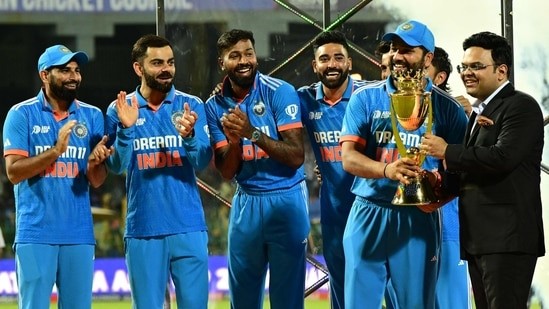
Friday’s five-wicket victory over Australia in Mohali in the first of three One-Day Internationals catapulted India to top-dog status in 50-over cricket. Already occupying the top rung in Tests and Twenty20 Internationals, India are now the No. 1-ranked side in the world in all formats, a remarkable achievement given that it has only happened once before – in 2012, when South Africa ruled the roost.
What does the No. 1 ranking truly mean?
It’s said, and not without reason, that staying at the top is infinitely more difficult than getting there. That’s not to say that the ascent to the summit is easy; it’s just that on the upward march, several factors can combine to propel one to the peak but once there, you becomes a marked entity, every competitor looking to pull you down.
The No. 1 ranking is a reflection of the consistency shown by the Indian team, but is the No. 1 team the best side in the world?
India haven’t won a global title since the 2013 Champions Trophy, and last week’s triumph at the Asia Cup in Colombo was their first silverware in a tournament involving more than two teams for nearly five years. Would you rather be the top-ranked side in the world, or a unit that knows how to rise to the challenge in big events, how to seize the moments that truly matter?
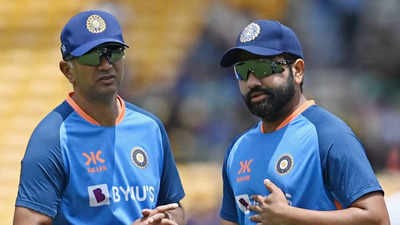
Skipper Rohit Sharma and head coach Rahul Dravid might not admit so publicly, but they would happily swap the No. 1 ranking in each of the three versions for a trophy – the World Cup trophy, if they had the choice. After all, that’s what great teams are remembered by, for the tournaments and titles they win, for the crowns they wear.
It’s not as if the top ranking counts for nothing, because it rewards consistency over extended periods of time which, in some quarters, might be worth plenty more than a sporadic patch of brilliance that might net ultimate glory. But when that barren run extends beyond a decade, is being ranked No. 1 alone a massive cause for celebration?
Let’s jog back to 1983
Let’s take the 1983 World Cup triumph as a guide. Under Ajit Wadekar, India had registered Test series triumphs in the Caribbean and in England in the space of six months in 1971, but it didn’t quite fire the imagination of the fans like it should have because it was in the pre-television era.
But when viewers were able to witness live the semifinals and finals 40 years back when India overcame England and subdued the mighty West Indies respectively, the fallout was humongous. An entire generation of legends – Sachin Tendulkar, Rahul Dravid, Anil Kumble, VVS Laxman – was so inspired by that title run that cricket became the be-all and end-all. 1983 triggered a limited-overs revolution that only met its match in 2007 when, against all odds, Mahendra Singh Dhoni’s unheralded bunch carved its way through the draw to lift the inaugural T20 World Cup.
Around the plethora of individual achievements that followers of the sport in India, more than anywhere else, celebrate uninhibitedly, it’s the 1983 World Cup, the 1985 World Championship of Cricket, the 2007 T20 World Cup and the 2011 World Cup triumphs that stand out. And that’s precisely why the No. 1 ranking needs to be put in perspective. It’s no mean feat, to be able to occupy pole position in all three formats when the surfeit of cricket has spawned injuries galore. It speaks to the depth of cricketing talent in the country, to the success of the systems put in place that focus not just on the present but also the future.
Recently in Sri Lanka, the great Aravinda de Silva was all praise for the quality at India’s disposal, telling me that not many countries had the wherewithal to field two or three equally competitive and top-class teams at the same time. But it did come with a rider: ‘I hope they win a title too soon.’ Numero uno in rankings is brilliant, and in all formats three times so. Now, to embellish the trophy cabinet with meaningful, much-needed silverware.

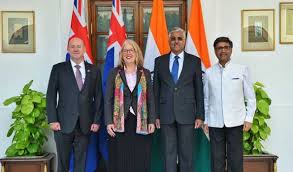
MELBOURNE: Fourth India-Australia 2+2 Secretary-level Consultations

TORONTO: India’s response to diplomatic communication from Canada

NGERULMUD: Shri Harsh Kumar Jain concurrently accredited as the next Ambassador of India to the Republic of Palau

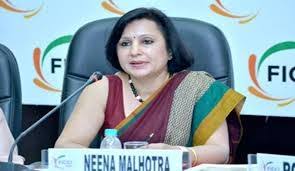
STOCKHOLM: Dr. Neena Malhotra appointed as the next Ambassador of India to the Kingdom of Sweden
2020 will be remembered as time of the pandemic. The fallout will be felt for years

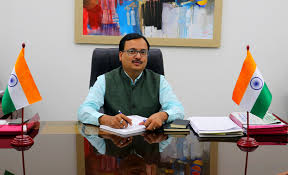
KINGSTON: Shri Subhash Prasad Gupta concurrently accredited as the next High Commissioner of India to St.Vincent and the Grenadines
-
 Diplomatic News2 years ago
STOCKHOLM: Dr. Neena Malhotra appointed as the next Ambassador of India to the Kingdom of Sweden
-
Opinions5 years ago
2020 will be remembered as time of the pandemic. The fallout will be felt for years
-
 Diplomatic News2 years ago
KINGSTON: Shri Subhash Prasad Gupta concurrently accredited as the next High Commissioner of India to St.Vincent and the Grenadines
-
 Politcs2 years ago
LONDON: Indian-Origin Candidate On How He Plans To Win London Mayoral Polls
-
 Technology2 years ago
MARYLAND: All About Pavan Davuluri, New Head Of Microsoft Windows
-

 Sports2 years ago
DODOMA: Milind Soman At “Friendship” Marathon Organised By India, Tanzania
-
 Business2 years ago
LONDON: UK Court Allows Sale Of Nirav Modi’s Luxury London Apartment
-
 Politcs2 years ago
LONDON: Run For Modi” Event In London To Drum Up Support For PM Modi