
Entertainment
LONDON: Dune- The Indian behind VFX Oscar for sci-fi epic

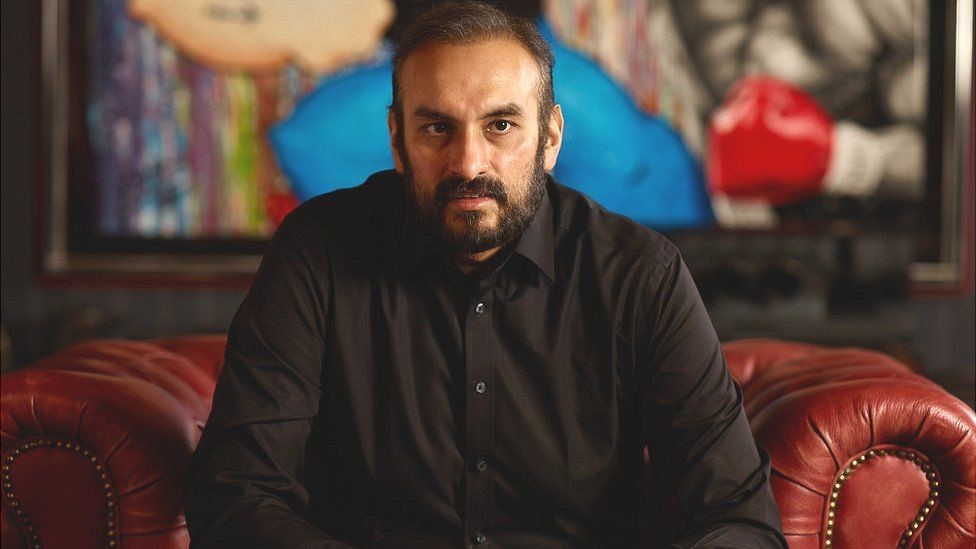
LONDON: Just minutes into watching Dune, it’s easy to see why it won an Oscar for its visual effects.
The sweeping majesty of the desert comes alive in Denis Villeneuve’s epic sci-fi film based on Frank Herbert’s 1965 novel. Critics have called it a “colossal spectacle” with “arresting, filigreed and meaningful” designs and textures.
But what few know is that Namit Malhotra, the 46-year-old CEO behind the company that crafted Dune’s stunning visual effects, started his journey in India – and specifically Bollywood.
The desert planet of Arrakis – where this saga of love and war unfolds – was designed in astounding detail by London-based visual effects and animation company DNEG. Its team of visual effects artists and engineers made nearly 1,200 VFX shots of the film’s 1,700 – the film’s VFX supervisors told BBC Click that each element was designed to “heighten the photorealism of Villeneuve’s immersive vision”.
“What you actually experience is a function of production design, music, cinematography and many other parts coming together to create that world,” Mr Malhotra says over the phone from his office in London.
It’s a long way from the garage in Mumbai, India’s financial hub, where he launched his business in 1995. Now, he heads a global firm that has won seven Oscars.
He knew he would always be associated with the world of movies – his grandfather was a Bollywood cinematographer who worked on one of India’s first colour films in 1953, Jhansi Ki Rani. His father produced major Bollywood films, including Shahenshah, a 1988 cult classic starring superstar Amitabh Bachchan.
Just after he turned 18, Mr Malhotra told his father he wanted to become a director. But his father, who had observed how fast the movie business was changing, encouraged him to learn more about the craft of making movies, including what was happening on the technology side.
He said that Mr Malhotra “could direct films anytime” but tech was a gamechanger.
So, Mr Malhotra started a company, offering editing services to filmmakers. A year later, in 1995, he founded Prime Focus, which expanded to do post-production.
“When we started, we were constantly innovating. Everything we did was the first of its kind in India,” Mr Malhotra says.
In 2004, they brought a motion-control rig – a robotic crane used for special visual effects – to India for the first time.
“It was a complicated tool. It would take four hours to set up on a shoot. Actors and directors would say, ‘What is this thing?'” he recalls.
By then, Indians had watched Hollywood spectacles such as the Lord of the Rings trilogy, which used technology such as the digital intermediate (DI) process to tweak colour and image characteristics.
“We were able to replicate that,” he says.
But as Prime Focus grew, Mr Malhotra says he found that Indian filmmakers were slow to adapt to the changes it offered.
“Change is very hard in the film business. They’re comfortable with how they make their movies. It was a struggle to get everybody to latch on to new technology,” he says.
That’s when he began thinking of expanding abroad.
“What gave me confidence was that we could do this in India at one-fourth the price. So why couldn’t we leverage this and take it to the West?”
Prime Focus – which listed on Indian stock exchanges in 2006 – soon entered the US and the UK by acquiring smaller post-production companies.
In 2010, it was the first company to convert an entire Hollywood film – Clash of the Titans – from 2D to 3D.
Four years later, it bought London-based Double Negative, which had already won an Oscar for visual effects for Christopher Nolan’s Inception.
Since then, the company has won six more Oscars for visual affects, including for Tenet and Interstellar.
Mr Malhotra is still actively interested in the Indian film industry and is one of the producers of the upcoming Bollywood superhero movie Brahmastra.
“Everyone likes a spectacle. Everyone likes Spiderman. Everyone likes Avatar,” he says.
And Indians films are starting to spend more on visual affects, he adds, pointing to Telugu film director SS Rajamouli’s blockbuster period extravaganza, Baahubali, and now, RRR.
“The spend on VFX is going up. These films are ground-breaking in the sense that we haven’t seen a period film that has used visuals effects to bring in such a ‘wow’ experience” he says.
Why has India, which started making movies more than a century ago, not produced a film like Avatar or Interstellar?
“Our filmmakers have a different reference point for cinema,” Mr Malhotra says – Nolan, for instance, regards Stanley Kubrick’s sci-fi epic 2001: A Space Odyssey as the benchmark of filmmaking.
“So when Nolan wants to make an Interstellar, he’s thinking of how can he push the boundaries of filmmaking and storytelling like that film did in 1968,” he says.
Indian directors, on the other hand, turn to the country’s own rich film history for inspiration.
“If director and actor Raj Kapoor was very popular with a certain kind of filmmaking in the 50s and 60s, there are more movies which will take a piece out of that cinema rather than give you a Star Wars or Space Odyssey.”












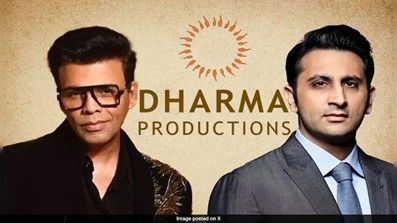
NEW DELHI: Business tycoon Adar Poonawalla has acquired a 50% stake in Karan Johar‘s Dharma Productions and Dharmatic Entertainment (collectively known as Dharma). According to a press note released by Dharma Productions, the deal, finalised for ₹1,000 crore, involves Poonawalla’s Serene Entertainment. The remaining 50% ownership will remain with Karan Johar, who will lead the company’s creative vision as the Executive Chairman.
As the Chief Executive Officer, Apoorva Mehta will collaborate with Karan to guide the strategic direction and ensure operational excellence within the organisation.
Adar Poonawalla expressed his happiness to join hands with Karan Johar. He said, “I am delighted to have the opportunity to partner with one of the most iconic production houses in our nation, along with my friend Karan Johar. We hope to build and grow Dharma and scale even greater heights in the years to come.”
Talking about the partnership, Karan Johar said, “From its inception, Dharma Productions has been synonymous with heartfelt storytelling that captures the essence of Indian culture. My father dreamed of creating films that would leave a lasting impact, and I’ve dedicated my career to expanding that vision.”
KJo added, “Today, as we join forces with Adar, a close friend and an exceptional visionary and innovator, we’re poised to elevate Dharma’s legacy to new heights. This partnership represents a perfect blend of our emotional storytelling prowess and forward-thinking business strategies. It’s about honoring our roots while embracing the future of global entertainment. Dharma’s journey has been remarkable, and this collaboration opens up a world of possibilities for creating content that will resonate across borders and generations.”
The CEO of Dharma, Apoorva Mehta said that this partnership allows the production house to take “bigger creative steps.” He said, “Over the years, I’ve witnessed Dharma’s transformation into a multi-faceted content powerhouse. This partnership with Adar realizes our vision and marks a new era where cinema, streaming, and global content converge. It enables us to explore new avenues in content creation and distribution, elevating the Indian entertainment ecosystem. More importantly, this investment allows us to take bigger creative steps.”
Dharma Productions was founded in 1976 by Karan Johar’s father, Yash Johar. The production house has been behind films such as Kuch Kuch Hota Hai, Kabhi Alvida Naa Kehna, Student of the Year, Good Newwz and Brahmastra: Part One – Shiva.
On the other hand, Dharmatic Entertainment was launched in 2018 and focuses on a wide array of projects, including web series, documentaries and feature films. Ajeeb Daastaans, Ae Watan Mere Watan, Koffee With Karan, Fabulous Lives of Bollywood Wives and The Tribe are produced by Dharmatic Entertainment.
Entertainment
MUMBAI: Shahid Kapoor opens up about the challenges faced by character actors in Bollywood

MUMBAI: There is a prejudice against star kids that every actor’s child is born with a silver spoon in his mouth. However, according to Shahid Kapoor, this is not true, as the power lies in the hands of superstars, big directors, producers, and not character actors.
In a conversation with Neha Dhupia on her chat show, Shahid Kapoor, who is the son of veteran actor Pankaj Kapur, delved into the nuanced dynamics of privilege and struggle within the Bollywood industry. Despite his lineage, Kapoor candidly addressed the challenges faced by character actors, highlighting the stark reality that only superstars wield significant influence while character actors often lack power.
Shahid expressed his belief in the importance of earning success through hard work, emphasizing the satisfaction derived from overcoming obstacles and earning recognition on merit. He said starting your struggle in a luxury car and then buying a luxury car after being successful doesn’t have any fun. One needs to know the challenge of traveling on local trains, and the complexity of arranging money for the first photoshoot, as the victory after this hard work tastes sweet.
He even reflected on being a background dancer during his initial days. He said, forget about enjoying a star status among the other background dancers, when you are working with choreographer Shaimak Dawar, you need to earn your place in the center. He expressed that there was a struggle and fight among his contemporaries to get a spot in the first row.
Amid these reflections, Kapoor remains focused on his craft, having recently commenced shooting for his upcoming action thriller, ‘Deva,’ which was announced last year.
Entertainment
MUMBAI: Pyaar Kiya To Darna Kya turns 26: Kajol says THIS was the symbol of an innocent girl back then

MUMBAI: One of the most successful movies of the 90s, Pyaar Kiya To Darna Kya brought on-screen Kajol and Salman Khan for the first time, in a simple boy meets girl love story. The movie also starred Arbaaz Khan and Dharmendra in key roles, and was directed by Salman’s brother Sohail Khan.
Today, the movie completed 26 years of its release, and marking the occasion, Kajol took to her IG handle to share some stills with Salman, Dharmendra and Arbaaz. In the movie, Kajol plays Muskaan, a simple village girl, who goes to the city for higher studies, where she meets the rich Suraj (Salman), and falls in love with him, despite their contrasting backgrounds. Sharing the same, Kajol wrote, “When tying ur hair in a plait was a symbol of an innocent girl 👧🤪 #26yearsofpyaarkiyatodarnakya”
While on Kajol, earlier this month, on Women’s day, March 8, Kajol posted a video paying tribute to the wonderful women in her life including her mother Tanuja, sisters Tanishaa Mukerji and Rani Mukerji, daughter Nysa Devgan and mother-in-law Veena Devgan. She shared a throwback video and said, “Happy #womensday to all these amazing women who don’t need a day to celebrate themselves coz they’re running their worlds everyday and they can and do take a day off when they need it without anyone’s permission! Cheers and kudos to this breed of #badasswomen!#internationalwomensday.”
On the work front, Kajol will next be seen in Kriti Sanon’s maiden production venture, ‘Do Patti’. The film marks the first-ever collaboration of Kajol and Kriti Sanon. The teaser of the film was launched in February, and Kajol essays the role of a cop in the film. Speaking about the film earlier , Kajol said, “Do Patti has a standout script that promises a unique blend of adventure and mystery. It is a story that is not only rooted in India but also promises the thrill that can be enjoyed by entertainment enthusiasts across borders ’’


MELBOURNE: Fourth India-Australia 2+2 Secretary-level Consultations

TORONTO: India’s response to diplomatic communication from Canada

NGERULMUD: Shri Harsh Kumar Jain concurrently accredited as the next Ambassador of India to the Republic of Palau

STOCKHOLM: Dr. Neena Malhotra appointed as the next Ambassador of India to the Kingdom of Sweden
2020 will be remembered as time of the pandemic. The fallout will be felt for years

KINGSTON: Shri Subhash Prasad Gupta concurrently accredited as the next High Commissioner of India to St.Vincent and the Grenadines
-
 Diplomatic News2 years ago
STOCKHOLM: Dr. Neena Malhotra appointed as the next Ambassador of India to the Kingdom of Sweden
-
Opinions5 years ago
2020 will be remembered as time of the pandemic. The fallout will be felt for years
-
 Diplomatic News2 years ago
KINGSTON: Shri Subhash Prasad Gupta concurrently accredited as the next High Commissioner of India to St.Vincent and the Grenadines
-

 Politcs2 years ago
LONDON: Indian-Origin Candidate On How He Plans To Win London Mayoral Polls
-

 Technology2 years ago
MARYLAND: All About Pavan Davuluri, New Head Of Microsoft Windows
-

 Sports2 years ago
DODOMA: Milind Soman At “Friendship” Marathon Organised By India, Tanzania
-

 Business2 years ago
LONDON: UK Court Allows Sale Of Nirav Modi’s Luxury London Apartment
-
 Science2 years ago
WASHINGTON: Who Is Aroh Barjatya, Indian-Origin Researcher Who Led Recent NASA Mission