
Business
TOKYO: Elon Musk’s grand vision for Twitter faces reality check in Asia

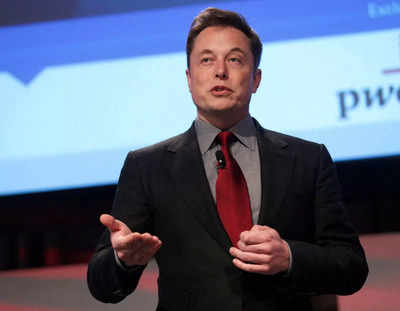
TOKYO: For all the furor about which way Elon Musk might tilt US political discourse after getting the keys to Twitter Inc, his biggest challenges may emerge across the Pacific.
Asia, home to more than half the world’s population, is Twitter’s biggest growth opportunity and arguably a far thornier challenge. If the Tesla Inc and SpaceX billionaire makes good on promises to scrap censorship, he’ll encounter a plethora of perplexing regulations, wielded by sometimes authoritarian governments, pushed to the limits by a horde of first-time internet users.
The numbers alone suggest Musk’s biggest headaches lie abroad. Twitter’s monetizable daily active users numbered 179 million internationally — dwarfing the 38 million in the US in 2021, according to its latest annual report.
As a public company, Twitter has repeatedly emphasized it must abide by local regulations. Once it’s a private concern controlled by the world’s richest man, Musk will personally shoulder responsibility for navigating that thicket — and the fallout if he fails.
“Asia has the potential to make or break the new Twitter,” said JJ Rose, a contributor to Australia’s nonpartisan Lowy Institute think tank. “It will depend on how he approaches it, if he can harness it for his free speech aims.”
Representatives for Twitter and Musk didn’t respond to requests for comment.
China
Twitter is officially banned in China, but the country will still demand a lot of Musk’s attention. Amazon.com Inc founder Jeff Bezos alluded to the potential conflicts in a tweet shortly after Musk’s deal, asking “Did the Chinese government just gain a bit of leverage over the town square?”
An obvious point is that China is tremendously important for Tesla, the key source of Musk’s wealth. The billionaire will certainly face pressures — implicit or explicit — to fine-tune Twitter’s policies to please Beijing.
As the world’s biggest electric-vehicle market as well as a supplier of Tesla batteries, China is essential to the healthy growth of the centerpiece of Musk’s business empire. Tesla has also benefited from significant tax breaks in setting up his Shanghai Gigafactory — its first overseas plant — and been allowed to wholly own its local operations, a rarity for a US firm.
A pressing issue is how Twitter handles China’s efforts to spread propaganda globally on the platform. The company in 2020 instituted labels for government officials and “state-affiliated media” for publications like Xinhua and Global Times, and readers are reminded of this government-backing any time they like or retweet stories. Chinese media have called the practice “intimidation” and already begun to lobby the billionaire to roll it back.
“One of the fiercest tests of Musk’s avowed commitment to expanding free speech on Twitter will lie in whether he withstands pressure from Beijing to whitewash criticisms and challenges of China on the platform,” said Suzanne Nossel, CEO of non-profit advocacy group PEN America. “Whatever incremental changes he makes on the platform in the name of free speech risk being subsumed beneath the weight of a heavy Chinese hand controlling what Musk has rightly dubbed a global public square.”
Chen Weihua, a journalist at the China Daily, appealed directly to Musk with the argument that such labels suppress free speech and contradict Musk’s stated principles. The billionaire hasn’t given a clear indication of how he would decide such matters.
“By ‘free speech’, I simply mean that which matches the law,” Musk wrote on Twitter. “I am against censorship that goes far beyond the law.”
Bots are another matter. China has also used automated and anonymous accounts to distribute the government’s messages, which prompted Twitter to remove more than 170,000 accounts in 2020 for “spreading geopolitical narratives favorable to the Communist Party.” Musk has pledged to “defeat the spam bots or die trying!” and sounds determined to keep taking on the fake accounts.
Beijing has shown a willingness to punish billionaires who don’t comply with its wishes. Regulators have hammered the country’s tech giants and effectively banished Alibaba Group Holding Ltd. co-founder Jack Ma from public view.
There are incentives on offer beyond the electric-vehicle market. Musk’s SpaceX could certainly seek Chinese customers, while his Boring Co may profit from lucrative infrastructure contracts in the country.
And what of Twitter itself? A slice of the Chinese population employs virtual private networks to evade Beijing’s control and use the service. Could Beijing also offer up access to its 1.4 billion people? Perhaps under the right terms. They would certainly not include free speech.
India
India is another high-stakes market for Twitter: there are half a billion internet users in the country and another half-billion getting online.
Twitter plays a role in India’s online discourse similar to that in the US: the country’s political leaders use it to get their messages out, which are then relayed across TV and news networks. Prime Minister Narendra Modi was an early adopter and has 78 million followers on the service — more than Twitter has registered users in the country.
But the New Delhi government has insisted on far more control than Washington has ever been able to exert. Tensions in the relationship spiked during farmer protests in the country in 2020 and 2021 as Twitter and the government clashed over what sort of speech would be tolerated on the platform.
When farmers’ groups demanded the repeal of certain laws they said favored corporate-run farms, they took to the streets and social media to make their case, including Twitter. Modi’s administration insisted the San Francisco-based company take down posts critical of its actions — and Twitter at first refused to comply. Indian authorities then threatened to jail the company’s executives, which prompted Twitter to permanently suspend more than 500 accounts and block access to hundreds more.
It was a direct example of how support for “free speech” can clash with government edicts and legal compliance. Later in 2021, New Delhi tightened its grip over social media such as Twitter and Facebook: The government insisted that companies identify specific individuals as grievance officers, who will be responsible for handling official removal requests and who could face prison terms for non-compliance. Twitter acceded, albeit after a delay.
It’s not clear how Musk would reconcile his support for more free speech with such strict government controls.
“Twitter should match the laws of the country,” the owner-to-be said in an interview.
The issue is hardly limited to India. Nearby Sri Lanka restricted social media access in anticipation of protests in April, while Myanmar’s military junta last year disrupted internet access altogether in its push to quell opposition. Researchers found Twitter was the most-blocked social media platform globally with a total 12,379 hours of outages in 2021.
Southeast Asia
Southeast Asia has become one of the fastest-growing internet markets, fueled by countries like Indonesia and India getting their vast populations online.
But developing markets come with their own set of issues. Meta Platforms Inc names the Philippines, Vietnam and Indonesia as prominent sources of fake and duplicate accounts. Meta, whose Facebook and Instagram services face similar challenges to Twitter’s, has for years reported in its annual filings that roughly 11% of its worldwide users are duplicate accounts and another 5% are fake. As with China, Twitter will have its work cut out to eradicate synthetic users.
Freedom of expression also bumps up against local laws in this region. Singapore passed a contentious “foreign interference” law last year granting it powers to demand user information from social networks, in an effort to prevent outsiders from swaying domestic politics. Would that square with Musk’s ambition of free-wheeling expression?
Vietnam has posed similar challenges for online service providers like Facebook and Alphabet Inc’s Google, with a cybersecurity law effectively forcing a choice between upholding user privacy and adhering to local rules.
The question to be answered over the coming years is how far Musk will stick with his promises of freeing up Twitter — not just in the US, but in the rest of the world.
“Asia is not North America and it is not Europe,” said the Lowy Institute’s Rose. “Musk has a globalist view and his business interests to date have tended to be fairly universal. But something like media requires a more nuanced approach when applied globally.”






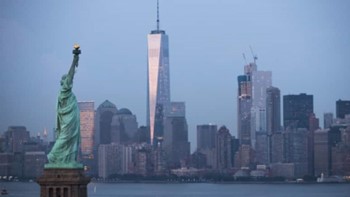
NEW YORK: Union Minister of Commerce and Industry, Piyush Goyal, declared that the H1B visa issue is now “a thing of the past” during a meeting at Vanijya Bhavan, New Delhi.
He emphasized that the topic would no longer be a point of discussion in international dialogues, marking a shift in focus towards other areas of economic and strategic partnerships.
Minister Goyal’s recent visit to the United States included a two-day stay in New York, where he met with CEOs of major companies to discuss reforms initiated by the Modi government aimed at boosting foreign investments in India, particularly in the pharmaceutical and diamond sectors.
Surat, a prominent hub for the diamond industry, was highlighted as a key region for such investments. Goyal met around thirty business leaders who have already established ventures in India, signalling continued interest in expanding business operations in the country.
Following his engagements in New York, the Minister travelled to Washington, where he had a luncheon meeting with 17 CEOs from the CEO forum, including Tata Sons’ top executive.
The discussions primarily centred on restructuring the forum, as the terms of several members are set to expire in December. Various Memorandums of Understanding (MoUs) were also signed during the visit, underscoring the commitment to deepening business ties.
The visit also involved meetings with Small and Medium-sized Enterprises (SMEs), think tanks, educators, and the Center for Strategic and International Studies (CSIS). Goyal described this visit as different from previous trips, noting that there were no “negative agendas” on the table, reflecting a more positive outlook towards Indo-US relations.
Discussions extended beyond traditional sectors, covering potential partnerships in critical areas such as clean energy development, technology transfer, digital telecommunications, and defence.
Talks on biosciences have been ongoing, though Goyal noted that progress on biofuels was limited due to the upcoming US elections.
There were also conversations about setting a stable exchange rate between the Indian rupee and the US dollar, which could benefit bilateral trade.
Tourism and the development of the digital economy were also focal points during his meetings. Goyal’s engagements at the CEO forum and with the CA forum aimed to showcase India’s evolving business landscape and ongoing economic reforms, positioning the country as an attractive destination for global investment.
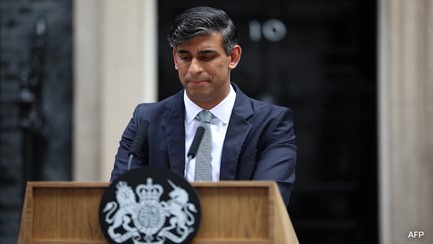
LONDON: The two frontrunners in the race to replace Rishi Sunak as Conservative Party leader and take his place in the House of Commons as Leader of the Opposition have thrown the spotlight on cutting immigration into the UK, with visas for Indians being singled out in heated debates.
Against the backdrop of the launch of the Conservative Party conference in Birmingham on Sunday, former immigration minister Robert Jenrick singled out India as one of the countries that should be subjected to tough visa restrictions across all categories unless it takes back its nationals who enter Britain illegally.
His closest contender, shadow housing secretary Kemi Badenoch, has also zeroed in on the same issue and condemned new migrants bringing their disputes from India to cause unrest on the streets of the country.
“It is quite clear that there are many people who have recently come to this country who have brought views from their countries of origin that have no place here,” Badenoch told the BBC.
“I saw as equalities minister people bringing cultural disputes from India to the streets of Leicester… we need to make sure that when people come to this country, they leave their previous differences behind. This is not a controversial thing to say,” she said.
Nigerian-heritage Badenoch, considered among the favourites to win the ongoing Tory leadership election, was apparently referencing the clashes that broke out in Leicester in September 2022 in the wake of an India-Pakistan Asia Cup cricket match.
Meanwhile, her former ministerial colleague Robert Jenrick who has notched up an early lead in the contest told ‘The Daily Telegraph’ earlier this week that while India benefited from 250,000 visas in the past year, there were as many as 100,000 Indian nationals estimated to be illegally residing in the UK.
He lamented that deportations or removals to India remain stuck in the hundreds despite an India-UK Migration and Mobility Partnership which is designed to cover such returns of illegal migrants.
“The government must stop other countries exploiting our generosity by imposing severe visa restrictions and restricting foreign aid to countries that do not take back their nationals here illegally,” said Jenrick.
Over the four-day Tory conference starting on Sunday, Jenrick and Badenoch will go head-to-head with two other party colleagues – former Cabinet ministers James Cleverly and Tom Tugendhat – as they make their leadership pitches before MPs vote in the next round. This time the field will be whittled down to the final two candidates who will then fight it out for the online ballot of the wider Conservative Party membership, many of whom will be making up their minds during the party conference. The new Conservative Party chief and Opposition Leader is then scheduled to be declared on November 2 after the voting closes.
The election follows the resignation of Sunak as Tory leader in the wake of the party’s bruising general election defeat in July under his leadership. The British Indian politician, who was re-elected member of Parliament from Richmond and Northallerton in northern England, has meanwhile been serving as interim leader until his successor is elected.
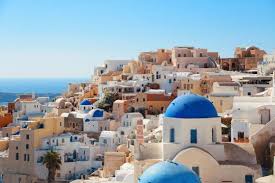
ATHENS: Greece has witnessed a remarkable 37 per cent surge in property purchases by Indian investors between July and August. This flurry of activity is driven by Indian buyers eager to secure permanent residency under Greece’s Golden Visa Programme before significant regulatory changes took effect on September 1.
Launched in 2013, Greece’s Golden Visa programme offers residency permits in exchange for property investments, making it an attractive option for non-EU citizens. Its initial €250,000 (Rs 2.2 crore) threshold was one of Europe’s lowest, drawing significant investment and boosting Greece’s real estate market.
However, the surge in demand pushed up property prices, particularly in high-demand areas like Athens, Thessaloniki, Mykonos and Santorini. To address this, the Greek government raised the investment threshold to €800,000 (approx Rs 7 crore) for properties in these regions, effective September 1 2024.
Sanjay Sachdev, Global Marketing Director of Leptos Estates, noted an “unprecedented rush” of Indian homebuyers in recent months. “Many investors purchased under-construction projects with handover periods of six-twelve months,” said Sanjay Sachdev, as per MoneyControl.
Many invested in properties under construction, with completion timelines of six to twelve months. Leptos Estates reported selling out its available residential stock in Greece due to this surge.
Effective September 2024, the revised Golden Visa programme seeks to:
– Temper rapid price increases
– Promote equitable development
– Direct investment towards less saturated areas
The appeal of Greece’s Golden Visa Programme for Indian investors
– Greece offers attractive rental yields of 3-5 per cent annually, making property investments financially rewarding.
– Property values in Greece have been increasing at an impressive rate of 10 per cent year-on-year, with significant growth following the pandemic.
– Investors gain access to high-quality healthcare, education, and the opportunity to establish businesses within the EU.
Before the rule changes, Indian investors gravitated towards popular Greek islands like Paros, Crete, and Santorini for property purchases.

MELBOURNE: Fourth India-Australia 2+2 Secretary-level Consultations

TORONTO: India’s response to diplomatic communication from Canada

NGERULMUD: Shri Harsh Kumar Jain concurrently accredited as the next Ambassador of India to the Republic of Palau

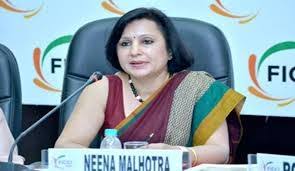
STOCKHOLM: Dr. Neena Malhotra appointed as the next Ambassador of India to the Kingdom of Sweden
2020 will be remembered as time of the pandemic. The fallout will be felt for years

MARYLAND: All About Pavan Davuluri, New Head Of Microsoft Windows
-
 Diplomatic News1 year ago
STOCKHOLM: Dr. Neena Malhotra appointed as the next Ambassador of India to the Kingdom of Sweden
-
Opinions5 years ago
2020 will be remembered as time of the pandemic. The fallout will be felt for years
-
 Technology2 years ago
MARYLAND: All About Pavan Davuluri, New Head Of Microsoft Windows
-
 Diplomatic News1 year ago
KINGSTON: Shri Subhash Prasad Gupta concurrently accredited as the next High Commissioner of India to St.Vincent and the Grenadines
-
 Politcs2 years ago
LONDON: Indian-Origin Candidate On How He Plans To Win London Mayoral Polls
-
 Science2 years ago
WASHINGTON: Who Is Aroh Barjatya, Indian-Origin Researcher Who Led Recent NASA Mission
-
 Technology2 years ago
HOUSTON: Mumbai boys in the final rounds of FIRST World Robotics competition to be held in Houston
-

 Sports2 years ago
DODOMA: Milind Soman At “Friendship” Marathon Organised By India, Tanzania