
Opinions
The diaspora and India’s growth story

Author: Shreya Challagalla
This brief sketches the growing interest of the incumbent Bharatiya Janata Party (BJP) government in the Indian diaspora. Over the last three years, the prime minister has repeatedly called attention to the role that the diaspora will play in India’s development process and in the promotion of its foreign policy goals. The brief gives an overview of the policies that the present government has rolled out and examines the benefits from, and pitfalls of an increased focus on the diaspora.
Introduction
If Atal Bihari Vajpayee, during his 1998-2004 tenure, is credited for having promoted serious engagement with the Indian diaspora to develop mutually beneficial linkages, current Prime Minister Narendra Modi is getting known for his enthusiasm in expanding those earlier efforts. The prime minister’s vigour in this arena has been evident since the day he took office in May 2014, and it begins with his public pronouncements. In foreign trips and outreach activities with India’s expatriate communities, he persuades them to “contribute to India’s growth story”.
Unlike the Indian National Congress which tends to disassociate with the diaspora and views them as largely burdensome, the Bharatiya Janata Party (BJP) perceives the Indian diaspora as an asset. In 1964 in Burma (now Myanmar), when General Ne Win nationalised all businesses in the country, the large Indian trading community was greatly affected. They lost their livelihoods, were denied compensation, and as many as 300,000 of them were expelled from the country.[i] The Indian Government at the time did not extend help to the diaspora, maintaining that those events were “strictly a matter of domestic jurisdiction”.[ii] Similarly, in 1972, when 70,000 Indians suffered persecution in Idi Amin’s Uganda and were expelled from the country, many were forced to take asylum in England after the Indian government “turned a blind eye” on their plight.[iii]
Today, a close look at the two parties’ manifestos in the run-up to the 2014 election reveals a gap in their outlook towards India’s expatriate communities. The BJP in its 2014 election manifesto made it clear that it will work with Non-Resident Indians (NRIs) and Persons of Indian Origin (PIOs), by adopting a proactive diplomacy strategy, to develop what it referred to as “Brand India”. It stated that “the NRIs, PIOs and professionals settled abroad are a vast reservoir to articulate the national interests and affairs globally. This resource will be harnessed for strengthening Brand India”.[iv] In contrast, the Congress’ manifesto highlighted the “protective” role it sees itself playing towards the diaspora. It said, “Protecting Indians overseas from exploitation or threats will remain a paramount concern”.[v] As part of this larger strategy, it envisioned playing a role in safeguarding Tamilians in Sri Lanka, and in establishing exchange centres for youth in India. As can be gleaned from its 2014 manifesto, the Congress party does not view the diaspora as a tool to leverage its foreign policy goals or in the development of India.
The Congress’ outlook towards the diaspora, as shaped over the years, was influenced by non-alignment and the Cold War, which was characterised by suspicion – the Indian government had no trust for the West, which only reciprocated the sentiment – thereby creating a hostile environment for any diaspora policy. In this backdrop it was not logical for them to focus on the diaspora. Recently, however, it appears from its leaders’ public statements that the Congress party is employing a new approach. When party leader Rahul Gandhi visited the United States in September 2017, he told a gathering of Indian-Americans to “get involved” and help in “transforming India”.[vi] During his visit to Bahrain in 2018, Gandhi also told the diaspora that they are “important”.[vii]
Ram Madhav, BJP general secretary, at the launch of the 2015 Indian Diaspora Investment Initiative made his party’s policy clear when he said, “They (Indian diaspora) can be India’s voice even while being loyal citizens in those countries. That is the long-term goal behind the diaspora diplomacy. It is like the way the Jewish community looks out for Israel’s interests in the United States”.[viii] It is hard to imagine Modi repeating the mistakes of former Prime Minister Indira Gandhi when Indians were expelled from Uganda in 1972. In general, the Congress has been happy to cut its ties with those who have left the country; the BJP tends to nurture those very ties. This brief examines the growing significance of the diaspora in Indian foreign policy, and the challenges and opportunities that follow.
Defining ‘Diaspora’
Who comprises the Indian diaspora? The term “diaspora” is derived from the Greek word diaspeirein, which means “dispersion”. Over time, the term evolved, and now loosely refers to any person/s belonging to a particular country with a common origin or culture, but residing outside their homeland for various reasons.
The Government of India does not follow a specific definition, although it attempted to define the term in 2004 as “a generic term to describe the people who migrated from territories that are currently within the borders of the Republic of India. It also refers to their descendants.”[ix] Today, ‘diaspora’ is commonly understood to include Non-Resident Indians (NRIs), Persons of Indian Origin (PIOs) and Overseas Citizens of India (OCI), of which PIO and OCI card holders were merged under one category — OCI — in 2015. Broadly speaking, for the Indian government, the diaspora encompasses a group of people who can either trace their origins to India or who are Indian citizens living abroad, either temporarily or permanently.
Diaspora is not homogenous since migration involves human mobility over multiple time periods, encompassing a whole spectrum and types of movements. The Indian example of migration began in large numbers during the British rule as indentured labourers to former colonies like Fiji, Kenya and Malaysia. It continued in the post-independence period with Indians from different social strata moving to countries like the United Kingdom, the United States, and Gulf countries. Today as there are numerous, heterogeneous diaspora, they have different demands of the Indian Government. The diaspora from the Gulf, for example, look to India for support on welfare issues, while those from wealthier nations such as the US look to India for investment opportunities. The Indian communities in countries such as Fiji and Mauritius, meanwhile, desire to reconnect with the country on cultural grounds.
As of December 2016, the Indian diaspora comprised approximately 31 million people, of which PIOs were 17 million and NRIs were 13 million, spread across 146 countries in the world.[x] The US, Saudi Arabia, the United Arab Emirates, Malaysia, Myanmar, the UK, Sri Lanka, South Africa and Canada host an Indian diasporic population of at least one million each.
Generally, the Indian diaspora is looked at as a “model minority” and comprises many accomplished individuals. This is especially true of Indians in more developed countries like Australia, the UK and US. As they gain prominence, both in terms of their sheer size and through their economic contributions, the host country finds that it must pay more attention to the Indian expatriate communities. They are becoming increasingly visible in electoral politics, though still in relatively small numbers. US President Donald Trump, for one, has appointed some individual Indians to key positions within his administration, including the following: Nikki Haley as US Ambassador to the UN; Raj Shah as his Deputy Assistant and Research Director; Krishna Urs as the Ambassador to Peru; Neil Chatterjee to the Federal Energy Regulatory Commission; and Vishal Amin as Intellectual Property Enforcement Coordinator. In Europe, Ireland witnessed the rise of Leo Varadkar and Portugal has Antonio Costa, both of whom serve as prime ministers in their respective countries. Interestingly, both Varadkar and Costa are second-generation migrants whose fathers uprooted from India— the former is from Maharashtra while the latter migrated from Goa. There is also Ashwin Adhin, a Grimitiya,[1] and the vice president of Suriname who traces his roots to Allahabad, Uttar Pradesh.
Modi has effectively played to the diaspora’s emotions – they see in him a man of action, someone who can bring about change in corruption-ridden, bureaucratic India; the same India they left many years ago. It is clear that Modi sees tremendous potential in the diaspora, and is eager to see them contribute to India’s growth story. At the 2017 Pravasi Bharatiya Divas in Bengaluru, Modi announced that India is moving from “brain drain to brain gain”, making his vision clear — that “there is only one dream (within all of us): Bharatiyata”.[xi]
Recent Policies
The government’s initiatives towards the diaspora are two-pronged. For one, they cater to the needs of NRIs and OCIs by providing them with consular services, protection and conduct outreach activities to engage with them. At the same time, they create policies to encourage the diaspora to contribute to India’s growth through philanthropy, knowledge transfers, investments in innovation and assistance in other development projects.
With this in mind, the Modi government has launched a string of initiatives and repackaged old schemes such as the ‘Know India Program’ (KIP). The last three years saw the launch of Head Post Offices as passport centres enabling thousands more to apply for a passport. For those looking to go abroad, training centres and orientation programmes are provided to train future employees on relevant skills and minimise culture shock.[xii]
A number of policies were announced keeping in mind the protection of welfare and interest of Indians abroad. For example, the 2014 Minimum Referral Wages (MRW), applicable only to Emigration Check Required (ECR) countries, increased the minimum wage of Indian workers employed as industrial workers, domestic servants, cleaners and labourers. To partially reduce the risk of vulnerability from fraudulent contracts, nurses for example can now only be recruited through one of the six state government placement agencies. Furthermore, in 2015, the Ministry of External Affairs launched the e-migrate system that requires all foreign employers to register in the database. These policies are a step in the right direction but have faced criticism from countries like the UAE who claim it is a “breach of our sovereignty”.[xiii]
The successful KIP, launched in 2003 by Atal Bihari Vajpayee, has been refashioned to include more participants and sessions every year. If in 2006 India hosted 55 participants across two sessions, in 2017 it hosted 160 participants across four sessions.[xiv] The incumbent government also launched a website that enables participants to apply online. The programme is aimed mostly at Girmitiya youth and provides an opportunity for them “to better understand and appreciate contemporary India, foster closer ties with the land of their ancestors and enhance their engagement with India”.[xv] Homeland visits or diaspora tourism is viewed by some scholars as a prerequisite to contribute constructively to the home country. In view of the above, focusing on Girmitiya youth is effective as most participants visit India for the first time through the programme. Eventually, the idea is to mould them into unofficial ambassadors of India.
Other youth-centric outreach programmes include scholarships to pursue undergraduate courses in recognised University Grants Commission universities in India, as well as Bharat Ko Jano online quizzes that test the participants’ knowledge of India’s heritage, history and culture. The inaugural quiz in 2016 saw the participation of some 5,000 diaspora youth.
Indeed, Prime Minister Modi is trying to realise Vajpayee’s dream of a strong Pravasi, but on a larger scale. In the many Pravasi Bharatiya Divas (PBD) that have been organised since he became PM, Modi has been keen on wooing the diaspora. Yet it can be argued that the Pravasi Bharatiya Divas have almost become a show where he entices well-off diaspora, often neglecting those who really contribute to India. The relevance and productivity of such a celebration is thus questionable. But not for Modi, who continues to view PBD as an opportunity. To further emphasise the importance of their contributions, he has dedicated a building in New Delhi to them—called the Pravasi Bhartiya Kendra. These soft tactics create an impact for a diaspora that has often felt neglected. Yet, an increased focus on the diaspora comes with its own challenges.
Opportunities and Challenges
Perhaps one of the greatest benefits of engaging with the 30-million-strong Indian diaspora has been in terms of remittances. India was the world’s largest recipient of remittances in 2016, receiving US$ 62.7 billion.[xvi] Remittances aid in socio-economic development as it is used for the recipient family’s personal use (accounting for 50 percent of household expenditure in rural areas), in temple building, and for donations to schools.[xvii] These remittances have played a role in poverty reduction while changing consumption behaviour in rural areas. In an Indian Economic Review survey using National Sample Survey Organisation data, the researchers point to the fact that remittance-receiving households were not only better-off than non-remittance-receiving households, but also that the remittance was mostly used to purchase food items, other consumer goods, and healthcare.[xviii] Spending on healthcare has an important labour market implication as it increases labour productivity. Interestingly, the same survey reported that least money was spent on education, which also has implications on the labour market.
Another tangible long-term advantage in nurturing ties with an active diaspora is an accelerated technological sector and increased socio-economic development. Some examples to illustrate this phenomenon are Bengaluru, Gurugram and Hyderabad as thriving Information Technology hubs that not only house multinational companies (MNCs) like Amazon, Google, Facebook and Uber, but also multiple Indian start-ups like Flipkart, Ola, Swiggy and Zoho. The government can further tap this transnational entrepreneurship, including support for entrepreneurs and small businesses in India in the form of technical knowledge transfers and finances from the diaspora. Authorities have done well to ease Foreign Direct Investment (FDI) and remittance norms. Perhaps the most mutually beneficial policy is the government’s 2015 move to treat NRI/OCI holders’ investment as domestic investment and not FDI.[2] This makes it easier for the diaspora to invest in India; the country, in turn, benefits as the money earned cannot be easily repatriated overseas. The measure is also expected to result in increased investment and a rise in inflow of foreign exchange remittance, both of which will aid in the growth of the economy.[xix]
If the government continues to focus on this aspect of the diaspora-homeland relationship, they are bound to benefit from its synergistic advantages. They act as important intermediaries linking traditional development actors and local communities. Diaspora’s motives to invest in India are in contrast to non-diaspora FDI. Their investment decisions are not entirely profit-driven as many of them wish to establish a long-term base in India. They are also better informed of market conditions, the domestic labour and economic policies and consequently have more realistic expectations of time frames for project completions and investment returns. Yet, it is important to note that their decision to invest may be negatively influenced by their reasons for migrating. Moreover, their capacity to invest will be lower than traditional sources of FDI.
A less tangible but important advantage in having a large emigrant group is “diaspora diplomacy”. Vinay Lal (2008) argues that the diaspora have realised the value of advocacy and says that as the diaspora gain affluence abroad, they become more “anxious” to showcase their influence. For long, he says, their ability to make their presence acknowledged corresponded to the “visibility of India itself on the world stage”.[xx] Moreover, for diaspora diplomacy to work effectively, India needs to share good relations with that country. It is here that Prime Minister Modi is viewed with enthusiasm.
For the prime minister’s supporters, he stands to the right of development. He is lionised by the middle class, from which many of the Indian diaspora emerge. No other Indian prime minister can boast of a welcome similar to what he received in New York (2014), Sydney (2014), London (2015), Kuala Lumpur (2015) and South Africa (2016). In each of his speeches he calls on them to become ambassadors of India, reminds them that “our common heritage makes sure we remain connected in hearts and minds”, that they are a part of a flourishing global Indian family, that they have done extremely well for themselves, and at the same time, reassures them that India has not forgotten her children.[xxi] This sentiment resonates with a bulk of the diaspora.
India has enjoyed being viewed more favourably by the world since 2014, and the diaspora can further these perceptions. From being a largely inconsequential country after Independence, in part due to its active Non-Alignment Policy, India is today seen as a strong nation headed by a strong leader. With foreign publications writing about Modi as “dynamic”,[xxii] the “most powerful leader since Indira Gandhi”,[xxiii] and a man who is “restoring” India’s image[xxiv] – it is a ripe environment for exploiting diaspora diplomacy. Opinions can be channelled through the media, think-tanks and the press to increase the diaspora’s bargaining strength. While they certainly do not determine policy, they can effectively shape it and act as “bridge-builders” between their home and adopted countries.
India’s permanent membership to the United Nations Security Council (UNSC) can become a reality with support from the diaspora. According to Article 108 of the Charter, for a UN reform an affirmative vote from two-thirds of its members and support from the five permanent members is required. India has demonstrated its diplomatic influence with the reappointment of Justice Dalveer Bhandari to the International Court of Justice in November 2017, when it secured two-thirds of the votes at the UN. Apart from political pressures and ministerial and diplomatic level lobbying, India can leverage its diaspora to influence states such as Canada and Mexico to support India’s membership.[xxv] India’s negotiations hit a roadblock when there was a “change in the chief negotiator under US pressure”.[xxvi] The diaspora could give a new impetus for India to secure its seat at the UNSC. Moreover, it is believed that India can protect its diaspora better once it attains a permanent seat in the UNSC, especially in situations where it can exercise its veto rights.
India is also a rising power and a key stakeholder in the security dynamics of South Asia and Southeast Asia. Its role in East Asia is taking shape and although not yet an economic power, its military capabilities, common interests and willingness to go beyond rhetoric have raised expectations of its capabilities and the role it can play in the region. The large populations of Indian expatriates in countries like Thailand, Malaysia and Singapore present an opportunity to nurture a growing, mutual relationship.
Yet an increased focus on the diaspora comes with its own challenges. First, support of the diaspora is neither automatic nor continuous, and their interests need not be India’s priorities. For example, the Indian community in the US was not vocal enough in criticising President Donald Trump’s proposal to restrict the H-1B visa programme that has benefited many Indians. Another challenge is that remittances may not always be used for beneficial purposes. For instance, India faced problems due to foreign funding for extremist movements like the Khalistan movement.[xxvii] Moreover, the diaspora is unfair in expecting India to stand by them at all times of need. This contradictory attitude of the diaspora and the Indian government will need to be worked out.
In the last three years, India had to spend millions of rupees in rescuing Indians from crisis situations from Iraq and Libya. Sankat Mochan, the rescue mission in South Sudan, for example proved to be costly, but necessary for India. Similarly, the announcement that the Indian mission in Bali, Indonesia has set up a helpdesk at the Bali airport to aid the diaspora during the volcanic eruption will be expensive both in terms of money, time and personnel. Moreover, with the economic downturn in some countries in the Middle East, many Indians found their contracts being terminated—this posed difficulties for the Indian missions in these countries as the affected workers had to return to India. Rescuing these workers is costly, but India rescued 4,600 workers from Saudi Oger and Saad Group companies alone.
Second, reports suggest that the e-Migrate system and the Minimum Referral Wages policy have been detrimental to India as companies now find it easier to hire labour from countries like Bangladesh and Pakistan.[xxviii] It was found that in 2016 the number of Indian workers who went to work fell by half in Saudi Arabia and by 33 percent in other Gulf countries, while the number of expats in the regional actually increased by 12.17 percent.[xxix] These statistics hint at heavily reduced remittances for India and perhaps even a need to establish rehabilitation centres for returning workers.
Finally, there are other problems such as the wealthier diaspora from the US, Canada and the UK wanting dual citizenship and voting rights. Meanwhile, those who contribute more in terms of remittances to India from Gulf countries are wanting more support and security.
Conclusion
Over the years, the diasporic populations have become an increasingly important factor in international politics. The Jewish, Chinese and British diasporas have recorded various successes in their second home. The Indian diaspora, for their part, have many of the elements required for success — they are a “model minority”, they are affluent, and they are growing in number. Many of them are willing to exert their influence in electoral politics and are engaged in multinational businesses, and are thus highly visible. This makes for a ripe environment for India to aggressively tap on their potential.
Historically, India has benefitted from its diaspora. Two instances stand out: lobbying for the US-India Civilian Nuclear Agreement Bill in 2008, and their remittance inflow. Today, while there is more potential for the diaspora to contribute to India’s growth story, their success will also be a reflection of the Indian government’s schemes, policies and outreach activities toward them. Poor schemes coupled with ineffectual implementation will hinder the diaspora’s contribution towards the growth of India. In the past, policies towards the diaspora have been inconsistent and often followed by poor implementation. Today, the government’s foreign-policy strategy of a strong outreach to the Indian diaspora stands out.
Yet it must be remembered that having a strong diaspora does not always translate to benefits for the home country. India has had problems with negative campaigning and foreign funding, coming from abroad, for separatist movements like the Khalistan movement. In the backdrop of Canada Prime Minister Justin Trudeau’s visit to India in February 2018, multiple media outlets carried articles on the strongest support for the Khalistan movement coming from the Sikh diaspora in countries such as Canada and the UK.[xxx] The Indian government, while continuing to engage with the diaspora as a part of its foreign policy, will have to be cautious of these sensitive issues that may impact the security of the state. The government will also have to ask itself how much it should pamper the diaspora – how much is too much?
As much of India’s foreign policy aims to translate partnerships to benefits for key projects like Swachh Bharat, Clean Ganga, Make In India, Digital India, and Skill India, the diaspora has plenty of scope to contribute. Projecting the changes underway in India has been a focal point of the Ministry of External Affairs’ policy. The diaspora can step up and act as Indian ‘ambassadors’, as it is insufficient and ineffective for a country or its missions abroad to rely only on press releases to change public opinion. The diaspora can provide the requisite strategic impulse, which makes it all the more important to unlock their potential. The present government is right in their focus on the diaspora as they are a strategic asset to India.









For much of India’s post-independence history, Indians moving abroad have been viewed with suspicion. Students of elite colleges such as the Indian Institutes of Technology (IITs) who went abroad to take up high-paying jobs faced outright hostility. It seemed a waste of scarce national resources to educate such ingrates.
Such concerns were also voiced in other parts of the globe, with economists worrying about a brain drain from developing countries. In a 1976 research paper, the trade economist Jagdish Bhagwati famously proposed a brain drain tax on high-skilled emigrants. Pakistan even attempted to impose such a tax, before giving up in the face of protests.
Since the turn of the 20th century, public opinion on emigration has changed considerably, with many developing countries setting up dedicated ministries to reach out to emigrants. This list includes India, which set up the ministry of overseas Indians affairs in 2004 before merging it with the external affairs ministry in 2016. Emigrants began to be feted not just for the dollar remittances they send back but for being conduits of novel ideas and new investments. Today, politicians of different hues — from Narendra Modi to Rahul Gandhi — strive hard to reach out to the Indian diaspora during their trips abroad.
The change in public mood tracks a change in scholarly opinion. Over the past two decades, a growing number of research papers have documented the diaspora’s role in the development of poor countries. In particular, the positive experiences of two large developing countries — China and India — have helped reshape views on diaspora economics.
In China’s case, the diaspora played a key role in directing foreign direct investment (FDI) flows after the opening up of the Chinese economy in 1979. The early post-reform era marked an era of uneasy compromise with capitalism. The Chinese communist leadership was happy to welcome investors who could be shown to represent patriotic fervour more than capitalist instincts, the economists’ Alan Smart and Jinn-Yuh Hsu wrote in a 2004 research paper. Even special economic zones were strategically located in regions with high levels of emigrants.
The reliance on social networks to scale up enterprises and to integrate with global value chains led to a new kind of guanxi capitalism in China. In the initial post-reform era, informal social networks were a substitute for the lack of effective formal institutions and contracts. As the institutional environment developed, social networks assumed a complementary role. This kind of socially networked capitalism allowed entrepreneurs to scale up flexibly and quickly in response to market demands, Smart and Hsu argued.
Social networks of a different kind helped fuel India’s IT boom in the post-liberalisation era. As Indian engineers made their mark in Silicon Valley, it spurred demand for more hires with similar skill sets. American-Indian IT professionals not only helped their firms recruit from Indian engineering colleges but also helped outsource IT projects to India-based startups.
“The Indian diaspora’s success in Silicon Valley influenced how the world began reevaluating its beliefs about India, reflecting the reputational spillover effects of success in a leading sector in a leading country,” political scientist Devesh Kapur wrote in his 2010 book, Diaspora, Development, and Democracy: The Domestic Impact of International Migration from India. This reputational effect created a demand for Indian IT professionals even in countries without sizable Indian migrants – such as Germany and Japan. Just as a made in Japan label is a signal of quality hardware, an Indian software programmer assumed a quality tag, Kapur argued.
A similar signalling effect is also at play in other knowledge-intensive sectors such as health care and data analytics. Hence, high-skilled emigrants are now seen as the unofficial ambassadors of the country, having raised the profile of Indian workers in these sectors. The rising demand for such skills in turn raises educational investments in India. Since many with these skill sets end up working within the country, the initial brain drain can end up creating brain gain over the long run, some economists have argued.
In the case of the IT sector, several successful professionals have returned to set up their own firms here. Others have funnelled investments to scale up IT startups. The bidirectional flow of talent and capital has in turn led to greater lobbying efforts to ease such flows. The software lobby in India is among the few pro-trade lobby groups in India today, and has played a key role in easing venture capital restrictions in India and visa restrictions in the US.
The recent bonhomie between India and the US has taken many observers by surprise. For Indian Americans, this represents the culmination of decades-long efforts to bridge the gap between their adopted country and their country of origin. The Indian diaspora is perhaps the single-biggest driver of Indo-US ties today. A prosperous and politically connected community has pushed the US leadership to develop closer tech ties with India at a time when the US-China tech relationship has strained.
One reason for the divergence in India and China’s trade policies today lies in their diaspora ties. India now seeks closer trade ties with English-speaking countries which host a large Indian diaspora (such as the UK, the US, and Australia). In contrast, China is more closely integrated with Southeast Asia, which hosts a large contingent of prosperous Chinese diaspora.
Pramit Bhattacharya is a Chennai-based journalist. The views expressed are personal
Story highlights
For years, we interacted with Indian community only on national days or other important occasions. Problems of diaspora were never given importance. But things have changed now
On January 9, India celebrated the 17th Pravasi Bhartiya Divas (PBD). No other Prime Minister of India than Narendra Modi has recognised the role of Indian diaspora as a ‘strategic asset’ in the all round development of the our country. Jawaharlal Nehru, India’s first Prime Minister, pursued a policy of “active dissociation” from the Indian diaspora. He was concerned that connecting with, and advocating for, them would impair the sovereignty of host countries.
For years, we interacted with Indian community only on national days or other important occasions. Problems of diaspora were never given importance. Under the regime of Rajiv Gandhi, there was a boost in diaspora policy. However, the policy of reaching out to the Indian diaspora began in earnest during the tenure of Atal Bihari Vajpayee. It was under NDA-I that Pravasi Bharatiya Divas(PBD) was first launched in 2003.
But it’s Narendra Modi who has brought the linkage between Indian diasporic community and development of the country. While as Chief Minister of Gujarat, he had organised ‘Vibrant Gujarat’ with an eye of harnessing the potential of Pravasi Bharatiya in the development of Gujarat; as PM since 2014 he has galvanized the role of Pravasi Bharatiya in the economic development of the country.
trending now
For PM Modi, Diaspora is an ‘asset’ rather than a ‘liability’ and India’s intellectual power beyond borders is ‘brain gain’ and not ‘brain drain’. Towards this goal he not only took a whirlwind tour of the globe during the first term of his prime ministership to USA, UK, Australia, Canada, Singapore, Israel; meeting, appealing and motivating the Indian community abroad to reconnect with their Indian roots and play a critical role in the development of country. His interactions with Indian community at New York’s Madison Square Garden and Allphones Arena in Sydney, aimed at turning every Indian abroad into an ambassador.
He considered the Indian Diaspora as a valuable asset just like Jewish and Chinese Diaspora. It is no secret that Chinese diaspora had played a seminal role in 1990s in the economic transformation of China by investing in the rural and semi-urban township on the basis of trust, understanding of culture and networking.
The Chinese diaspora further help in globalising the Chinese trade through its global network. PM Modi too wants to transform the Indian diaspora into a ‘strategic asset’ and expect from them to play a role of facilitator in the globalising the Indian trade/export through their global network and bring investment across many small cities of the country. It is in this sense that while inaugurating the 16th
Pravasi Bharatiya Divas (PBD) on 9th January 2021 that PM Modi called for the decisive role of PBD in the building of “Atmanirbhar Bharat”. PBD is celebrated once in every two years to strengthen the engagement of the overseas Indian community with the Government of India and reconnect them with their roots. During these conventions, selected overseas Indians are also honored with the prestigious Pravasi Bharatiya Samman Award to recognize their contributions to various fields both in India and abroad.
Today Indian diaspora with its 18 million number across 136 countries is considered the largest diaspora community in the world, bringing highest amount of remittance i.e. $87 billion in 2021 in the world, of which the largest percentage comes from the Gulf countries. In other words, Indians contribute 13% of global remittances and the remittance sent by Indians back to India amount to approximately 3.2% of the Indian GDP. Similarly, their contribution to the country of residence is also noteworthy. For e.g., the Indian diaspora in UK is almost 1.8% of the total population of UK, but it contributes almost 6% of the total GDP of UK.
It is not without reason that PM Modi clearly recognised and lauded the contribution of PBD during Covid times, which makes India stand firm and tall in the world. Amidst the deepening economic crisis due to COVID-19, the PM Modi successfully launched the world largest vaccination programme in the country and also helped other Asian and African countries .
Indian diaspora has come a long way to play a significant role in keeping India at the centre of global affairs. First, it is well poised to contribute towards global supply chains. Self-reliant India envisions India as a contributor to the world and a part of Covid crisis has shown the perils of being dependent upon foreign sources for raw materials and intermediate products. Thus, the direction of self-reliance is towards creating alternate supply chains.
Second, the outflow of the Indian diaspora has positively transformed the perception of the world towards the India. The dominance of Indians in computer software, particularly in the Silicon Valley, has strengthened the image of India as a technology powerhouse and a source of quality human resources. Sundar Pichai, Satya Nadella, Indra Nooyi, Vinod Khosla, Deepak Chopra and many others have reached the highest echelons in their respective sectors.
Third, with focus on ‘Make in India’, Indian diaspora can be facilitated to contribute to the Indian development story by investing in the greenfield and brownfield projects, as well as, portfolio investments in India. Similarly, the Indian diaspora is expected to guide the policy-makers in the field of the Artificial Intelligence-driven industry which will create high-value jobs.
In view of the growing role of Indian diaspora in the economic transformation of the country, the Modi government is taking concrete steps to strengthen the role of the members of Indian diaspora.
Thus the government has facilitated the rules and regulations that have significantly improved Indian ranking in ease of doing business from 130 to 66 in 2020.
This creates a favorable environment for businesses to invest in India and also gives an opportunity to the diaspora to confidently create an outreach strategy in their areas of influence.
Similarly, the Modi government has brought the merger of PIO (Persons of Indian Origin) and OCI (Overseas Citizenship of India), which has been a long-standing demand of the Indian community.
Along with that, the Indian government has accorded many advantages to the OCIs by including them in the definition of Indian management control, in the context of sensitive industries. This will create investment opportunities for the diaspora.
Further, Indian government is in the process of launching awareness generation portals like the Global Pravasi Rishta portal, to provide an instrument of connecting with the diaspora. It will be a dynamic communication platform to connect the diaspora with the Ministry of foreign affairs, Indian missions and the Indian diaspora abroad.
Usually, at the end of the year, I land myself up in a blue funk, contemplating yet another twelve months of “lack of weight loss”, bad A1C numbers, and the general plateauing that characterises middle age, looking wistfully at those who have achieved so much and telling myself “God doesn’t exist” and “God doesn’t care for me”, all at the same time. Not this year though, I am just glad I am going to be seeing January 1st. Alive.
And if you are reading this, you should be happy too. If you and those you love have made it through this year, consider yourself extremely lucky.
Now, staying alive is something we so take for granted, that it’s not something that gives us any comfort in any other year, but in 2020, when life has become like batting against the new ball on a green top in Melbourne, going in undefeated at stumps is a privilege.
This is not to trivialise businesses shutting down and jobs lost, but they can be brought back again, and they will, but, not life, and 2020, if it has any silver lining, has made us appreciate the high privilege it is to be able to breathe. Literally and figuratively.
And then there are the small things that 2020 has made me thankful for. First-day Hindi releases on streaming, which meant at least I didn’t have to pay for theatre tickets and popcorn to watch Ludo. A medical reason to not socialise. The ability to terminate Zoom interactions with friends and family, during those uncomfortable lulls in conversation, by just saying “my tablet is out of charge”, something you can’t do during normal face to face interactions. The time saved by not driving to work, more time with my family, and perhaps most importantly, that extra time in the morning spent sleeping.
Will 2021 be better? I don’t know, if I knew when stuff hit bottom, I would be making a killing at the stock market. I can only hope that the next year will be better, in which case there will be lot of good things to look forward to, for there is nothing more exhilarating than a rebound up.
And what if it gets worse? Well 2020 would have given you good practice.

MELBOURNE: Fourth India-Australia 2+2 Secretary-level Consultations

TORONTO: India’s response to diplomatic communication from Canada

NGERULMUD: Shri Harsh Kumar Jain concurrently accredited as the next Ambassador of India to the Republic of Palau

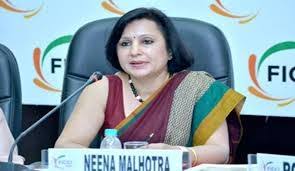
STOCKHOLM: Dr. Neena Malhotra appointed as the next Ambassador of India to the Kingdom of Sweden
2020 will be remembered as time of the pandemic. The fallout will be felt for years

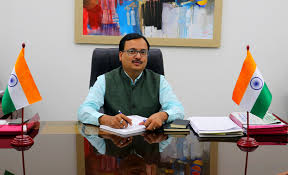
KINGSTON: Shri Subhash Prasad Gupta concurrently accredited as the next High Commissioner of India to St.Vincent and the Grenadines
-
 Diplomatic News1 year ago
STOCKHOLM: Dr. Neena Malhotra appointed as the next Ambassador of India to the Kingdom of Sweden
-
Opinions5 years ago
2020 will be remembered as time of the pandemic. The fallout will be felt for years
-
 Diplomatic News1 year ago
KINGSTON: Shri Subhash Prasad Gupta concurrently accredited as the next High Commissioner of India to St.Vincent and the Grenadines
-

 Technology2 years ago
MARYLAND: All About Pavan Davuluri, New Head Of Microsoft Windows
-
 Politcs2 years ago
LONDON: Indian-Origin Candidate On How He Plans To Win London Mayoral Polls
-

 Technology2 years ago
HOUSTON: Mumbai boys in the final rounds of FIRST World Robotics competition to be held in Houston
-
 Science2 years ago
WASHINGTON: Who Is Aroh Barjatya, Indian-Origin Researcher Who Led Recent NASA Mission
-
 Diplomatic News1 year ago
MELBOURNE: Fourth India-Australia 2+2 Secretary-level Consultations