
Entertainment
MUMBAI : Shakun Batra: I feel the most rewarding part of making a film is that it changes you

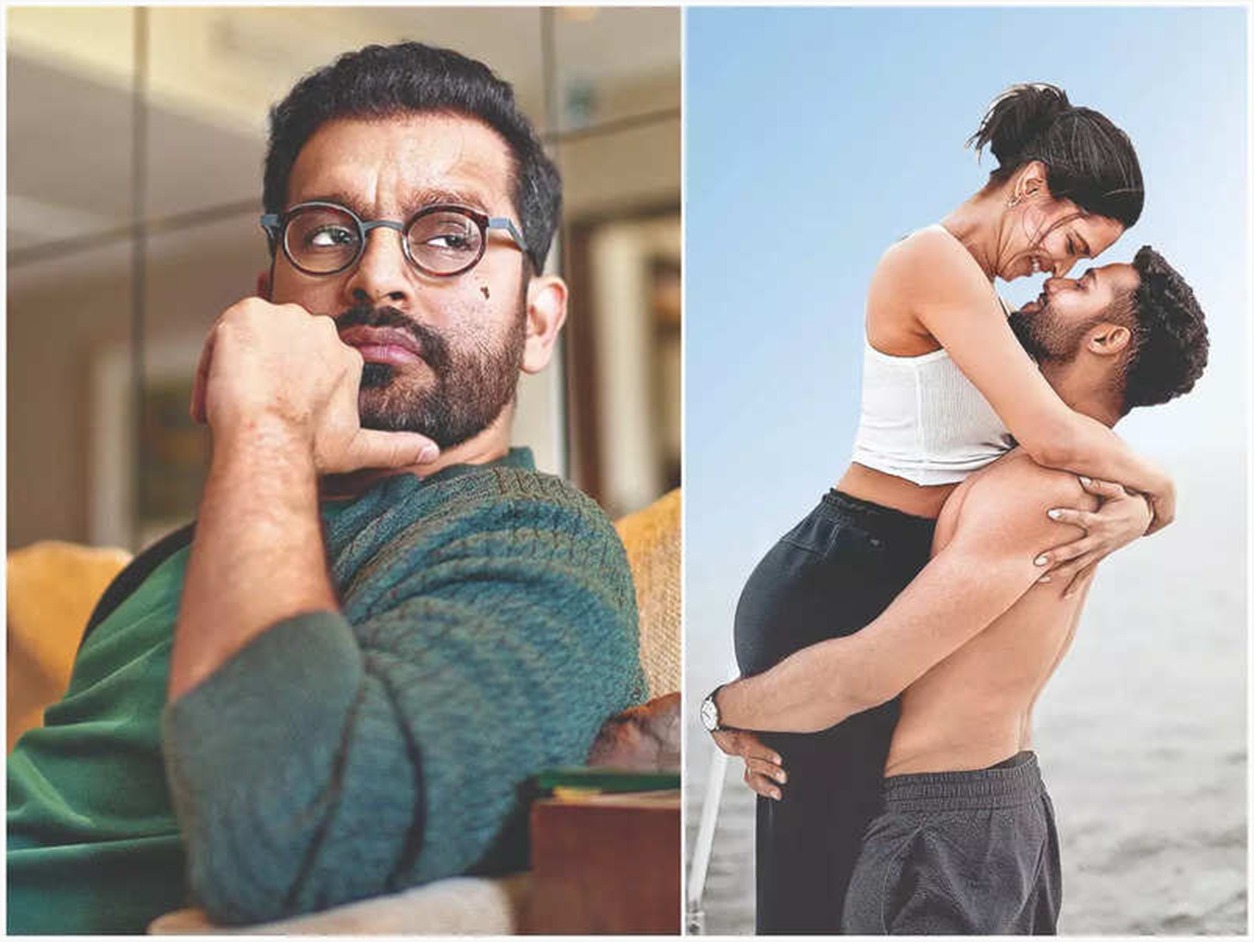
MUMBAI: He doesn’t claim to make tentpole films replete with elaborate song and dance moments. However, his stories are infused with several tender, yet emotionally powerful moments to hold on to, and in his own words, “It takes you on an emotional journey and makes you connect with characters and relationships.”
His last directorial was Kapoor & Sons, and now, the upcoming Gehraiyaan, an emotional and intimate drama that releases on Amazon Prime Video on February 11, seemingly dives into the deep end of love and relationships. And yes, it’s complicated.
From what it appears, the film delves with a certain maturity into the complexities and messiness that creep into a relationship. Has the attempt been to give a new voice to the way grown-up relationships and love is depicted on screen?
Yes, that was the intent from the word go. I had been thinking about the kind of oversimplified version of relationships we have been watching, and I felt that I wanted to make a grown-up film about grown-ups and see relationships from where I am today, at 40. I felt like all relationships came across like they were in their twenties. I constantly felt starved for stories that reflected more mature and complex relationships. That was a beginning point for me. I hope that comes across.
The last line in the trailer where Deepika Padukone asks Siddhant Chaturvedi, “Are we just messed up people,” and he turns around and tells her, “Haan, shaayad.” There is no pretence, it comes across with ease on screen, but at the same time, carries a lot of weight and depth. In our cinema, we seldom see characters baring their flaws and broken selves. And, of course, showing infidelity on screen has its challenges. Were there any moments of uncertainty about how it would unfold, what would be the reactions and how far could you go with the idea?
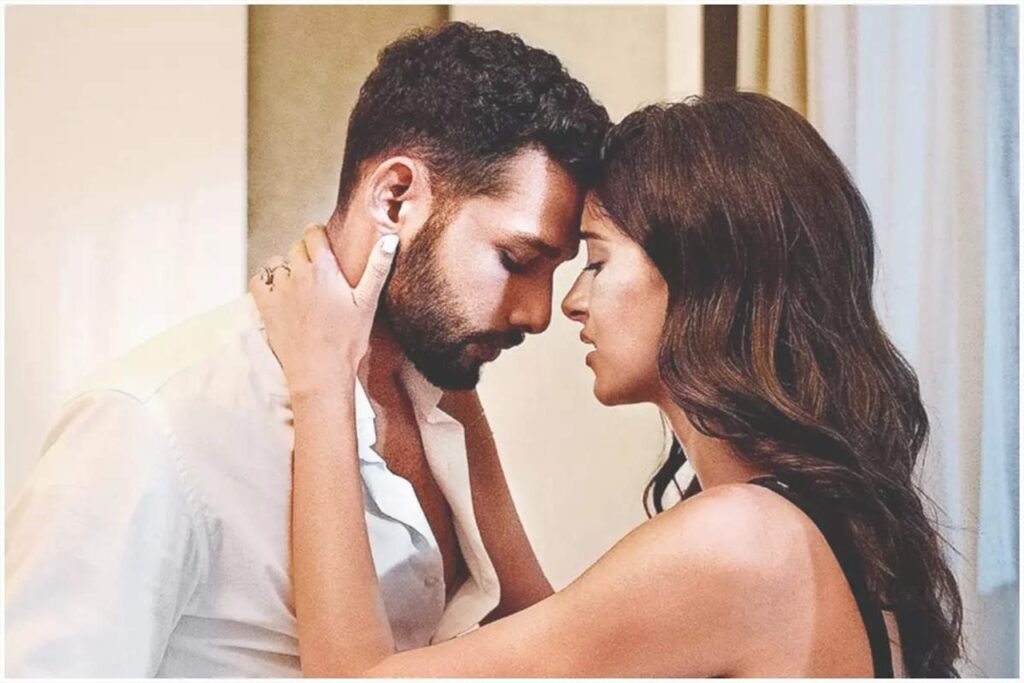
You are right, it carries a certain amount of weight and also gives you an insight into these characters. These are characters in their early thirties who are carrying the weight of their past, and they are aware of it. We wanted to make a film about relationships in your early thirties, and you know, physicality, your body and desires play a huge part.
We have shied away from it, including myself, in my first film Ek Main Aur Ekk Tu. This time around, it was very important for me to make sure that I address intimacy in a way that comes from these characters and helps take the story forward. I was scared and shy, and I started reading a lot and understanding how it was being done in the West.
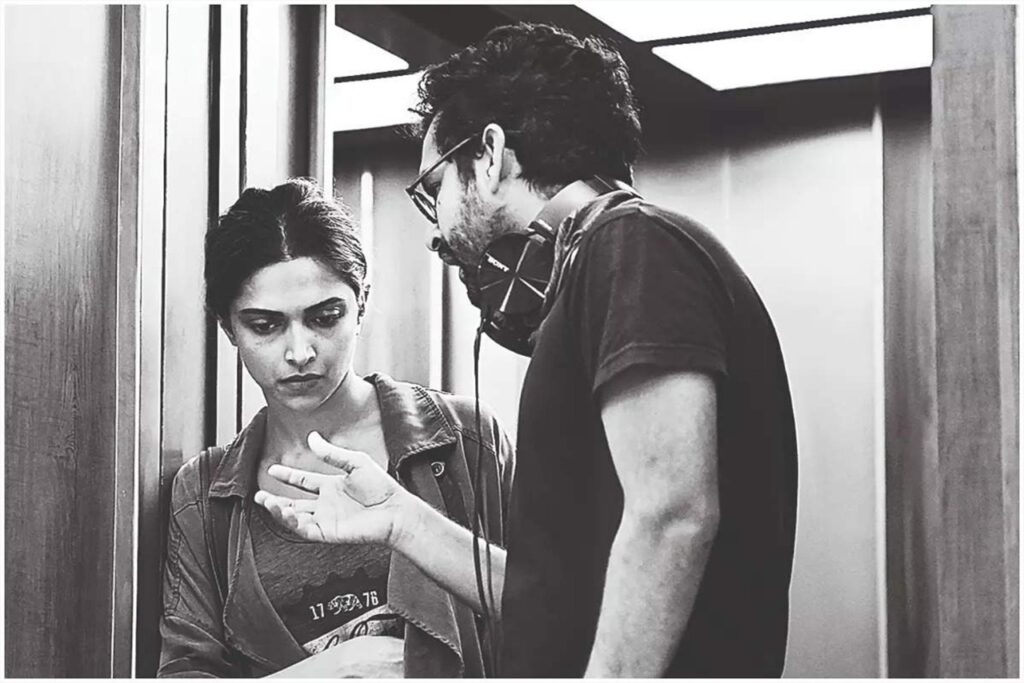
And then, the idea of getting an intimacy director on board came about?
Yes, I came across the idea of an intimacy coordinator in a post #MeToo world, and then, I called my very dear friend Dar Gai, and I brought her on board to collaborate. It made my life easy as we sat down and chalked out a process, routine and workshops. Those things are no different than a trust-building exercise. You create a safe environment for people to feel vulnerable, you create boundaries and understand consent. I was keen to also take a step in the right direction as a filmmaker and try to reform the system in whatever small way we could. As we do more grown-up storytelling, these things like having an intimacy director on board will become a more integral part of filmmaking. Right now, we are talking about it as it’s still new. My hope is to normalise it, so it isn’t a conversation.
In a film where the core lies in the interplay of emotions, I would assume that a lot of spontaneity unfolds on set. Even if there is a very well-etched-out character on paper, eventually, in front of the camera there could be ample room for improvisation, right? That, I guess also explains why your actors have been saying that you are a director of many takes…
Honestly, I am ambitious about where I’d like to see my actors go in their scenes. I want them to go to places where I haven’t seen them before, and sometimes, that doesn’t happen in take 5 or 6. I love this David Fincher (American director) quote where he talks about how we make these huge sets, we write our scripts, actors come and we put them up in hotels, and we are spending thousands of dollars in a day, and it’s not so that everyone can quickly run back.
No, you do that so that you have an environment where you can come closest to the best version of the scene and story. I do have my own OCD sometimes, but I also know that my actors are workhorses. They wouldn’t be satisfied if they didn’t get to a place where they felt that they justified the scene. I have a process that is demanding, and I am not apologetic about it. It’s not like we are repeating the same take, we are trying to arrive at a take that is a little more nuanced and textured, and those are the things that I love.
Do a lot of your own life experiences go into writing such characters that are deep and complex?
For me, filmmaking is a way of exploring myself. And I think it would only be a half-interesting profession if I didn’t use the movie to do that for me. It is so fascinating that we do not do 9-5 jobs, instead, we are in a profession that makes us delve deeper into our own psyche and feelings. So, a part of the reason and as hard as it is to come up with a story,
I really feel that the most rewarding part of making a film is that it changes you. It has an impact on your life, it changes who you are and makes you come to question things that you didn’t even know you had in your mind. I don’t know if you will ever find an answer to them, but it makes you reflect. I am not saying that you have to make dramas and serious films, but it’s a privilege to know that you have a job that pushes you to delve deeper.
Do you think that in the times ahead, the audience will be discerning about the kind of films that they want to watch on the big screen and what they want to view from the comfort of their homes, and ultimately, that will dictate which medium a filmmaker will choose to release their film?
I feel what will happen is the method of success will change. Right now, we are extremely seduced by the idea of box office as the metric of success. We need to redefine that. A lot of people are still running after box office numbers, as that gives you a clear idea of how the film is received. Some people don’t want to go the OTT way, and they are like… ‘Oh, it should not look like a small film.’ Also, I think that this notion that a big film is for the big screen and a small film is for the small screen — that is going to change.
There is also a notion that big stars are meant for the big screen. However, that perception seems to be evidently changing course.
Look, we know that the industry will not be how we see it today in the next five years. Instead, the idea is not to fight it, the idea is to open ourselves to change. Am I somebody who has a clear vision of what it will be?
No. I think we are all taking a journey together in that direction, and I am 100% open to seeing how things change and the conversations that happen around redefining success. So, I want to be part of this change that is happening. That is what matters, not the size of the screen or the format.
Your film apparently belongs to the domestic noir genre. Now, we haven’t heard of that in the context of our Indian cinema…
I love that genre; it is my go-to thing for movies, at least it was. People are used to putting things in a box and understanding the label before anything, especially, if you are trying to do something that steps out of the conventional. So, it becomes your responsibility to define it for them.
When I am pitching a movie, I always come up with these interesting terms that make people go and look up online (laughs!). It is part of my strategy, and it has done well so far. Is this film domestic noir? I would love to know your definition once you have watched it.








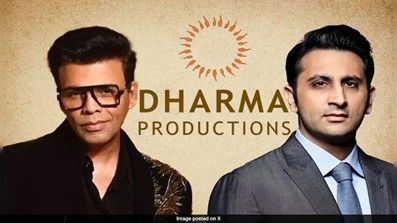
NEW DELHI: Business tycoon Adar Poonawalla has acquired a 50% stake in Karan Johar‘s Dharma Productions and Dharmatic Entertainment (collectively known as Dharma). According to a press note released by Dharma Productions, the deal, finalised for ₹1,000 crore, involves Poonawalla’s Serene Entertainment. The remaining 50% ownership will remain with Karan Johar, who will lead the company’s creative vision as the Executive Chairman.
As the Chief Executive Officer, Apoorva Mehta will collaborate with Karan to guide the strategic direction and ensure operational excellence within the organisation.
Adar Poonawalla expressed his happiness to join hands with Karan Johar. He said, “I am delighted to have the opportunity to partner with one of the most iconic production houses in our nation, along with my friend Karan Johar. We hope to build and grow Dharma and scale even greater heights in the years to come.”
Talking about the partnership, Karan Johar said, “From its inception, Dharma Productions has been synonymous with heartfelt storytelling that captures the essence of Indian culture. My father dreamed of creating films that would leave a lasting impact, and I’ve dedicated my career to expanding that vision.”
KJo added, “Today, as we join forces with Adar, a close friend and an exceptional visionary and innovator, we’re poised to elevate Dharma’s legacy to new heights. This partnership represents a perfect blend of our emotional storytelling prowess and forward-thinking business strategies. It’s about honoring our roots while embracing the future of global entertainment. Dharma’s journey has been remarkable, and this collaboration opens up a world of possibilities for creating content that will resonate across borders and generations.”
The CEO of Dharma, Apoorva Mehta said that this partnership allows the production house to take “bigger creative steps.” He said, “Over the years, I’ve witnessed Dharma’s transformation into a multi-faceted content powerhouse. This partnership with Adar realizes our vision and marks a new era where cinema, streaming, and global content converge. It enables us to explore new avenues in content creation and distribution, elevating the Indian entertainment ecosystem. More importantly, this investment allows us to take bigger creative steps.”
Dharma Productions was founded in 1976 by Karan Johar’s father, Yash Johar. The production house has been behind films such as Kuch Kuch Hota Hai, Kabhi Alvida Naa Kehna, Student of the Year, Good Newwz and Brahmastra: Part One – Shiva.
On the other hand, Dharmatic Entertainment was launched in 2018 and focuses on a wide array of projects, including web series, documentaries and feature films. Ajeeb Daastaans, Ae Watan Mere Watan, Koffee With Karan, Fabulous Lives of Bollywood Wives and The Tribe are produced by Dharmatic Entertainment.
Entertainment
MUMBAI: Shahid Kapoor opens up about the challenges faced by character actors in Bollywood
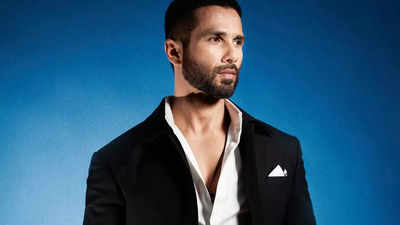
MUMBAI: There is a prejudice against star kids that every actor’s child is born with a silver spoon in his mouth. However, according to Shahid Kapoor, this is not true, as the power lies in the hands of superstars, big directors, producers, and not character actors.
In a conversation with Neha Dhupia on her chat show, Shahid Kapoor, who is the son of veteran actor Pankaj Kapur, delved into the nuanced dynamics of privilege and struggle within the Bollywood industry. Despite his lineage, Kapoor candidly addressed the challenges faced by character actors, highlighting the stark reality that only superstars wield significant influence while character actors often lack power.
Shahid expressed his belief in the importance of earning success through hard work, emphasizing the satisfaction derived from overcoming obstacles and earning recognition on merit. He said starting your struggle in a luxury car and then buying a luxury car after being successful doesn’t have any fun. One needs to know the challenge of traveling on local trains, and the complexity of arranging money for the first photoshoot, as the victory after this hard work tastes sweet.
He even reflected on being a background dancer during his initial days. He said, forget about enjoying a star status among the other background dancers, when you are working with choreographer Shaimak Dawar, you need to earn your place in the center. He expressed that there was a struggle and fight among his contemporaries to get a spot in the first row.
Amid these reflections, Kapoor remains focused on his craft, having recently commenced shooting for his upcoming action thriller, ‘Deva,’ which was announced last year.
Entertainment
MUMBAI: Pyaar Kiya To Darna Kya turns 26: Kajol says THIS was the symbol of an innocent girl back then
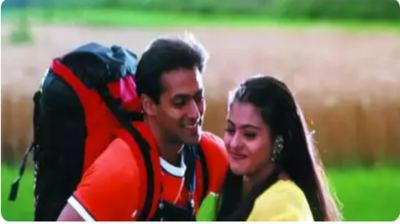
MUMBAI: One of the most successful movies of the 90s, Pyaar Kiya To Darna Kya brought on-screen Kajol and Salman Khan for the first time, in a simple boy meets girl love story. The movie also starred Arbaaz Khan and Dharmendra in key roles, and was directed by Salman’s brother Sohail Khan.
Today, the movie completed 26 years of its release, and marking the occasion, Kajol took to her IG handle to share some stills with Salman, Dharmendra and Arbaaz. In the movie, Kajol plays Muskaan, a simple village girl, who goes to the city for higher studies, where she meets the rich Suraj (Salman), and falls in love with him, despite their contrasting backgrounds. Sharing the same, Kajol wrote, “When tying ur hair in a plait was a symbol of an innocent girl 👧🤪 #26yearsofpyaarkiyatodarnakya”
While on Kajol, earlier this month, on Women’s day, March 8, Kajol posted a video paying tribute to the wonderful women in her life including her mother Tanuja, sisters Tanishaa Mukerji and Rani Mukerji, daughter Nysa Devgan and mother-in-law Veena Devgan. She shared a throwback video and said, “Happy #womensday to all these amazing women who don’t need a day to celebrate themselves coz they’re running their worlds everyday and they can and do take a day off when they need it without anyone’s permission! Cheers and kudos to this breed of #badasswomen!#internationalwomensday.”
On the work front, Kajol will next be seen in Kriti Sanon’s maiden production venture, ‘Do Patti’. The film marks the first-ever collaboration of Kajol and Kriti Sanon. The teaser of the film was launched in February, and Kajol essays the role of a cop in the film. Speaking about the film earlier , Kajol said, “Do Patti has a standout script that promises a unique blend of adventure and mystery. It is a story that is not only rooted in India but also promises the thrill that can be enjoyed by entertainment enthusiasts across borders ’’


MELBOURNE: Fourth India-Australia 2+2 Secretary-level Consultations

TORONTO: India’s response to diplomatic communication from Canada

NGERULMUD: Shri Harsh Kumar Jain concurrently accredited as the next Ambassador of India to the Republic of Palau

STOCKHOLM: Dr. Neena Malhotra appointed as the next Ambassador of India to the Kingdom of Sweden
2020 will be remembered as time of the pandemic. The fallout will be felt for years

MARYLAND: All About Pavan Davuluri, New Head Of Microsoft Windows
-
 Diplomatic News1 year ago
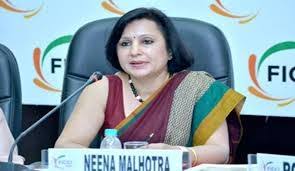
STOCKHOLM: Dr. Neena Malhotra appointed as the next Ambassador of India to the Kingdom of Sweden
-
Opinions5 years ago
2020 will be remembered as time of the pandemic. The fallout will be felt for years
-
 Technology2 years ago
MARYLAND: All About Pavan Davuluri, New Head Of Microsoft Windows
-
 Diplomatic News1 year ago
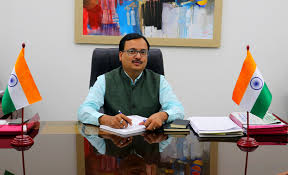
KINGSTON: Shri Subhash Prasad Gupta concurrently accredited as the next High Commissioner of India to St.Vincent and the Grenadines
-
 Politcs2 years ago
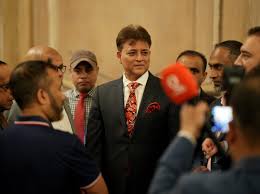
LONDON: Indian-Origin Candidate On How He Plans To Win London Mayoral Polls
-

 Science2 years ago
WASHINGTON: Who Is Aroh Barjatya, Indian-Origin Researcher Who Led Recent NASA Mission
-

 Technology2 years ago
HOUSTON: Mumbai boys in the final rounds of FIRST World Robotics competition to be held in Houston
-

 Sports2 years ago
DODOMA: Milind Soman At “Friendship” Marathon Organised By India, Tanzania