
Education
LONDON: UK’s New “High Potential” Visa And What It Means For Indian Students


LONDON: Graduates from the world’s top 50 non-UK universities, including Indian students, can now come and work in Britain through a new High Potential Individual (HPI) visa route launched in London on Monday.
In a joint announcement, Indian-origin UK Cabinet ministers Rishi Sunak and Priti Patel said the new “exciting” category under the post-Brexit points-based system is aimed at attracting the “best and brightest” talent from around the world, regardless of nationality.
Successful applicants will be given a two-year work visa, with a three-year visa offered to those with a PhD, without the need for a specific job offer in hand.
“This new visa offer means that the UK can continue to attract the best and brightest from across the globe,” said Chancellor Rishi Sunak.
“The route means that the UK will grow as a leading international hub for innovation, creativity and entrepreneurship. We want the businesses of tomorrow to be built here today – which is why I call on students to take advantage of this incredible opportunity to forge their careers here,” he said.
“The UK is already home to some of the most ground-breaking start-ups, on the forefront of R&D and an incredibly diverse and exciting place to live – come and join in,” added UK-born Sunak, himself an MBA from Stanford University in the US.
Under the new route, the world’s top graduates in subjects such as science, engineering and medical research will be encouraged to bring their skills to the UK after graduating from prestigious universities such as Harvard, Stanford and MIT.
“I am proud to be launching this new and exciting route as part of our points-based immigration system which puts ability and talent first – not where someone comes from,” said UK Home Secretary Priti Patel.
“This government is delivering for the British people by bringing in the high skills and talent our country and businesses need,” she said.
The top 50 list of universities has been identified from the rankings lists produced annually by ‘QS’, ‘Times Higher Education’ and the ‘Academic Ranking of World Universities’ and covers universities from the US, Canada, Japan, Germany, Australia, Hong Kong, China, Singapore, France, Sweden and Switzerland.
The new HPI visa route will cost around GBP 715 and have the option to bring in dependents or close family members. According to the UK Home Office, an applicant applying under this route must have funds of at least GBP 1,270 and to be eligible, an institution must be outside of the UK and must have featured in the top 50 of at least two of the three rankings for the year in which the applicant was awarded the qualification.
“Graduates from the listed universities are eligible for the High Potential Individual route scheme regardless of nationality,” a Home Office spokesperson said.
“Each of the eligible universities attracts students from across the globe to study. There are several other routes eligible for graduates from other universities including the Graduate, Skilled Worker and Global Talent route,” the spokesperson said.
The Home Office notes that the list of the top 50 Global Institutes has been identified from three of the world’s most reliable university rankings lists, which are widely cited by the education system and used in immigration systems globally.
“Using a combination of these lists provides independent validation for institutions and opens up the opportunity for new international universities to move up the ranks and join this list in the future,” the spokesperson added.
The HPI visa is intended to attract an unlimited number of talented graduates at the early stages of their careers, who “demonstrate exceptional promise, providing a highly desirable and able pool of mobile talent from which UK employers can recruit”.
Meanwhile, international students, including Indians, who are studying in the UK at any of the top universities are already eligible to stay for up to three years through the Graduate visa – popularly referred to as a post-study work visa – opened in July last year.
The UK government said these new visas form part of a series of changes to the country’s immigration system after leaving the European Union (EU) and grant visas “based on the skills they have to offer and the contribution they can make, not where they come from”.
A new Global Business Mobility route opened in April this year to simplify and improve various routes to enable businesses to expand. Later this year, the Scale-up visa route is aimed at supporting businesses in talent recruitment by enabling them to bring employees to the UK.











Education
LONDON: 3 Indian-Origin Candidates Shortlisted For Oxford Chancellor’s Post, Imran Khan Out

LONDON: The University of Oxford today announced the final candidates for their Chancellor election. Three Indian-origin individuals are among the 38 finalists, but former Pakistani Prime Minister Imran Khan was not included.
Diverse Field Of Contenders
The finalists come from various backgrounds including academics, politicians, and business leaders. Ankur Shiv Bhandari (first Indian-origin Mayor of Bracknell Forest), Nirpal Singh Paul Bhangal (Professor of International Entrepreneurship), and Pratik Tarvadi (medical professional) will be competing for the position.
Former Conservative Party leader Lord William Hague and former Labour politician Lord Peter Mandelson are among the senior politicians selected, however, Khan is deemed to have been disqualified following the selection process.
38 Candidates Meet Tough Criteria
“Applications were considered by the Chancellor’s Election Committee solely on the four exclusion criteria set out in the university’s regulations. All applicants have been notified whether their submissions have been successful,” a university statement reads.
To qualify for the unpaid position, candidates were required to meet stringent criteria. They had to demonstrate exceptional accomplishments in their field, as well as the ability to inspire respect from a wider audience.
Additionally, candidates were expected to have a profound understanding of the university’s research and academic goals, its diverse global community, and its aspiration to maintain its status as a world-class institution. Furthermore, they needed to possess the capacity and desire to elevate the university’s reputation both domestically and internationally.
Although the university did not provide specific reasons for individual rejections, some experts suggested that Khan’s criminal convictions in his home country – Pakistan, might have disqualified the former Oxford graduate.
The University’s Convocation, composed of faculty and alumni, will now conduct an online election to choose Lord Patten’s successor. Lord Patten, a former governor of Hong Kong, will step down from his 21-year tenure as Chancellor at the end of Trinity Term 2024.
In the first round of voting, which begins on October 28, voters can rank as many candidates as they wish. The top five candidates, to be announced on November 4, will advance to the second round of voting, scheduled for November 18. The University of Oxford’s new Chancellor will be revealed on November 25.
In his ‘Statement of Interest,’ Mr Bhandari expressed his desire to become Chancellor of Oxford University. He described the university as ‘a temple of learning, research, and a beacon of history’ and stated that serving as Chancellor would be ‘the honor of my life.’ Mr Bhandari believes he is well-suited for the role and can contribute to the university’s ongoing mission.
Mr Bhangal highlights his global connections, deep understanding of Oxford and Oxford University, and experience as a course developer and visiting professor. He believes his strong business acumen, multicultural competence, and government contacts in major economies worldwide make him a valuable asset to Oxford University in the 21st century.
Tarvadi sees the Chancellor position as an opportunity to promote inclusivity, innovation, and a global impact. He asserts that his international experience and network would be crucial in establishing new partnerships and strengthening existing ones, thereby ensuring Oxford’s continued leadership in global academic and research endeavors.
Oxford Chancellor – A Decade Of Leadership
The incoming Chancellor will serve a fixed term of no more than 10 years, in line with recent amendments to the university’s statutes.
The Chancellor serves as the ceremonial head of Oxford University, presiding over significant ceremonies and chairing the Committee to Elect the Vice-Chancellor. Beyond these formal responsibilities, the Chancellor engages in advocacy, advisory, and fundraising activities, representing the university at various national and international events.
The position of Chancellor has previously been held by former Conservative prime minister Harold Macmillan, former Labour home secretary and president of the European Commission Roy Jenkins, and most recently by Lord Patten.
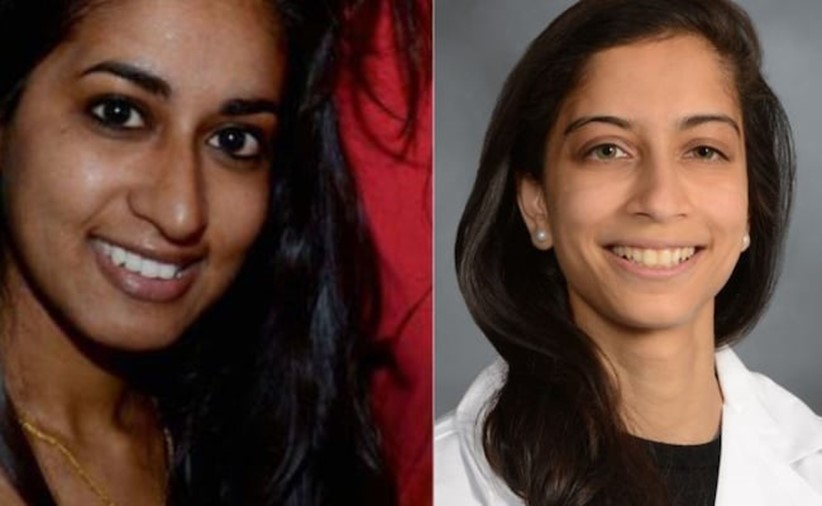
WASHINGTON: Two Indian Americans, Padmini Pillai from Boston and Nalini Tata from New York, were appointed to the 2024-2025 class of White House Fellows on Thursday.
In all, 15 exceptionally-talented individuals from across the United States have been named to this prestigious programme. Fellows spend a year working with senior White House staff, cabinet secretaries and other top-ranking administration officials, and leave the administration equipped to serve as better leaders in their communities.
While Ms Tata is placed at the White House Office of Cabinet Affairs, Padmini Pillai is placed at the Social Security Administration, the White House said in a media release.
Newton, Massachusetts, Ms Pillai is an immunoengineer bridging the gap between discoveries in immunology and advances in biomaterial design to treat human disease.
She has led a team at the MIT developing a tumour-selective nanotherapy to eliminate hard-to-treat cancers. During the COVID-19 pandemic, Ms Pillai was featured in several media outlets, including “CNBC”, “The Atlantic” and “The New York Times”, to discuss vaccination, immunity and the disproportionate impact of the pandemic on vulnerable communities.
Ms Pillai received her PhD in immunobiology from the Yale University and a BA in biochemistry from the Regis College.
Ms Tata is a neurosurgery resident at the New York-Presbyterian Weill Cornell Medical Centre/Memorial Sloan Kettering Cancer Centre, where she helps treat the spectrum of emergency and elective neurosurgical conditions between a level-1 trauma centre and a world-renowned cancer institute.
Her published work spans clinical and non-scientific journals, with a focus on advancing equity in access to care. Her career in neurosurgery and long-standing interest in public policy are closely bound by a deep-rooted dedication to public service. She received her BSc in neurobiology from the Brown University, MPhil from the University of Cambridge, MD from the Northwestern Feinberg School of Medicine and MPP in Democracy, Politics, and Institutions from the Harvard Kennedy School of Government.
According to the White House, this year’s Fellows advanced through a highly-competitive selection process, and they are a remarkably gifted, passionate and accomplished group. These Fellows bring experience from across the country and from a broad cross-section of professions, including from the private sector, state government, academia, non-profits, medicine and the armed forces, it said.
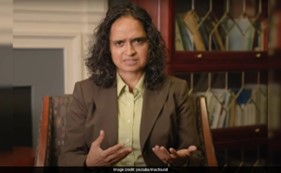
NEW YORK: An Indian-American professor, Shailaja Paik, conducting research on and writing about Dalit women has received a $800,000 “genius” grant from the MacArthur Foundation which gives out awards every year to people with extraordinary achievements or potential.
Announcing her fellowship, the Foundation said, “Through her focus on the multifaceted experiences of Dalit women, Paik elucidates the enduring nature of caste discrimination and the forces that perpetuate untouchability.”
Ms Paik is a distinguished research professor of history at the University of Cincinnati, where she is also an affiliate faculty in Women’s, Gender, and Sexuality Studies, and Asian Studies.
“Paik provides new insight into the history of caste domination and traces the ways in which gender and sexuality are used to deny Dalit women dignity and personhood,” the Foundation said.
The MacArthur Fellowships, popularly known as “genius” grants, are given to people across a spectrum from academia and science to arts and activism, who according to the Foundation are “extraordinarily talented and creative individuals as an investment in their potential”.
The selections are made anonymously based on recommendations received and it does not allow applications or lobbying for the grants, which come without any strings and are spread over five years.
The Foundation said that her recent project focused “on the lives of women performers of Tamasha, a popular form of bawdy folk theatre that has been practised predominantly by Dalits in Maharashtra for centuries”.
“Despite the state’s efforts to reframe Tamasha as an honourable and quintessentially Marathi cultural practice, ashlil (the mark of vulgarity) sticks to Dalit Tamasha women,” it said.
Based on the project, she published a book, “The Vulgarity of Caste: Dalits, Sexuality, and Humanity in Modern India”.
It said, “Paik also critiques the narrative of Dr B.R. Ambedkar, the twentieth century’s most influential caste abolitionist” and the architect of India’s Constitution.
In an interview with National Public Radio (NPR), the US government-subsidised broadcaster, she said that she was herself a member of the Dalit community who grew up in Pune in a slum area and was inspired by her father’s dedication to education.
After getting her masters’ degree from the Savitribai Phule University in Pune, she went to the University of Warwick in the UK for her PhD.
She did a stint as a visiting assistant professor of South Asian history at Yale University.
Since the programme began in 1981, fellowships have been granted to 1,153 people.
Previous MacArthur Fellows include writers Ruth Prawer Jhabvala, and Ved Mehta, poet A.K. Ramanujam, economists Raj Chetty and Sendhil Mullainathan, mathematician L Mahadevan, computer scientists Subhash Khot and Shwetak Patel, physical biologist Manu Prakash, musician Vijay Gupta, community organiser Raj Jayadev, and lawyer and activist Sujatha Baliga.


MELBOURNE: Fourth India-Australia 2+2 Secretary-level Consultations

TORONTO: India’s response to diplomatic communication from Canada

NGERULMUD: Shri Harsh Kumar Jain concurrently accredited as the next Ambassador of India to the Republic of Palau

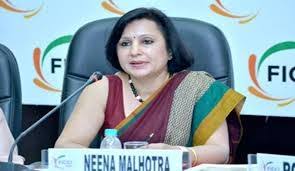
STOCKHOLM: Dr. Neena Malhotra appointed as the next Ambassador of India to the Kingdom of Sweden
2020 will be remembered as time of the pandemic. The fallout will be felt for years

MARYLAND: All About Pavan Davuluri, New Head Of Microsoft Windows
-
 Diplomatic News1 year ago
STOCKHOLM: Dr. Neena Malhotra appointed as the next Ambassador of India to the Kingdom of Sweden
-
Opinions5 years ago
2020 will be remembered as time of the pandemic. The fallout will be felt for years
-
 Technology2 years ago
MARYLAND: All About Pavan Davuluri, New Head Of Microsoft Windows
-
 Diplomatic News1 year ago
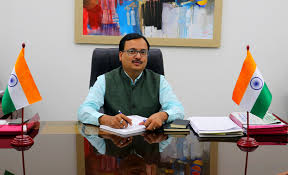
KINGSTON: Shri Subhash Prasad Gupta concurrently accredited as the next High Commissioner of India to St.Vincent and the Grenadines
-
 Politcs2 years ago
LONDON: Indian-Origin Candidate On How He Plans To Win London Mayoral Polls
-
 Science2 years ago
WASHINGTON: Who Is Aroh Barjatya, Indian-Origin Researcher Who Led Recent NASA Mission
-

 Technology2 years ago
HOUSTON: Mumbai boys in the final rounds of FIRST World Robotics competition to be held in Houston
-

 Sports2 years ago
DODOMA: Milind Soman At “Friendship” Marathon Organised By India, Tanzania