
Technology
LONDON : Fast Fiber Networks Have Quietly Won the Broadband War


LONDON: Government subsidies and pandemic-era telecommuting have quietly fueled the growth of broadband fiber networks, propelling the fast connection technology from an exotic, expensive technology niche to the mainstream.
In the US, the Rural Digital Opportunity Fund and Broadband Equity, Access and Deployment programs encouraged internet service providers to bring higher-speed access to places that previously wouldn’t have been profitable to serve. Government support also has helped improve broadband in Sweden, Lithuania, Italy and other European nations.
A global pandemic, which turned our homes into offices and schoolrooms, also encouraged the upgrade to faster broadband. Work video conferences and Zoom school lessons demanded more data — often at the same time — than we had previously needed. An explosion in the use of streaming video services like Netflix, HBO Max, Apple TV Plus and Disney Plus added to the demand for fiber at home.
Fiber broadband now has reached a tipping point, passing both cable and DSL in the 38 member countries of the Organization for Economic Cooperation and Development, a club of relatively rich countries. Fiber accounted for 35% of subscriptions compared with 32% for cable and 27% for DSL in 2021, according to OECD data released in July. From 2020 to 2021, fiber broadband subscriptions surged 40%.
The rapid embrace of fiber comes as our homes become more connected. A decade ago, a household might have had a few laptops and a couple smartphones connected to a local network. But an explosion of streaming services, tablets and smart home devices has created a need for fat data pipes, like those fiber offer, that was out of reach for most people until recently.
“It’s becoming the new normal,” said Jeff Heynen, a broadband analyst at the Dell’Oro Group.
Broadband delivered by fiber optic lines has surpassed older cable and DSL network technology using copper cables in the 38 relatively wealthy nations tracked by the OECD.
Data from OECD; graph by Stephen Shankland/CNET
When the broadband revolution began in the 1990s, phone companies upgraded their decades-old copper wires to DSL service, while cable companies started using their coaxial cables to deliver data alongside TV shows. The fastest DSL download speeds rarely surpass a few tens of megabits per second, however, and cable usually is in the range of 25 to a few hundred megabits per second. By contrast, fiber broadband easily reaches 1 gigabit per second for downloads and, in sharp contrast to cable and DSL, uploads that are just as fast.
Longer term broadband benefits
Fiber’s leap in speed may be difficult to discern if you’re upgrading from a reasonably good cable internet service. Most services and websites don’t supply data at gigabit speeds.
And a network, no matter how fast, won’t help people who can’t access it. Fiber broadband does little to address the digital divide, particularly given that programs to bring broadband to lower income families are expiring. Fiber broadband is a premium option. Even where it’s available, it isn’t always affordable.
As with 5G mobile networks, however, the full impact of the improvements may come over time. Better speeds and lower communication delays pave the way for the more deeply digital lives we’ll soon be living. Networked devices, streaming video, remote work, smart homes and software updates for our cars all add up to a need for more network capacity.
On Wednesday, Google Fiber staked its place in the fiber broadband market, expanding to five new states after a five-year hiatus. The company helped kick off the gigabit fiber revolution, though other companies, such as AT&T Fiber, Ting and Sonic, are now carrying the mantle.
Mark Strama, a former Texas state representative who runs Google Fiber’s expansion efforts, said demand for the company’s gigabit service forced it to move more deliberately. Google Fiber had a backlog of customers trying to get onto the service in the 15 cities it already operated that had to be addressed first.
Google Fiber, which hasn’t participated in any government subsidy programs, has benefited from faster, cheaper fiber installation methods, Strama said. About eight years ago, the company began using “micro trenching,” a technique that buries fiber optic cable at 6 inches, rather than the previous standard of 3 feet. Now, Google Fiber can reach 500 new homes in a weekend, Strama said.
Dumping DSL
Heynen, the analyst, said many customers ditched DSL for cable or fiber as the pandemic revealed the technology’s shortcomings. Now, as we become a culture of YouTubers and TikTokers, upload speed will drive demand for fiber networks, he said.
Fiber’s “symmetric” data rates are also important for appearing in videoconferences, he added. The physics of transmitting data over fiber optic strands instead of electrical signals over copper wires does away with many of the limits that have bogged down internet service providers.
“With fiber, the only limitations on speed are the electronics on either end of the connection,” Heynen said. “It’s a real sea change.”










Technology
CAIRO: Indian-Origin Teen, Son Of IIT-JEE Topper, Wins Gold At World’s Toughest Programming Contest
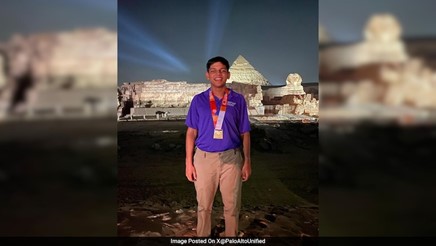
CAIRO: Agastya Goel, a 17-year-old Indian-origin student from California, has won his second gold medal at the 36th International Olympiad in Informatics (IOI), which took place in Egypt. Agastya, son of Stanford professor Ashish Goel, secured the fourth overall rank at the prestigious contest, also dubbed as the world’s toughest programming competition for high school students.
Agastya scored 438.97 out of 600, while Kangyang Zhou of China topped the event with a perfect score of 600. A total of 34 students were awarded gold medals this year, including fellow Indian participant Kshitij Sodani, who ranked 21st.
This marks the 17-year-old’s second gold at the IOI. His father, Ashish Goel, made waves in 1990 by topping the IIT-JEE exam before going on to build a distinguished career at companies like Twitter and Stripe.
Who is Agastya Goel?
Agastya Goel, a junior at Henry M Gunn High School in Palo Alto, California, loves physics, computer science, and music. His hobbies include tennis, hiking, stargazing, and playing the guitar and piano.
Agastya’s interest in physics began at a young age, with his father introducing him to the subject during car rides and hikes. One memorable experience was learning about projectile motion while playing Angry Birds. This sparked a fascination with physics that has only grown stronger over the years.
Agastya’s competitive spirit was ignited through the USACO competition series, which he started preparing for in 6th grade. His hard work earned him a spot at the USACO training camp in his freshman year, followed by selection for the US IOI team.
Initially, Agastya considered majoring in computer science, but after exploring physics, he discovered a new passion. He spent 14 days intensively studying physics over winter break and was hooked.
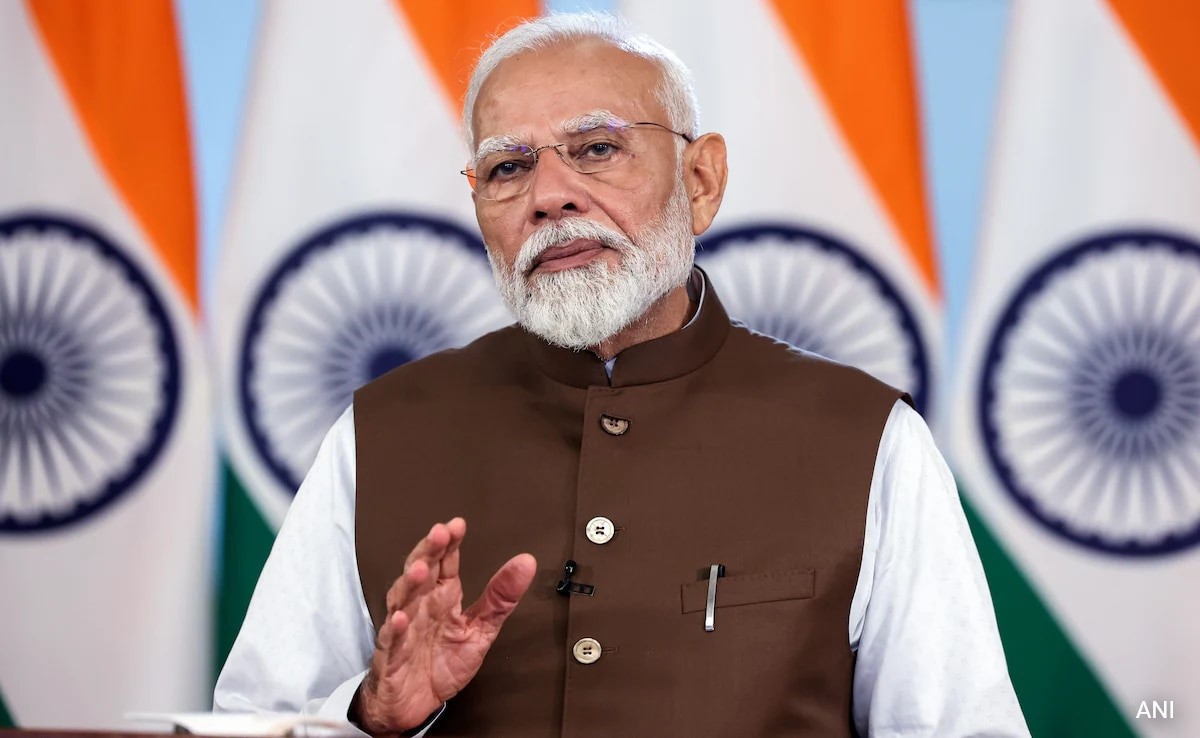
CALIFORNIA: Indian-origin business leaders from the IT industry lauded Prime Minister Narendra Modi’s leadership for putting India on the global map as a “credible innovator and leader” for all nations to invest in and grow.
Speaking at the Indiaspora AI Summit 2024 on ‘Can Artificial intelligence be good force for future or not’ at the University of Stanford on April 26, Informatica CEO Amit Walia said, “India is perceived very differently in the global space. It’s a space of innovation. It’s a space of human capital. It’s a space of progress and innovation. And as we look forward, what Modi has been able to do is put India into the global map as a credible innovator, leader for all countries to invest in and grow.”
Speaking at the same event, Elastic CEO Ashutosh Kulkarni said that PM Modi and the government have been doing amazing work.
Mr Kulkarni said, “The Prime Minister and the government has been doing some amazing work and their focus on being open to innovation, their focus on industry, their focus on bringing the population, India is now one of the, it is the largest, most populous country in the world and bringing that population towards progress, the way they have tapped into the potential of this country has just been fantastic.”
Calling PM Modi’s era “amazing,” Mayfield Fund Managing Partner Navin Chaddha praised PM Modi’s leadership for ties between India and the US and his ability to connect the Indian diaspora which he stressed is doing extremely well in the tech industry. He noted that India is making progress in using technology and improving its infrastructure.
Navin Chaddha said, “The Modi era has been amazing, the kind of relationship they’ve been able to build with the United States. And to be able to connect the Indian diaspora, which is doing extremely well in the tech industry, hats off to them. And also the progress India is making in using technology, improving the infrastructure is just amazing. So, Mr Modi, keep doing what you’re doing.”
Rohit Jain, Speaker and Moderator – CIO, Harvard Business School, called on PM Modi to increase his guarantee, as he has always delivered. The event on Artificial Intelligence was organised to deliberate and discuss artificial intelligence.
He said, “Mr Modi needs to increase his guarantee because he’s always been delivering. So, I think his promises have been 100 per cent true. So, he now needs to promise 110 per cent and then again he’ll deliver on that. Mr Modi, thank you for what you have done, not only for India, but for the world.”
Priya Rajan, Managing Director, National Venture Coverage and Business Development, MUFG lauded PM Modi’s leadership in the entrepreneurial ecosystem. He stated that a number of VCs across the globe want to invest in India.
She said, “I see the Modi magic play is in the entrepreneurial ecosystem, which is an adventure ecosystem. So you can see the number of VCs now wanting to invest, not just where in India, investing in India, but world investors around the world wanting to do things. And you’re seeing kind of US, a ton of US global investors now setting up shops in India. I think that’s all coming back to what Modi magic has created.”
At the event, prominent Indian diaspora, along with the esteemed corporate leaders from the US shared their insights on the topic “Can Artificial Intelligence be a force for future or not.”
Rajya Sabha MP Satnam Singh Sandhu participated in the event. Notably, PM Modi has been advocating that artificial intelligence can provide a great support to help humanity’s development in the 21st century.
Taking to X, Satnam Singh Sandhu stated, “Indiaspora AI Summit, Stanford University, USA: Delighted to be a part of the summit where we had @ericgarcetti, US Ambassador to India, Indian Diaspora and business leaders from IT sectors who reiterated how PM @narendramodi Ji is leveraging AI to shape nation’s future strategy to build Viksit Bharat by 2047.”
“They highlighted PM Modi’s tech-savvy approach and his efforts to promote AI applications in various sectors like agriculture, health-care, and education for social development and inclusive growth. They also condemned the Western bias against India to rank them lower in parameters like Ease of doing business, and cite the irregularities while computing such rankings,” he added.
Earlier in December, PM Narendra Modi said that artificial intelligence is a dynamic issue and that India is working on creating a global framework for AI. He made the remarks while interacting with the participants of the Grand Finale of the Smart India Hackathon.
Speaking to the participants via video conferencing, the Prime Minister said, “AI (Artificial Intelligence) is a very dynamic issue. If one solution is brought in, the mischievous people will find another way. We have to be very alert to any new technology. It can be very useful if used within rules, but if it is used in the wrong way, it can create a lot of problems.”
“We all are aware of the generative AI-created deep fake videos that look completely real. Hence we need to be more alert before believing any photo or video. India is working on creating a global framework for AI,” said PM Modi.
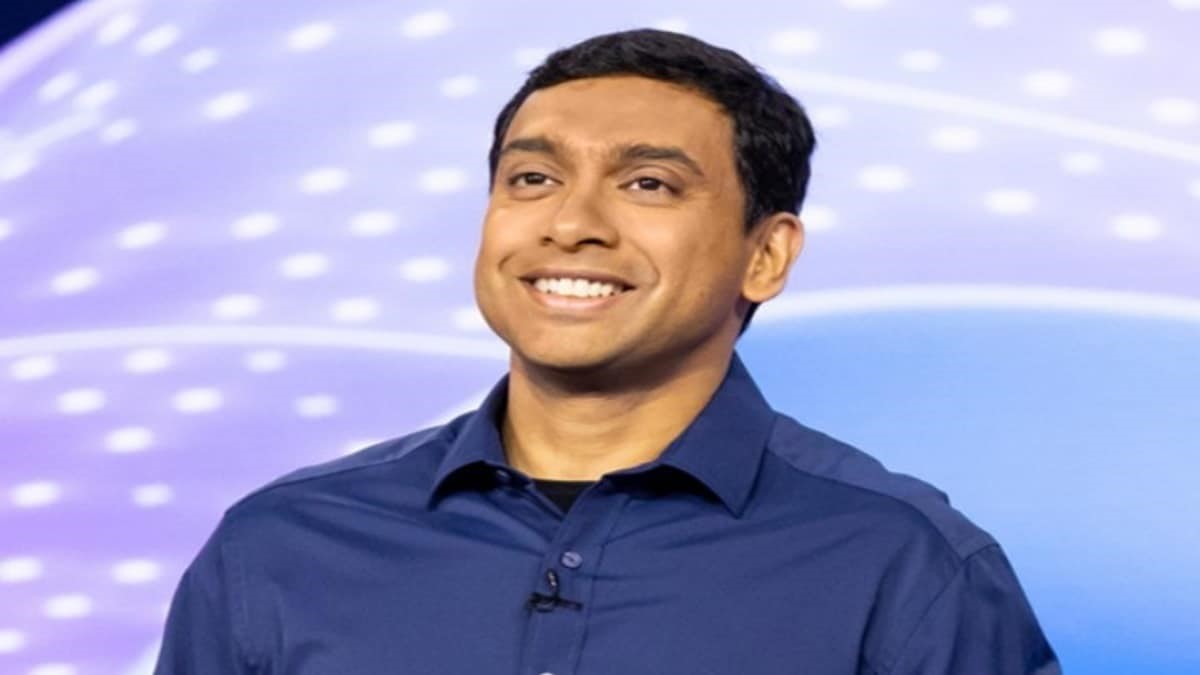
SILICON VALLEY: Pavan Davuluri, an IIT Madras graduate, has been appointed the new head of Microsoft Windows and Surface. He succeeds Panos Panay, who left for Amazon last year. Mr Davuluri previously oversaw the Surface group and now leads both Windows and Surface departments.
Rajesh Jha, Microsoft’s head of experiences and devices, said, “As part of this change, we are bringing together the Windows Experiences and Windows + Devices teams as a core part of the Experiences + Devices (E+D) division. This will enable us to take a holistic approach to building silicon, systems, experiences, and devices that span Windows client and cloud for this AI era.”
“Pavan Davuluri will lead this team and continue to report to me. Shilpa Ranganathan and Jeff Johnson and their teams will report directly to Pavan. The Windows team will continue to work closely with the Microsoft AI team on AI, silicon, and experiences,” he said.
Who is Pavan Davuluri?
- Pavan Kumar Davuluri is an IIT Madras graduate. He completed his post-graduation from the University of Maryland, according to his LinkedIn
- Mr Davuluri began his career at Microsoft as a Reliability Component Manager in 2001.
- Mr Davuluri has held various leadership positions over his 23-year tenure at Microsoft, working across PC and Xbox hardware, Surface, and Windows.
- Pavan Davuluri took on the role of corporate vice president for Windows and Silicon & Systems Integration in 2021, overseeing efforts to optimise Windows for Arm-based devices.
- Mr Davuluri was recently assigned to lead Windows engineering alongside his existing responsibilities in Microsoft’s hardware endeavours. He will lead a dedicated team developing silicon systems for Microsoft’s Windows and Surface products.

MELBOURNE: Fourth India-Australia 2+2 Secretary-level Consultations

TORONTO: India’s response to diplomatic communication from Canada

NGERULMUD: Shri Harsh Kumar Jain concurrently accredited as the next Ambassador of India to the Republic of Palau

STOCKHOLM: Dr. Neena Malhotra appointed as the next Ambassador of India to the Kingdom of Sweden
2020 will be remembered as time of the pandemic. The fallout will be felt for years

MARYLAND: All About Pavan Davuluri, New Head Of Microsoft Windows
-
 Diplomatic News1 year ago
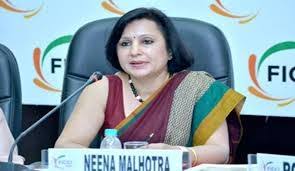
STOCKHOLM: Dr. Neena Malhotra appointed as the next Ambassador of India to the Kingdom of Sweden
-
Opinions5 years ago
2020 will be remembered as time of the pandemic. The fallout will be felt for years
-
 Technology2 years ago
MARYLAND: All About Pavan Davuluri, New Head Of Microsoft Windows
-
 Diplomatic News1 year ago
KINGSTON: Shri Subhash Prasad Gupta concurrently accredited as the next High Commissioner of India to St.Vincent and the Grenadines
-
 Politcs2 years ago
LONDON: Indian-Origin Candidate On How He Plans To Win London Mayoral Polls
-
 Science2 years ago
WASHINGTON: Who Is Aroh Barjatya, Indian-Origin Researcher Who Led Recent NASA Mission
-
 Technology2 years ago
HOUSTON: Mumbai boys in the final rounds of FIRST World Robotics competition to be held in Houston
-

 Sports2 years ago
DODOMA: Milind Soman At “Friendship” Marathon Organised By India, Tanzania