
Diplomatic News
DUBAI: Secret India-Pakistan peace roadmap brokered by top UAE royals

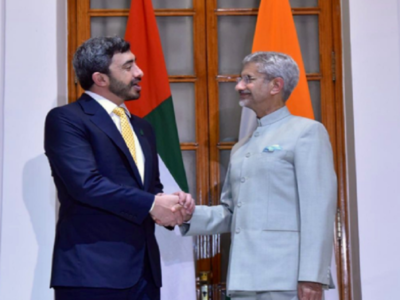
DUBAI: About 24 hours after military
chiefs from India and Pakistan surprised the world last month with a rare joint
commitment to respect a 2003 ceasefire agreement, the top diplomat of the
United Arab Emirates popped over to New Delhi for a quick one-day visit.
The official UAE readout of the February 26 meeting gave few clues of what
foreign minister Sheikh Abdullah bin Zayed spoke about with Indian counterpart
Subrahmanyam Jaishankar, noting they “discussed all regional and international
issues of common interest and exchanged views on them.”
Yet behind closed doors, the India-Pakistan ceasefire marked a milestone in secret talks brokered by the UAE that began months earlier, according to officials aware of the situation who asked not to be identified. The ceasefire, one said, is only the beginning of a larger roadmap to forge a lasting peace between the neighbors, both of which have nuclear weapons and spar regularly over a decades-old territory dispute.
The next step in the process, the official said, involves both sides reinstating envoys in New Delhi and Islamabad, who were pulled in 2019 after Pakistan protested India’s move to revoke seven decades of autonomy for Jammu and Kashmir. Then comes the hard part: Talks on resuming trade and a lasting resolution on Kashmir, the subject of three wars since India and Pakistan became independent from Britain in 1947.
Over the years, India and Pakistan have routinely made peace overtures only to
have them quickly fall through, particularly as both sides frequently use the
issue to stir up emotions around election time. Officials said expectations
were low that the current detente would achieve much beyond the return of
envoys and a resumption of trade through their Punjab land border.
But this process appears to be the most concerted effort in years, and comes as
the Biden administration is seeking wider peace talks on Afghanistan — a place
both countries for years have battled for influence. Indian Prime Minister
Narendra Modi wants to shore up growth and focus military resources on the
border with China, while Pakistan’s leaders are also facing economic woes and
looking to make a good impression with the US and other powers.
Last week Pakistan army chief General Qamar Javed Bajwa asked India “to bury
the past and move forward” while saying the military was ready to enter talks
to resolve “all our outstanding issues.” The comments came a day after Prime
Minister Imran Khan after called for a resolution on Kashmir, which he
described as “the one issue that holds us back.”
The UAE, which has historic trade and diplomatic links with India and Pakistan,
has taken a more assertive international role under de facto ruler Sheikh
Mohammed bin Zayed Al Nahyan. The biggest shift has been in the Middle East
where the Gulf Arab state has intervened in conflicts and backed groups and
regional leaders. But it has also looked to Asia as it strengthens political
alliances beyond its role as a global trade and logistics hub.
India-Pakistan ties were effectively cut off two years ago after a terrorist
attack in Kashmir killed 40 Indian soldiers, prompting Modi’s government to
authorize air strikes on alleged terror facilities inside Pakistan. The joint
statement last month said the two sides “agreed to address each other’s core
issues,” signaling a wider discussion on Kashmir and terrorism.
Several clues over the past few months pointed at the UAE’s role. In November,
Jaishankar met bin Zayed and the crown prince on a two-day visit to Abu Dhabi,
followed by Pakistan foreign minister Shah Mahmood Qureshi the following month.
Roughly two weeks before the February 25 announcement, the UAE foreign minister
held a phone call with Pakistan Prime Minister Imran Khan “wherein they
discussed regional and international issues of interest.” And just days before,
India allowed Khan’s aircraft to fly over Indian airspace as he headed to Sri
Lanka for a state visit — a practice suspended since the 2019 hostilities.
After the ceasefire, the UAE was one of a handful of countries to issue a
statement welcoming the ceasefire announcement, highlighting the “close
historical ties” it has with both India and Pakistan and hailing “the efforts
made by both countries to come to this agreement.” In Washington, State
Department spokesman Ned Price dodged a question on what role the US played in
bringing the two sides together while urging Pakistan to play a constructive
role in Afghanistan, Kashmir and other places.
“Obviously Pakistan has an important role to play when it comes to Afghanistan
and what takes place across its other border,” Price said on February 25. “So
clearly, we will be paying close attention.”









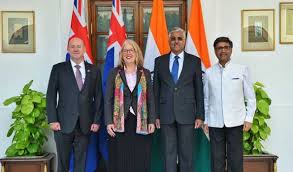
MELBOURNE: The fourth India-Australia 2+2 Secretary-level Consultations were held today in New Delhi. The Indian delegation was led by Defence Secretary Shri Giridhar Aramane and Foreign Secretary Shri Vikram Misri, while the Australian side was led by Secretary, Department of Defence (DoD) Mr. Greg Moriarty and Secretary, Department of Foreign Affairs & Trade (DFAT) Ms. Jan Adams. The last 2+2 Secretary-level Consultations were held in 2019, following which 2+2 Ministerial Dialogue was initiated in September 2021.
The two sides reviewed the progress made since the last 2+2 Ministerial Dialogue held in November 2023 and preparations for the next Ministerial Dialogue to be held in 2025. The meeting offered an opportunity for both sides to review the status of bilateral engagements in the context of emerging regional and global scenarios.
Discussions covered a wide range of issues such as political and strategic, defence and security including defence technology and industry cooperation, trade and investments, education, cyber & new emerging technologies, critical minerals, renewable energy, space, counter-terrorism and people-to-people ties. The two sides also exchanged views on regional and global issues of mutual interest.
Both sides called for continued strengthening of bilateral cooperation in various fora, including Quad and G20 and reiterated their commitment for achieving their shared objective of peace, prosperity, stability and progress in the Indo-Pacific region, as well as further advancing the India-Australia Comprehensive Strategic Partnership.
The Secretaries agreed to hold the inter-sessional 2+2 Foreign and Defence Secretaries Dialogue biennially and to continue these discussions ahead of the 2+2 Ministerial Dialogue.
Secretary Moriarty called on Raksha Mantri Shri Rajnath Singh on 14 Oct 2024, and Secretary Adams called on External Affairs Minister Dr. S Jaishankar. Bilateral meetings were also held between the Defence Secretaries and Foreign Secretaries.
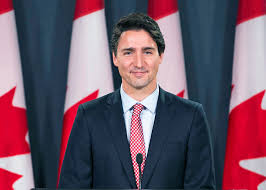
TORONTO: We have received a diplomatic communication from Canada yesterday suggesting that the Indian High Commissioner and other diplomats are ‘persons of interest’ in a matter related to an investigation in that country. The Government of India strongly rejects these preposterous imputations and ascribes them to the political agenda of the Trudeau Government that is centered around vote bank politics.
Since Prime Minister Trudeau made certain allegations in September 2023, the Canadian Government has not shared a shred of evidence with the Government of India, despite many requests from our side. This latest step follows interactions that have again witnessed assertions without any facts. This leaves little doubt that on the pretext of an investigation, there is a deliberate strategy of smearing India for political gains.
Prime Minister Trudeau’s hostility to India has long been in evidence. In 2018, his visit to India, which was aimed at currying favour with a vote bank, rebounded to his discomfort. His Cabinet has included individuals who have openly associated with an extremist and separatist agenda regarding India. His naked interference in Indian internal politics in December 2020 showed how far he was willing to go in this regard. That his Government was dependent on a political party, whose leader openly espouses a separatist ideology vis-à-vis India, only aggravated matters. Under criticism for turning a blind eye to foreign interference in Canadian politics, his Government has deliberately brought in India in an attempt to mitigate the damage. This latest development targeting Indian diplomats is now the next step in that direction. It is no coincidence that it takes place as Prime Minister Trudeau is to depose before a Commission on foreign interference. It also serves the anti-India separatist agenda that the Trudeau Government has constantly pandered to for narrow political gains.
To that end, the Trudeau Government has consciously provided space to violent extremists and terrorists to harass, threaten and intimidate Indian diplomats and community leaders in Canada. This has included death threats to them and to Indian leaders. All these activities have been justified in the name of freedom of speech. Some individuals who have entered Canada illegally have been fast-tracked for citizenship. Multiple extradition requests from the Government of India in respect of terrorists and organized crime leaders living in Canada have been disregarded.
High Commissioner Sanjay Kumar Verma is India’s senior most serving diplomat with a distinguished career spanning 36 years. He has been Ambassador in Japan and Sudan, while also serving in Italy, Turkiye, Vietnam and China. The aspersions cast on him by the Government of Canada are ludicrous and deserve to be treated with contempt.
The Government of India has taken cognizance of the activities of the Canadian High Commission in India that serve the political agenda of the current regime. This led to the implementation of the principle of reciprocity in regard to diplomatic representation. India now reserves the right to take further steps in response to these latest efforts of the Canadian Government to concoct allegations against Indian diplomats.
Diplomatic News
NGERULMUD: Shri Harsh Kumar Jain concurrently accredited as the next Ambassador of India to the Republic of Palau
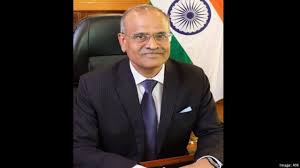
NGERULMUD: Shri Harsh Kumar Jain (IFS:1993), presently Ambassador of India to the Republic of the Philippines, has been concurrently accredited as the Ambassador of India to the Republic of Palau, with residence in Manila.
He is expected to take up the assignment shortly.

MELBOURNE: Fourth India-Australia 2+2 Secretary-level Consultations

TORONTO: India’s response to diplomatic communication from Canada

NGERULMUD: Shri Harsh Kumar Jain concurrently accredited as the next Ambassador of India to the Republic of Palau

STOCKHOLM: Dr. Neena Malhotra appointed as the next Ambassador of India to the Kingdom of Sweden
2020 will be remembered as time of the pandemic. The fallout will be felt for years

MARYLAND: All About Pavan Davuluri, New Head Of Microsoft Windows
-
 Diplomatic News1 year ago
STOCKHOLM: Dr. Neena Malhotra appointed as the next Ambassador of India to the Kingdom of Sweden
-
Opinions5 years ago
2020 will be remembered as time of the pandemic. The fallout will be felt for years
-
 Technology2 years ago
MARYLAND: All About Pavan Davuluri, New Head Of Microsoft Windows
-
 Diplomatic News1 year ago
KINGSTON: Shri Subhash Prasad Gupta concurrently accredited as the next High Commissioner of India to St.Vincent and the Grenadines
-
 Politcs2 years ago
LONDON: Indian-Origin Candidate On How He Plans To Win London Mayoral Polls
-
 Science2 years ago
WASHINGTON: Who Is Aroh Barjatya, Indian-Origin Researcher Who Led Recent NASA Mission
-

 Technology2 years ago
HOUSTON: Mumbai boys in the final rounds of FIRST World Robotics competition to be held in Houston
-

 Sports2 years ago
DODOMA: Milind Soman At “Friendship” Marathon Organised By India, Tanzania