
Technology
HYDERABAD: Women make a mark in a field that has been a preserve of men

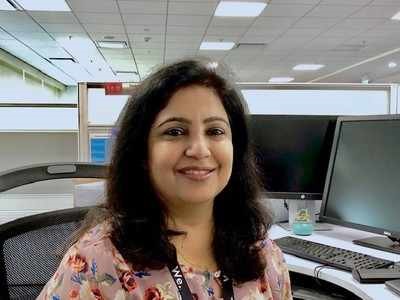
HYDERABAD: Diversity programmes are helping
women in India’s hardware industry. Some great role models too have emerged
The semiconductor industry has been dominated by men globally, more than most
industries. A survey by the Global Semiconductor Alliance and Accenture in 2019
showed that women represent about 20-25% of the industry workforce, falling to
under 10% in higher roles.
In India, industry-level figures are not easily available, but anecdotal
evidence suggests the numbers may be slightly better than the global ones. And
diversity and mentorship programmes are helping improve those numbers.
“How many times have we seen women being encouraged to do repair work,” asks
Jaya Singh, head of MSP (mixed signal processor) at Texas Instruments’ India
centre. I see that happening now, she says, but it was probably not done
consciously earlier. “We need to encourage girls to interact more with science
and technology right from the school level, and find ways to give them hands on
experience so that they gain an appreciation for this field,” she says.
MSP microcontroller is part of the embedded processing business which develops
system-on-chips (SoCs) that are affordable, ultra-low-power with integrated
digital and analog peripherals. These devices have applications in industrial
automotive, washing machine, blood glucometer and even drones.
Singh, an alumnus of IIT Roorkee and with Texas Instruments since 2001, leads a
team of more than 50 people in India which is responsible from architecture to
productisation – implementation, tape-out and post silicon release to market
enablement. “When you look around, electronics is everywhere. Why wouldn’t you
want to be a part of this journey. I personally wake up every day and get
excited to think that what I do matters at a broader level,” she says.
Just like her, Anasua Bhowmik of AMD too was fascinated with hardware design
ever since she studied engineering at Jadavpur University. Hardware, she feels,
deals with the fundamentals of how machines work, unlike software which can be
sometimes abstract.
This is a continuously evolving field where you need to keep learning. At the same time, you need role models, as a lot of the time you feel that you do not belong there.
Bhowmik, who did her PhD from the
University of Maryland, is also the first woman engineer to become a Fellow at
AMD India and over the years, has built her expertise in microprocessor design,
performance analysis, simulation and compiler design. Fellows are among the
highest-ranking designations in the engineering stream at AMD.
Chip designing, she says, is a continuously evolving field, and applications we
were looking at a few years ago have changed. “It is the desire to learn
continuously that has kept me going. If we are focused on learning, your career
will fall in place,” she says. Her team, comprising 14 members, half of whom
are women, works on performance markers for chips.
Seema Malhotra, senior manager in the memory technology team at Western
Digital, feels one of the ways to bring more women into the hardware industry
is to build greater collaboration between the industry and schools and
colleges, which would help students understand the prospects of the course.
“The college I studied in had a partnership with Intel. Somebody needs to tell
you where you will reach and the impact you can have in this industry,” says
Malhotra, who found the motivation to join after visiting an Intel office in
Silicon Valley in the late 90’s. She and her team of 20 people currently work
on the physical design of a chip before it is sent for manufacturing.
What helped me was the belief that I am meant to work. For me, career and lifestyle are negotiable, work and financial independence are not. I don’t know if I overcame challenges, I survived them.
Sumedha Limaye, general manager, Intel India
What is more encouraging, Malhotra of Western Digital says, is that now there
are more women at the mid-level and entry level, and even at the top. “Top
managements understand how diversity is important. Creativity comes when two
different worksets come together,” she says.
However, Singh, Bhowmik and Malhotra also point out that the lack of many role
models in the industry has discouraged women. This is true, but the scenario
appears also to be changing fast. Women now lead three of the leading hardware
companies and/or their R&D operations in India. Nivruti Rai has led Intel
India for over five years now, and is also the head of Intel’s data centre
group. Supria Dhanda leads Western Digital in India, Jaya Jagadish leads AMD’s
engineering and R&D operations in India.
Texas Instruments’ Singh indicates the issue is not just about women role
models, but about hardware itself not getting the kind of attention software,
for instance, gets. But even that is now beginning to change, as the government
seeks to reduce its dependence on China and Taiwan for electronics and semiconductors.
Do not shy away from any challenges and you do not have to be perfect. Try to do things differently. Sometimes also blow your own trumpet to make yourself visible.
To encourage more women to excel in the technology career path, Texas Instruments has a programme that gives women access to mentorship under technical leaders. “Women need holistic support at various life stages and the most important is mentorship. This programme deals with advising women on the kinds of assignments one needs to take up to advance, what types of courses to do, how to approach problems differently,” says Singh.
Sumedha Limaye, general manager of Xeon and network engineering at Intel India, says the realities of being a woman include dealing with work and home responsibilities, which is a constant challenge. “There were several points in life when the going got tough. That is when my mentors and the support system of family and friends helped me carry on,” she says.
Employers, she says, must have policies that enable women to build careers despite ups and downs related to marriage, childbirth and elderly care. Her team has been at the forefront of innovations for leadership products in the server, networking and 5G spaces.






Technology
CAIRO: Indian-Origin Teen, Son Of IIT-JEE Topper, Wins Gold At World’s Toughest Programming Contest
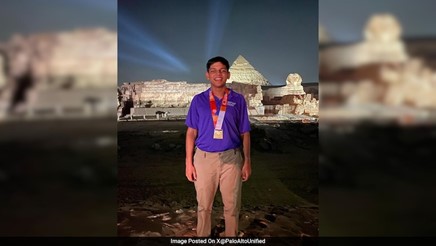
CAIRO: Agastya Goel, a 17-year-old Indian-origin student from California, has won his second gold medal at the 36th International Olympiad in Informatics (IOI), which took place in Egypt. Agastya, son of Stanford professor Ashish Goel, secured the fourth overall rank at the prestigious contest, also dubbed as the world’s toughest programming competition for high school students.
Agastya scored 438.97 out of 600, while Kangyang Zhou of China topped the event with a perfect score of 600. A total of 34 students were awarded gold medals this year, including fellow Indian participant Kshitij Sodani, who ranked 21st.
This marks the 17-year-old’s second gold at the IOI. His father, Ashish Goel, made waves in 1990 by topping the IIT-JEE exam before going on to build a distinguished career at companies like Twitter and Stripe.
Who is Agastya Goel?
Agastya Goel, a junior at Henry M Gunn High School in Palo Alto, California, loves physics, computer science, and music. His hobbies include tennis, hiking, stargazing, and playing the guitar and piano.
Agastya’s interest in physics began at a young age, with his father introducing him to the subject during car rides and hikes. One memorable experience was learning about projectile motion while playing Angry Birds. This sparked a fascination with physics that has only grown stronger over the years.
Agastya’s competitive spirit was ignited through the USACO competition series, which he started preparing for in 6th grade. His hard work earned him a spot at the USACO training camp in his freshman year, followed by selection for the US IOI team.
Initially, Agastya considered majoring in computer science, but after exploring physics, he discovered a new passion. He spent 14 days intensively studying physics over winter break and was hooked.
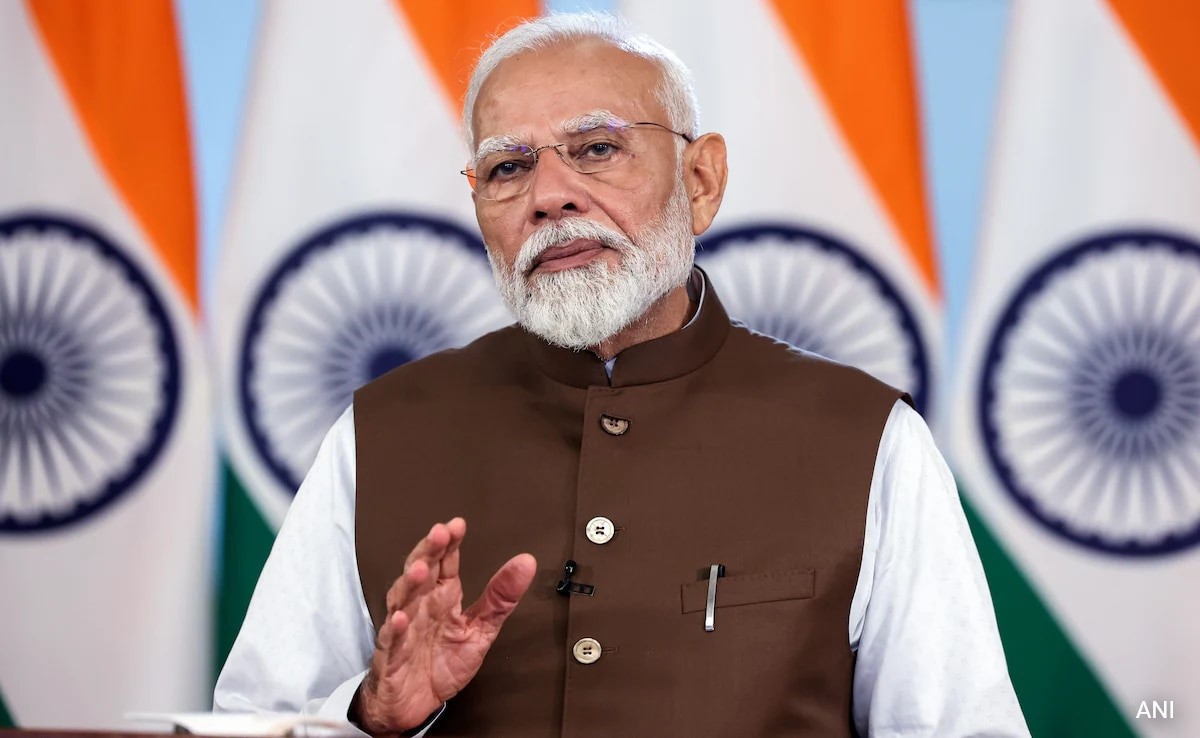
CALIFORNIA: Indian-origin business leaders from the IT industry lauded Prime Minister Narendra Modi’s leadership for putting India on the global map as a “credible innovator and leader” for all nations to invest in and grow.
Speaking at the Indiaspora AI Summit 2024 on ‘Can Artificial intelligence be good force for future or not’ at the University of Stanford on April 26, Informatica CEO Amit Walia said, “India is perceived very differently in the global space. It’s a space of innovation. It’s a space of human capital. It’s a space of progress and innovation. And as we look forward, what Modi has been able to do is put India into the global map as a credible innovator, leader for all countries to invest in and grow.”
Speaking at the same event, Elastic CEO Ashutosh Kulkarni said that PM Modi and the government have been doing amazing work.
Mr Kulkarni said, “The Prime Minister and the government has been doing some amazing work and their focus on being open to innovation, their focus on industry, their focus on bringing the population, India is now one of the, it is the largest, most populous country in the world and bringing that population towards progress, the way they have tapped into the potential of this country has just been fantastic.”
Calling PM Modi’s era “amazing,” Mayfield Fund Managing Partner Navin Chaddha praised PM Modi’s leadership for ties between India and the US and his ability to connect the Indian diaspora which he stressed is doing extremely well in the tech industry. He noted that India is making progress in using technology and improving its infrastructure.
Navin Chaddha said, “The Modi era has been amazing, the kind of relationship they’ve been able to build with the United States. And to be able to connect the Indian diaspora, which is doing extremely well in the tech industry, hats off to them. And also the progress India is making in using technology, improving the infrastructure is just amazing. So, Mr Modi, keep doing what you’re doing.”
Rohit Jain, Speaker and Moderator – CIO, Harvard Business School, called on PM Modi to increase his guarantee, as he has always delivered. The event on Artificial Intelligence was organised to deliberate and discuss artificial intelligence.
He said, “Mr Modi needs to increase his guarantee because he’s always been delivering. So, I think his promises have been 100 per cent true. So, he now needs to promise 110 per cent and then again he’ll deliver on that. Mr Modi, thank you for what you have done, not only for India, but for the world.”
Priya Rajan, Managing Director, National Venture Coverage and Business Development, MUFG lauded PM Modi’s leadership in the entrepreneurial ecosystem. He stated that a number of VCs across the globe want to invest in India.
She said, “I see the Modi magic play is in the entrepreneurial ecosystem, which is an adventure ecosystem. So you can see the number of VCs now wanting to invest, not just where in India, investing in India, but world investors around the world wanting to do things. And you’re seeing kind of US, a ton of US global investors now setting up shops in India. I think that’s all coming back to what Modi magic has created.”
At the event, prominent Indian diaspora, along with the esteemed corporate leaders from the US shared their insights on the topic “Can Artificial Intelligence be a force for future or not.”
Rajya Sabha MP Satnam Singh Sandhu participated in the event. Notably, PM Modi has been advocating that artificial intelligence can provide a great support to help humanity’s development in the 21st century.
Taking to X, Satnam Singh Sandhu stated, “Indiaspora AI Summit, Stanford University, USA: Delighted to be a part of the summit where we had @ericgarcetti, US Ambassador to India, Indian Diaspora and business leaders from IT sectors who reiterated how PM @narendramodi Ji is leveraging AI to shape nation’s future strategy to build Viksit Bharat by 2047.”
“They highlighted PM Modi’s tech-savvy approach and his efforts to promote AI applications in various sectors like agriculture, health-care, and education for social development and inclusive growth. They also condemned the Western bias against India to rank them lower in parameters like Ease of doing business, and cite the irregularities while computing such rankings,” he added.
Earlier in December, PM Narendra Modi said that artificial intelligence is a dynamic issue and that India is working on creating a global framework for AI. He made the remarks while interacting with the participants of the Grand Finale of the Smart India Hackathon.
Speaking to the participants via video conferencing, the Prime Minister said, “AI (Artificial Intelligence) is a very dynamic issue. If one solution is brought in, the mischievous people will find another way. We have to be very alert to any new technology. It can be very useful if used within rules, but if it is used in the wrong way, it can create a lot of problems.”
“We all are aware of the generative AI-created deep fake videos that look completely real. Hence we need to be more alert before believing any photo or video. India is working on creating a global framework for AI,” said PM Modi.
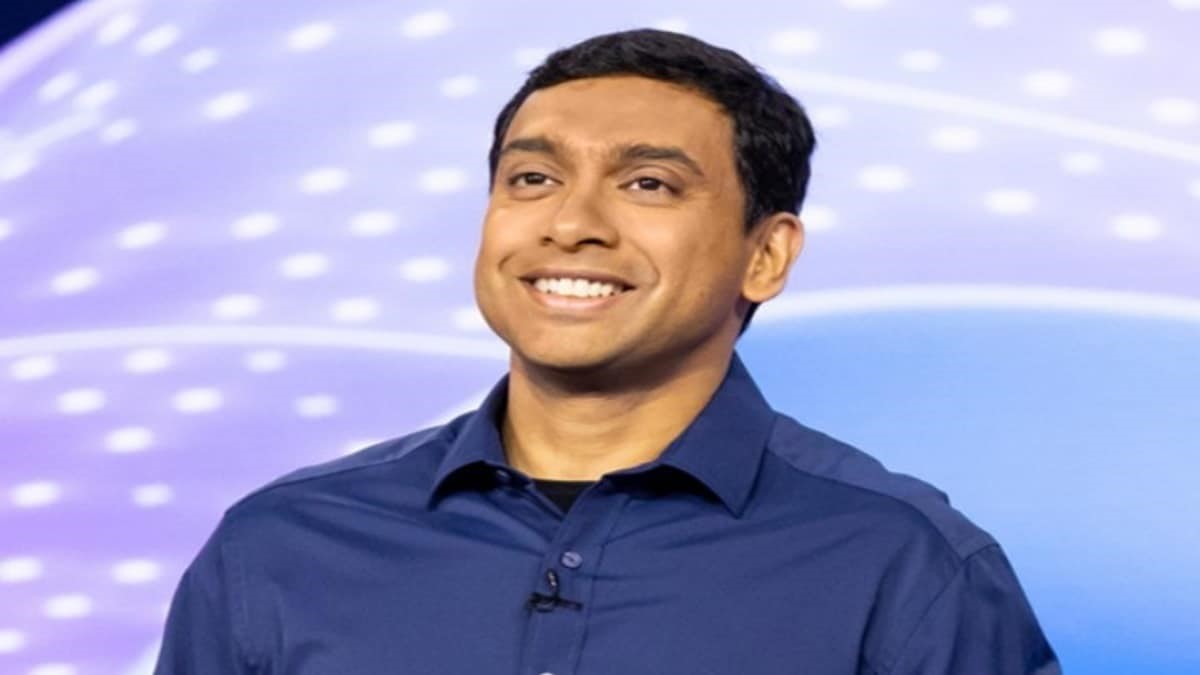
SILICON VALLEY: Pavan Davuluri, an IIT Madras graduate, has been appointed the new head of Microsoft Windows and Surface. He succeeds Panos Panay, who left for Amazon last year. Mr Davuluri previously oversaw the Surface group and now leads both Windows and Surface departments.
Rajesh Jha, Microsoft’s head of experiences and devices, said, “As part of this change, we are bringing together the Windows Experiences and Windows + Devices teams as a core part of the Experiences + Devices (E+D) division. This will enable us to take a holistic approach to building silicon, systems, experiences, and devices that span Windows client and cloud for this AI era.”
“Pavan Davuluri will lead this team and continue to report to me. Shilpa Ranganathan and Jeff Johnson and their teams will report directly to Pavan. The Windows team will continue to work closely with the Microsoft AI team on AI, silicon, and experiences,” he said.
Who is Pavan Davuluri?
- Pavan Kumar Davuluri is an IIT Madras graduate. He completed his post-graduation from the University of Maryland, according to his LinkedIn
- Mr Davuluri began his career at Microsoft as a Reliability Component Manager in 2001.
- Mr Davuluri has held various leadership positions over his 23-year tenure at Microsoft, working across PC and Xbox hardware, Surface, and Windows.
- Pavan Davuluri took on the role of corporate vice president for Windows and Silicon & Systems Integration in 2021, overseeing efforts to optimise Windows for Arm-based devices.
- Mr Davuluri was recently assigned to lead Windows engineering alongside his existing responsibilities in Microsoft’s hardware endeavours. He will lead a dedicated team developing silicon systems for Microsoft’s Windows and Surface products.

MELBOURNE: Fourth India-Australia 2+2 Secretary-level Consultations

TORONTO: India’s response to diplomatic communication from Canada

NGERULMUD: Shri Harsh Kumar Jain concurrently accredited as the next Ambassador of India to the Republic of Palau

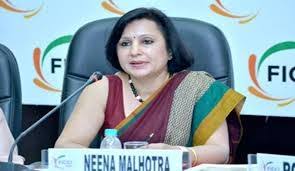
STOCKHOLM: Dr. Neena Malhotra appointed as the next Ambassador of India to the Kingdom of Sweden
2020 will be remembered as time of the pandemic. The fallout will be felt for years

KINGSTON: Shri Subhash Prasad Gupta concurrently accredited as the next High Commissioner of India to St.Vincent and the Grenadines
-
 Diplomatic News2 years ago
STOCKHOLM: Dr. Neena Malhotra appointed as the next Ambassador of India to the Kingdom of Sweden
-
Opinions5 years ago
2020 will be remembered as time of the pandemic. The fallout will be felt for years
-
 Diplomatic News2 years ago
KINGSTON: Shri Subhash Prasad Gupta concurrently accredited as the next High Commissioner of India to St.Vincent and the Grenadines
-
 Politcs2 years ago
LONDON: Indian-Origin Candidate On How He Plans To Win London Mayoral Polls
-
 Technology2 years ago
MARYLAND: All About Pavan Davuluri, New Head Of Microsoft Windows
-

 Sports2 years ago
DODOMA: Milind Soman At “Friendship” Marathon Organised By India, Tanzania
-
 Business2 years ago
LONDON: UK Court Allows Sale Of Nirav Modi’s Luxury London Apartment
-

 Politcs2 years ago
LONDON: Run For Modi” Event In London To Drum Up Support For PM Modi