
Science
BERLIN: From the lab to the jab: How BioNTech-Pfizer won vaccine race

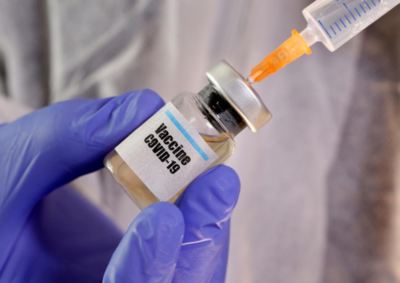
BERLIN:
It was over breakfast on the wintry morning of January 24 that Ozlem Tureci and
her husband Ugur Sahin decided, “we need to fire the starting gun on
this”.
Sahin “had concluded from a publication describing coronavirus cases in
Wuhan … that there was a high probability that a pandemic could be
imminent”, Tureci recounted.
The decision by the couple, founders of a small German company called BioNTech,
gave birth to Operation Lightspeed — in which the scientists in the company
diverted all their resources from cancer therapy research to finding a vaccine
to stop Covid-19.
“Since that day … there has not been a day when we took a break from
working on this project,” said Tureci.
Four days later, on January 28, Germany confirmed its first case of coronavirus
infection — also the first known human-to-human transmission on European soil.
What was an epidemic hitting China hardest soon morphed into a global health
crisis, forcing governments to close borders, schools and offices and keep
their populations at home to halt the spread.
As BioNTech and other pharmaceutical companies leapt into action in search of
the winning formula, Germany’s army of “Mittelstand” companies and
other bigger manufacturing and logistics experts would soon prove crucial.
Just a few minutes’ drive away from BioNTech’s headquarters in the city of
Mainz, one such company quietly ramped up production.
Little known to the rest of the world, the 130-year-old firm Schott is in fact
a major player in the pharmaceutical industry because of its little glass vials
designed to hold life-saving vaccines.
Three-quarters of the more than 100 coronavirus inoculation trials across the
world would end up using Schott products.
The company alone aims to produce enough vials to hold two billion doses of a
coronavirus vaccine by the end of 2021, head of communications Christina Rettig
said.
Schott itself had an early scare with the virus at its Mitterteich plant in
Bavaria.
The town became one of Germany’s first coronavirus hotspots in March after a
beer festival, and Rettig said several Schott workers from the Czech Republic
ended up “not seeing friends and family for weeks” as borders slammed
shut.
With passenger flights mostly grounded, the buzz at Frankfurt airport’s
terminals all but vanished to a hush in the spring.
Its freight area however kept humming. Tens of thousands of boxes of urgently
needed surgical gowns and masks were transiting through.
The head of freight infrastructure at Fraport, Max Philipp Conrady, knew that
was just the beginning for his division in the pandemic battle.
No one knew then which company would find a vaccine or when it would be ready,
but Frankfurt is already Europe’s largest hub for transporting pharmaceutical
goods.
And so planning had to begin for the unprecedented logistical challenge of
transporting millions of life-saving vaccine doses worldwide.
Fraport’s vast temperature-controlled hangar handled 120,000 tons of vaccines,
drugs and other pharmaceutical products in 2019.
The operator anticipated the demand for cold storage, and boosted investments
in high-tech refrigerated “dollies” that would do the transporting
from hangars to planes. It now has 20, so several freighters can be loaded at
the same time.
Fraport was not the only one upping investments in solutions to keep things
cool.
As it became clear that BioNTech’s vaccine would need to be stored at minus 70
degrees Celsius (minus 94 Fahrenheit) the expertise of cold chain management
became the next hot commodity in town.
Amid the global scramble to solve the problem of keeping vaccines at the right
temperature as they get transported across the world, it would appear that
there is a German company for every obscure application.
Binder in Tuttlingen has its “super freezers” which were already
tapped as early as March to chill coronaviruses used in laboratory research by
BioNTech and another German vaccine developer, CureVac.
But demand further grew as BioNTech advanced in the race.
“It started really in August, when we received these requests from
logistics companies… they knew we must fit our cold storage… with freezers
in order to distribute the vaccines around the world,” said Binder
spokeswoman Anne Lenze.
While Binder ensured static refrigeration of up to minus 90 degrees, another
company Va-Q-Tec makes moving boxes with an ultra-cool function for the actual
transportation process.
Using a silica particle technology, the containers can maintain temperatures
ranging from one similar to a fridge to polar chills for up to 10 days “without
the need for energy input”, chief executive Joachim Kuhn said.
On November 18, BioNTech and its partner Pfizer finally announced that their
Phase III study showed around 95 percent efficacy against the virus.
The news sent stock markets into euphoria and was hailed as a watershed, a
light at the end of a very long, dark tunnel.
By then, the logistics sector was raring to go.
As Fraport’s Conrady put it: “We’ve been ready since August.”
Celebrating in their understated manner, BioNTech’s founders knew it was too
early to rest on their laurels.
“Champagne is not our thing. We sat down and enjoyed a cup of tea and used
the time to reflect on what had happened so far and what will come next,”
Sahin said.
Several hundred kilometres away in the German capital, 66-year-old Albrecht
Broemme was placing a bunch of Lego figurines here and there as he visualised
how to transform Berlin’s old airports into centres for the unprecedented
vaccination drive.
An ex-firefighter and former head of civil protection agency THW, Broemme had
been called out of retirement to help in the pandemic battle.
Early on, he was pivotal in designing emergency sites in case patient numbers
were to soar above hospital capacities.
In the autumn, he was tapped again to conceptualise the vaccination drive for
the German capital.
“I came up with a system, thinking about how many (vaccination) booths we
would need and how much space we would need in order to prevent
bottlenecks,” he said.
Each visitor will follow a designated route from registration to the actual
jab, then on to a consultation with a doctor and finally to a waiting room
while final checks are performed.
The patient should be in and out of the doctor’s cubicle in a few minutes,
Broemme said. Including the queueing and waiting time, “we imagine that
all of this will take an hour.”
On December 2, BioNTech’s vaccine became the first to get the go-ahead for use
in the West, when Britain gave its approval.
As other nations from the United States to Saudi Arabia to Singapore followed
suit, Germany impatiently prodded the EU’s drugs regulator to bring forward its
decision from December 29.
The EMA finally gave its green light more than a week early, on December 21.
On the same night, the European Commission declared that the entire bloc would
start the inoculation operation from Sunday, December 27.
As vaccine doses began arriving around Europe Saturday, German health minister
Jens Spahn called it a “day of hope” but warned that getting everyone
immunised would be a “long-haul” effort.
With the first jabs imminent, officials raced to put the finishing touches on
the makeshift inoculation centres across Germany.
At the country’s biggest in Hamburg, doctors will be able to handle 7,000 daily
jabs.
BioNTech has also held webinars for nurses and doctors who will soon administer
the shot, with 1,100 questions answered during the sessions.
Lorries carrying vaccines rolled out from Pfizer’s factory in Belgium on
Wednesday.
BioNTech said it would directly supply its vaccines to 25 distribution sites
manned by federal authorities in Germany which would then send along the
allocations to 294 districts.
Local authorities will then further funnel the jabs down to 450 vaccination
centres.
A slew of mobile units will also be deployed to harder to reach districts.
With an eye on potential sabotage by a growing wave of corona skeptics and
anti-vaxxers, federal police with armed commando units are escorting the
precious cargo on the move.
First up will be the most vulnerable in elderly homes, several of which have
been hit by deadly outbreaks of the virus.
The inoculations could not come soon enough for Germany, which registered
record high daily death tolls of nearly 1,000 people during the week. At least
one district has reported that its crematorium is full.
With time pressing, one elderly care home went ahead with first vaccinations
for its residents shortly after the doses were delivered on Saturday — a day
before the national inoculation campaign was due to start.
Edith Kwoizalla, 101 years old, became the first in Germany to receive the jab
in the elderly home in Saxony-Anhalt state.
For Chancellor Angela Merkel, every jab means a life saved.
“When we see how many people are dying because of coronavirus, we can see
how many lives the vaccine can save.”








Science
SAN FRANCISCO: Indian-Origin Founder Unveils Wearable Device That Records Every Moment Of Your Life
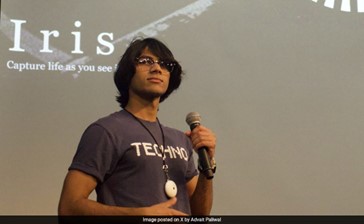
SAN FRANCISCO: Advait Paliwal, an Indian-origin entrepreneur, has recently introduced a wearable AI device called Iris, designed to provide users with “infinite memory.” According to Paliwal, the device captures “pictures every minute,” which are stored either on the device or in the cloud, allowing users to preserve life’s small moments and recognize patterns often overlooked.
In a series of tweets, Mr Paliwal, who is based in San Francisco, explained that Iris not only organises the photos into a timeline but also uses AI to generate captions and help users recall forgotten details. Additionally, the device features a “focus mode,” which detects when the wearer is distracted and offers reminders to refocus.
Mr. Paliwal shared that the design of Iris is inspired by the evil eye symbol. He developed the device over the summer at the Augmentation Lab in Cambridge, part of a two-month AI and hardware talent accelerator program. After the program, Mr Paliwal presented Iris to over 250 attendees at the MIT Media Lab, where he received positive feedback, with many expressing interest in owning the device.
Highlighting its potential, Mr Paliwal suggested that Iris could offer safety and health benefits, such as aiding doctors in understanding patients’ daily habits or ensuring workplace safety compliance. In elderly care, the device could help caregivers monitor patients without being intrusive.
However, after Mr Paliwal shared his post on X (formerly Twitter), reactions were mixed. While some users expressed excitement, others raised privacy concerns. One person commented, “It’s an interesting concept, but I wouldn’t want to interact with someone wearing this, taking a photo every minute.” Paliwal responded by pointing out that people are already “constantly taking mental photos.”
Others were more enthusiastic, with one user noting, “I’ve been searching for a device like this for years! A picture every minute should be enough if it archives, organizes, labels, and retrieves them.” Another user praised the concept, saying, “Love the idea. The design and name are perfect. Great work!”
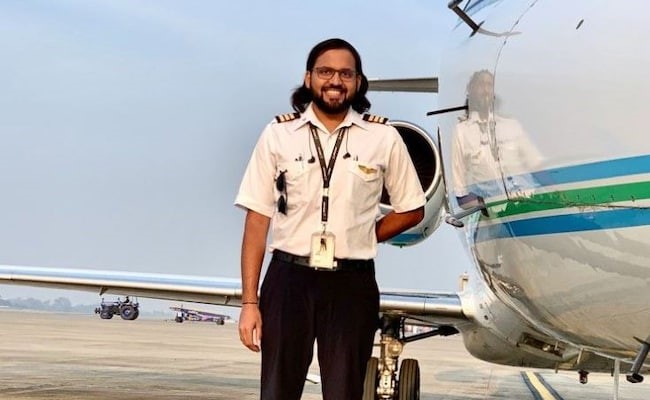
TEXAS: In an unprecedented leap towards the stars, pilot Gopichand Thotakura is set to become the first Indian to venture into space as a tourist. Selected as part of the elite crew for Blue Origin’s New Shephard-25 (NS-25) mission, Mr Thotakura will make a journey beyond the Earth’s atmosphere along with five other candidates.
Gopichand Thotakura, an entrepreneur and pilot, joins a distinguished lineup of 31 candidates who have flown beyond the Karman line, the boundary between Earth’s atmosphere and outer space.
A connoisseur of the skies since his youth, Mr Thotakura’s passion for flight saw him defy conventional norms, learning to pilot aircraft before mastering the art of driving. To further his passion, he graduated from Embry-Riddle Aeronautical University with a Bachelor of Science in Aeronautical Science.
Describing him, Blue Origins wrote, “Gopi is a pilot and aviator who learned how to fly before he could drive. Gopi pilots bush, aerobatic, and seaplanes, as well as gliders and hot air balloons, and has served as an international medical jet pilot. A lifelong traveler, his most recent adventure took him to the summit of Mt. Kilimanjaro.”
Born in Vijayawada, the 30-year-old currently runs Preserve Life Corp, a global center for holistic wellness and applied health located near Hartsfield-Jackson Atlanta International Airport
Each member of the NS-25 mission will carry a postcard on behalf of Blue Origin’s foundation, Club for the Future, symbolizing the collective dreams and aspirations of young minds worldwide.
From an environmental standpoint, the NS-25 mission heralds a new era of sustainability in space exploration.
“Nearly 99% of New Shepard’s dry mass is reused, including the booster, capsule, engine, landing gear, and parachutes. New Shepard’s engine is fueled by highly efficient liquid oxygen and hydrogen. During flight, the only byproduct is water vapor with no carbon emissions,” Blue Origins said in their statement.
The launch date for the mission is yet to be announced.
The mission also includes former Air Force Captain Ed Dwight, who was selected by US President John F Kennedy in 1961 as the country’s first Black astronaut candidate but was never granted the opportunity to fly to space.
Blue Origin has carried out six crewed flights — some passengers were paying customers and others were guests — since July 2021, when CEO Jeff Bezos himself took part in the first.
The company is also developing a heavy rocket for commercial purposes called New Glenn, with the maiden flight planned for next year.
This rocket, which measures 98 meters (320 feet) high, is designed to carry payloads of as much as 45 metric tons into low Earth orbit.
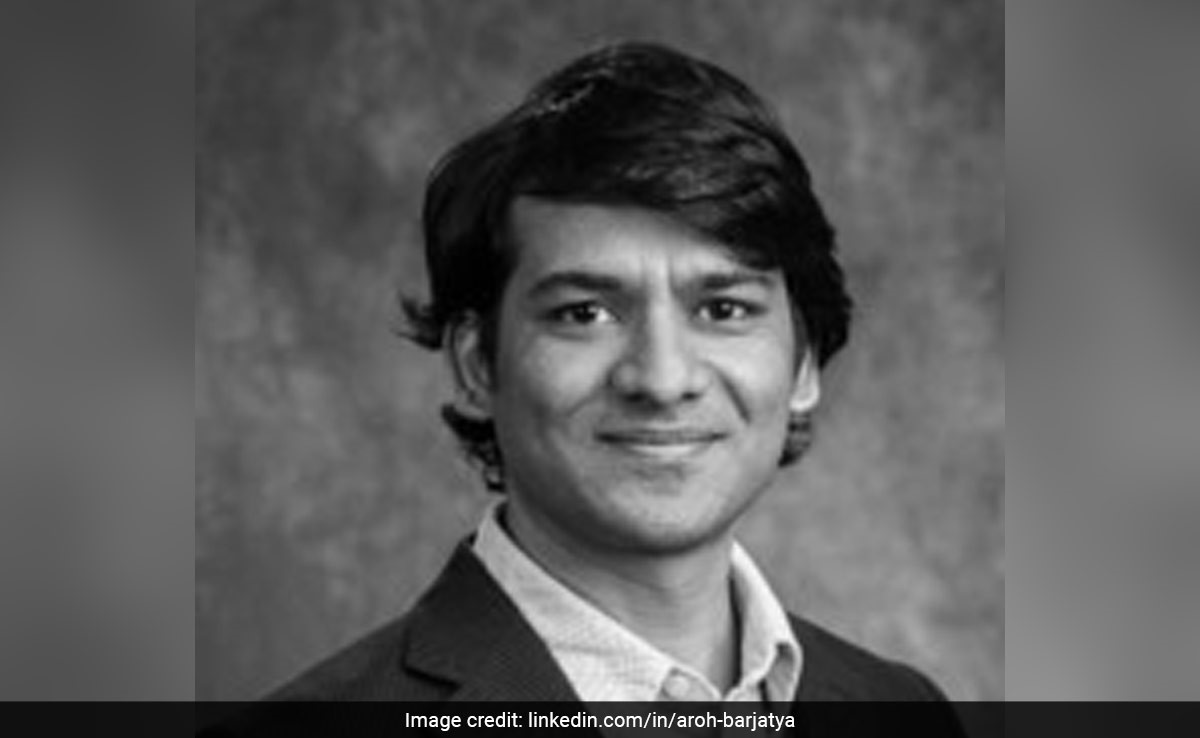
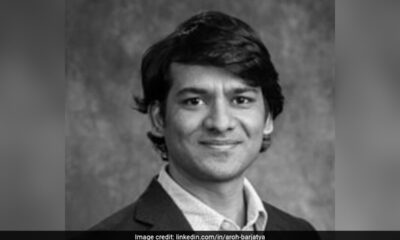
WASHINGTON: Aroh Barjatya, an India-born researcher, led NASA’s mission that launched sounding rockets during the recent total solar eclipse.
The US space agency launched three sounding rockets during the total solar eclipse on April 8 to study what happens to the Earth’s upper atmosphere when sunlight dims momentarily over a part of the planet.
Who Is Aroh Barjatya?
A professor of engineering physics, Aroh Barjatya directs the Space and Atmospheric Instrumentation Lab at the Embry-Riddle Aeronautical University in Florida.
Born to a chemical engineer, Ashok Kumar Barjatya, and his wife Rajeshwari, Aroh Barjatya went to schools across India, including in Patalganga near Mumbai, Hyderabad, Jaipur, Pilani, and Solapur.
He went on to get a degree in electronics engineering from Solapur’s Walchand Institute of Technology.
In 2021, he moved to the US for a master’s degree in electrical engineering at Utah State University. He later did his PhD in spacecraft instrumentation from the same university.
“In addition to leading an externally funded research enterprise, as a tenured faculty I have mentored and engaged young minds through inquiry-based learning tactics, created a new area of concentration within the Engineering Physics programme at ERAU… My mission is to advance the state of the art in space research and education and to inspire the next generation of space engineers and scientists,” he wrote on his LinkedIn profile.


MELBOURNE: Fourth India-Australia 2+2 Secretary-level Consultations

TORONTO: India’s response to diplomatic communication from Canada

NGERULMUD: Shri Harsh Kumar Jain concurrently accredited as the next Ambassador of India to the Republic of Palau

STOCKHOLM: Dr. Neena Malhotra appointed as the next Ambassador of India to the Kingdom of Sweden
2020 will be remembered as time of the pandemic. The fallout will be felt for years

KINGSTON: Shri Subhash Prasad Gupta concurrently accredited as the next High Commissioner of India to St.Vincent and the Grenadines
-
 Diplomatic News2 years ago
STOCKHOLM: Dr. Neena Malhotra appointed as the next Ambassador of India to the Kingdom of Sweden
-
Opinions5 years ago
2020 will be remembered as time of the pandemic. The fallout will be felt for years
-
 Diplomatic News2 years ago
KINGSTON: Shri Subhash Prasad Gupta concurrently accredited as the next High Commissioner of India to St.Vincent and the Grenadines
-

 Politcs2 years ago
LONDON: Indian-Origin Candidate On How He Plans To Win London Mayoral Polls
-

 Technology2 years ago
MARYLAND: All About Pavan Davuluri, New Head Of Microsoft Windows
-

 Sports2 years ago
DODOMA: Milind Soman At “Friendship” Marathon Organised By India, Tanzania
-

 Business2 years ago
LONDON: UK Court Allows Sale Of Nirav Modi’s Luxury London Apartment
-
 Science2 years ago
WASHINGTON: Who Is Aroh Barjatya, Indian-Origin Researcher Who Led Recent NASA Mission