
Opinions
Diaspora – A Driving Force Behind India’s G20 Success

As part of India’s G20 presidency, which culminates in a mega summit of world leaders this weekend, Indiaspora’s G20 forum in August featured 300 trailblazers of the Indian diaspora from 26 countries.
The Indiaspora forum, looking to emerge as the “Davos for the Global Indian”, explored how the diaspora can contribute to the success of “India@100” in the year 2047. The participants included ambassadors, cabinet secretaries, investors, entrepreneurs, corporate titans, philanthropists, academics, artists, healthcare practitioners, next generation torchbearers, AI savants and environmental experts.
Indiaspora, a non-profit founded in the US in 2012, works actively in eight countries and seeks to establish strong relationships in at least 20 more. We count among us political and public policy leaders, Fortune 500 CEOs, academicians, artists, legal luminaries, doctors, scientists, investors, environmentalists and, of course, entrepreneurs. People of Indian origin are even starting to make a headway in the American sporting arena, which was so far a scarcely considered vocation for most of us.
Even casual observers have noticed that America is paying close attention to India, and is proactively seeking to bolster bilateral relations. Witness Prime Minister Narendra Modi’s recent watershed state visit, and the substantive, in-depth dialogues that took place during his stay.
India benefits from the diaspora’s close relationship to the homeland. A case in point – diaspora remittances to India topped US $100 billion in 2022. This amount is 27 percent higher than foreign direct investment. Not surprisingly, almost a quarter of these remittances came from the US alone. Cross-border financial flows are not the only item of note. According to a recent estimate, while people of Indian origin comprise slightly more than one percent of the American population, they account for 6 percent of the USA’s tax coffers. This, among other factors, enables the Indian diaspora to have a powerful voice on issues of bilateral importance in the US-India corridor.
The recent impetus for education-sector collaboration between the two countries has received a big boost from the Indian diaspora in the US. This topic was explored in a panel discussion at the Indiaspora G20 Forum. On immigration and visas, a vexed issue for millions, diaspora organisations in the US (including Indiaspora), helped effect changes in processes and rules, and are working further to advocate for helpful legislation. During the early stages of COVID, India needed raw materials to begin manufacturing vaccines. The Indian diaspora facilitated the transfer of material, technology and knowhow from the US to India, with the result that India became a sought-after and reliable global vaccine supplier. These are concrete, constructive and beneficial roles that the diaspora has played just in the recent past.
It is worth reiterating that the diaspora was key in bringing America and India together for the breakthrough civil nuclear agreement nearly two decades ago. Previous G20 presidencies were centred on specific subject areas such as empowering women, fighting corruption, strengthening financial governance, fairness of the global tax system, trade and investment, and climate action. India has chosen a more overarching theme, with defined areas of focus beneath it.
The absence of two significant leaders in the Indian capital does not diminish the aspirational value of India’s G20 slogan, “Vasudhaiva Kutumbakam” or “One Earth – One Family – One Future”, which positions it as a unifier among nations. As India ascends to become a global power, the diaspora would do well to take to heart the spirit of India’s G20 presidency.
As India’s diaspora continues to rise to positions of prominence in a variety of occupations across the globe, India benefits by harnessing their skills, networks, stature and emotional ties to their country of origin. This symbiosis augurs well for India’s progress towards 100 years of independence and beyond. The Leaders’ Summit is viewed as a culmination of India’s G20 presidency. From the diaspora dimension, it is a clarion call for a shared and brighter future, full of possibilities as a force for good.
(MR Rangaswami is Indiaspora’s Founder and Chairman in San Francisco and Sanjeev Joshipura is Indiaspora’s Executive Director in Washington, D.C)








For much of India’s post-independence history, Indians moving abroad have been viewed with suspicion. Students of elite colleges such as the Indian Institutes of Technology (IITs) who went abroad to take up high-paying jobs faced outright hostility. It seemed a waste of scarce national resources to educate such ingrates.
Such concerns were also voiced in other parts of the globe, with economists worrying about a brain drain from developing countries. In a 1976 research paper, the trade economist Jagdish Bhagwati famously proposed a brain drain tax on high-skilled emigrants. Pakistan even attempted to impose such a tax, before giving up in the face of protests.
Since the turn of the 20th century, public opinion on emigration has changed considerably, with many developing countries setting up dedicated ministries to reach out to emigrants. This list includes India, which set up the ministry of overseas Indians affairs in 2004 before merging it with the external affairs ministry in 2016. Emigrants began to be feted not just for the dollar remittances they send back but for being conduits of novel ideas and new investments. Today, politicians of different hues — from Narendra Modi to Rahul Gandhi — strive hard to reach out to the Indian diaspora during their trips abroad.
The change in public mood tracks a change in scholarly opinion. Over the past two decades, a growing number of research papers have documented the diaspora’s role in the development of poor countries. In particular, the positive experiences of two large developing countries — China and India — have helped reshape views on diaspora economics.
In China’s case, the diaspora played a key role in directing foreign direct investment (FDI) flows after the opening up of the Chinese economy in 1979. The early post-reform era marked an era of uneasy compromise with capitalism. The Chinese communist leadership was happy to welcome investors who could be shown to represent patriotic fervour more than capitalist instincts, the economists’ Alan Smart and Jinn-Yuh Hsu wrote in a 2004 research paper. Even special economic zones were strategically located in regions with high levels of emigrants.
The reliance on social networks to scale up enterprises and to integrate with global value chains led to a new kind of guanxi capitalism in China. In the initial post-reform era, informal social networks were a substitute for the lack of effective formal institutions and contracts. As the institutional environment developed, social networks assumed a complementary role. This kind of socially networked capitalism allowed entrepreneurs to scale up flexibly and quickly in response to market demands, Smart and Hsu argued.
Social networks of a different kind helped fuel India’s IT boom in the post-liberalisation era. As Indian engineers made their mark in Silicon Valley, it spurred demand for more hires with similar skill sets. American-Indian IT professionals not only helped their firms recruit from Indian engineering colleges but also helped outsource IT projects to India-based startups.
“The Indian diaspora’s success in Silicon Valley influenced how the world began reevaluating its beliefs about India, reflecting the reputational spillover effects of success in a leading sector in a leading country,” political scientist Devesh Kapur wrote in his 2010 book, Diaspora, Development, and Democracy: The Domestic Impact of International Migration from India. This reputational effect created a demand for Indian IT professionals even in countries without sizable Indian migrants – such as Germany and Japan. Just as a made in Japan label is a signal of quality hardware, an Indian software programmer assumed a quality tag, Kapur argued.
A similar signalling effect is also at play in other knowledge-intensive sectors such as health care and data analytics. Hence, high-skilled emigrants are now seen as the unofficial ambassadors of the country, having raised the profile of Indian workers in these sectors. The rising demand for such skills in turn raises educational investments in India. Since many with these skill sets end up working within the country, the initial brain drain can end up creating brain gain over the long run, some economists have argued.
In the case of the IT sector, several successful professionals have returned to set up their own firms here. Others have funnelled investments to scale up IT startups. The bidirectional flow of talent and capital has in turn led to greater lobbying efforts to ease such flows. The software lobby in India is among the few pro-trade lobby groups in India today, and has played a key role in easing venture capital restrictions in India and visa restrictions in the US.
The recent bonhomie between India and the US has taken many observers by surprise. For Indian Americans, this represents the culmination of decades-long efforts to bridge the gap between their adopted country and their country of origin. The Indian diaspora is perhaps the single-biggest driver of Indo-US ties today. A prosperous and politically connected community has pushed the US leadership to develop closer tech ties with India at a time when the US-China tech relationship has strained.
One reason for the divergence in India and China’s trade policies today lies in their diaspora ties. India now seeks closer trade ties with English-speaking countries which host a large Indian diaspora (such as the UK, the US, and Australia). In contrast, China is more closely integrated with Southeast Asia, which hosts a large contingent of prosperous Chinese diaspora.
Pramit Bhattacharya is a Chennai-based journalist. The views expressed are personal
Story highlights
For years, we interacted with Indian community only on national days or other important occasions. Problems of diaspora were never given importance. But things have changed now
On January 9, India celebrated the 17th Pravasi Bhartiya Divas (PBD). No other Prime Minister of India than Narendra Modi has recognised the role of Indian diaspora as a ‘strategic asset’ in the all round development of the our country. Jawaharlal Nehru, India’s first Prime Minister, pursued a policy of “active dissociation” from the Indian diaspora. He was concerned that connecting with, and advocating for, them would impair the sovereignty of host countries.
For years, we interacted with Indian community only on national days or other important occasions. Problems of diaspora were never given importance. Under the regime of Rajiv Gandhi, there was a boost in diaspora policy. However, the policy of reaching out to the Indian diaspora began in earnest during the tenure of Atal Bihari Vajpayee. It was under NDA-I that Pravasi Bharatiya Divas(PBD) was first launched in 2003.
But it’s Narendra Modi who has brought the linkage between Indian diasporic community and development of the country. While as Chief Minister of Gujarat, he had organised ‘Vibrant Gujarat’ with an eye of harnessing the potential of Pravasi Bharatiya in the development of Gujarat; as PM since 2014 he has galvanized the role of Pravasi Bharatiya in the economic development of the country.
trending now
For PM Modi, Diaspora is an ‘asset’ rather than a ‘liability’ and India’s intellectual power beyond borders is ‘brain gain’ and not ‘brain drain’. Towards this goal he not only took a whirlwind tour of the globe during the first term of his prime ministership to USA, UK, Australia, Canada, Singapore, Israel; meeting, appealing and motivating the Indian community abroad to reconnect with their Indian roots and play a critical role in the development of country. His interactions with Indian community at New York’s Madison Square Garden and Allphones Arena in Sydney, aimed at turning every Indian abroad into an ambassador.
He considered the Indian Diaspora as a valuable asset just like Jewish and Chinese Diaspora. It is no secret that Chinese diaspora had played a seminal role in 1990s in the economic transformation of China by investing in the rural and semi-urban township on the basis of trust, understanding of culture and networking.
The Chinese diaspora further help in globalising the Chinese trade through its global network. PM Modi too wants to transform the Indian diaspora into a ‘strategic asset’ and expect from them to play a role of facilitator in the globalising the Indian trade/export through their global network and bring investment across many small cities of the country. It is in this sense that while inaugurating the 16th
Pravasi Bharatiya Divas (PBD) on 9th January 2021 that PM Modi called for the decisive role of PBD in the building of “Atmanirbhar Bharat”. PBD is celebrated once in every two years to strengthen the engagement of the overseas Indian community with the Government of India and reconnect them with their roots. During these conventions, selected overseas Indians are also honored with the prestigious Pravasi Bharatiya Samman Award to recognize their contributions to various fields both in India and abroad.
Today Indian diaspora with its 18 million number across 136 countries is considered the largest diaspora community in the world, bringing highest amount of remittance i.e. $87 billion in 2021 in the world, of which the largest percentage comes from the Gulf countries. In other words, Indians contribute 13% of global remittances and the remittance sent by Indians back to India amount to approximately 3.2% of the Indian GDP. Similarly, their contribution to the country of residence is also noteworthy. For e.g., the Indian diaspora in UK is almost 1.8% of the total population of UK, but it contributes almost 6% of the total GDP of UK.
It is not without reason that PM Modi clearly recognised and lauded the contribution of PBD during Covid times, which makes India stand firm and tall in the world. Amidst the deepening economic crisis due to COVID-19, the PM Modi successfully launched the world largest vaccination programme in the country and also helped other Asian and African countries .
Indian diaspora has come a long way to play a significant role in keeping India at the centre of global affairs. First, it is well poised to contribute towards global supply chains. Self-reliant India envisions India as a contributor to the world and a part of Covid crisis has shown the perils of being dependent upon foreign sources for raw materials and intermediate products. Thus, the direction of self-reliance is towards creating alternate supply chains.
Second, the outflow of the Indian diaspora has positively transformed the perception of the world towards the India. The dominance of Indians in computer software, particularly in the Silicon Valley, has strengthened the image of India as a technology powerhouse and a source of quality human resources. Sundar Pichai, Satya Nadella, Indra Nooyi, Vinod Khosla, Deepak Chopra and many others have reached the highest echelons in their respective sectors.
Third, with focus on ‘Make in India’, Indian diaspora can be facilitated to contribute to the Indian development story by investing in the greenfield and brownfield projects, as well as, portfolio investments in India. Similarly, the Indian diaspora is expected to guide the policy-makers in the field of the Artificial Intelligence-driven industry which will create high-value jobs.
In view of the growing role of Indian diaspora in the economic transformation of the country, the Modi government is taking concrete steps to strengthen the role of the members of Indian diaspora.
Thus the government has facilitated the rules and regulations that have significantly improved Indian ranking in ease of doing business from 130 to 66 in 2020.
This creates a favorable environment for businesses to invest in India and also gives an opportunity to the diaspora to confidently create an outreach strategy in their areas of influence.
Similarly, the Modi government has brought the merger of PIO (Persons of Indian Origin) and OCI (Overseas Citizenship of India), which has been a long-standing demand of the Indian community.
Along with that, the Indian government has accorded many advantages to the OCIs by including them in the definition of Indian management control, in the context of sensitive industries. This will create investment opportunities for the diaspora.
Further, Indian government is in the process of launching awareness generation portals like the Global Pravasi Rishta portal, to provide an instrument of connecting with the diaspora. It will be a dynamic communication platform to connect the diaspora with the Ministry of foreign affairs, Indian missions and the Indian diaspora abroad.
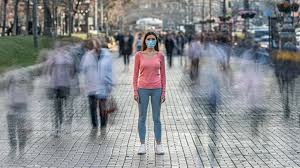
Usually, at the end of the year, I land myself up in a blue funk, contemplating yet another twelve months of “lack of weight loss”, bad A1C numbers, and the general plateauing that characterises middle age, looking wistfully at those who have achieved so much and telling myself “God doesn’t exist” and “God doesn’t care for me”, all at the same time. Not this year though, I am just glad I am going to be seeing January 1st. Alive.
And if you are reading this, you should be happy too. If you and those you love have made it through this year, consider yourself extremely lucky.
Now, staying alive is something we so take for granted, that it’s not something that gives us any comfort in any other year, but in 2020, when life has become like batting against the new ball on a green top in Melbourne, going in undefeated at stumps is a privilege.
This is not to trivialise businesses shutting down and jobs lost, but they can be brought back again, and they will, but, not life, and 2020, if it has any silver lining, has made us appreciate the high privilege it is to be able to breathe. Literally and figuratively.
And then there are the small things that 2020 has made me thankful for. First-day Hindi releases on streaming, which meant at least I didn’t have to pay for theatre tickets and popcorn to watch Ludo. A medical reason to not socialise. The ability to terminate Zoom interactions with friends and family, during those uncomfortable lulls in conversation, by just saying “my tablet is out of charge”, something you can’t do during normal face to face interactions. The time saved by not driving to work, more time with my family, and perhaps most importantly, that extra time in the morning spent sleeping.
Will 2021 be better? I don’t know, if I knew when stuff hit bottom, I would be making a killing at the stock market. I can only hope that the next year will be better, in which case there will be lot of good things to look forward to, for there is nothing more exhilarating than a rebound up.
And what if it gets worse? Well 2020 would have given you good practice.

MELBOURNE: Fourth India-Australia 2+2 Secretary-level Consultations

TORONTO: India’s response to diplomatic communication from Canada

NGERULMUD: Shri Harsh Kumar Jain concurrently accredited as the next Ambassador of India to the Republic of Palau

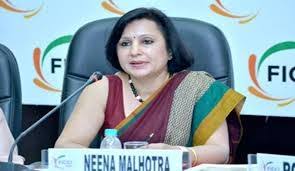
STOCKHOLM: Dr. Neena Malhotra appointed as the next Ambassador of India to the Kingdom of Sweden
2020 will be remembered as time of the pandemic. The fallout will be felt for years

KINGSTON: Shri Subhash Prasad Gupta concurrently accredited as the next High Commissioner of India to St.Vincent and the Grenadines
-
 Diplomatic News2 years ago
STOCKHOLM: Dr. Neena Malhotra appointed as the next Ambassador of India to the Kingdom of Sweden
-
Opinions5 years ago
2020 will be remembered as time of the pandemic. The fallout will be felt for years
-
 Diplomatic News2 years ago
KINGSTON: Shri Subhash Prasad Gupta concurrently accredited as the next High Commissioner of India to St.Vincent and the Grenadines
-
 Politcs2 years ago
LONDON: Indian-Origin Candidate On How He Plans To Win London Mayoral Polls
-

 Technology2 years ago
MARYLAND: All About Pavan Davuluri, New Head Of Microsoft Windows
-

 Sports2 years ago
DODOMA: Milind Soman At “Friendship” Marathon Organised By India, Tanzania
-

 Business2 years ago
LONDON: UK Court Allows Sale Of Nirav Modi’s Luxury London Apartment
-
 Science2 years ago
WASHINGTON: Who Is Aroh Barjatya, Indian-Origin Researcher Who Led Recent NASA Mission