
Culture
CALIFORNIA: Climate Concerns Center Focus At Give-Indiaspora Philanthropy Summit 2023

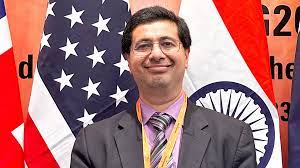
CALIFORNIA: Social entrepreneurs, philanthropists, academicians and others from all over US and India came together in September at the Stanford Faculty Club for an all day Give–Indiaspora Philanthropy Summit.
Thought provoking panel sessions, interesting keynotes and fireside chats with informal networking were the highlights of the event set in motion by Sanjeev Joshipura, Executive Director, Indiaspora with a brief introduction about Indiaspora and collaboration between Give and Indiaspora.
From a poetic opening keynote by Nadir Godrej, Chairman and MD of Godrej Industries on Rewiring Climate Action: Shaping Business Through Behavior, Culture and Systems to a candid Q & A with Vinod Khosla on his perspective on climate and AI- the esteemed speakers and inspiring sessions kept the audience enthralled and awestruck.
Scale and speed of social initiatives and need for improvement in trust and discovery with ease of giving to India were emphasized as success imperatives by various speakers.
Sustainability as a key corporate strategy with intermingling of profitability was also one of the main themes emphasized in the myriad discussions.
Climate Crisis Above All
In her opening remarks and introduction to Godrej, Radhika Shah, Co President, Stanford Angels and Entrepreneurs commented about the need for shift in thinking, cultures and corporate behavior to address the climate crisis.
Then, Godrej spoke about the Good and Green Program developed in collaboration between management and employees at Godrej Industries and merits of the Corporate Social Responsibility tax in India and how the diaspora leaders can get involved with climate change initiatives in India.
“Watershed development (the conservation; regeneration and the judicious use of all the natural resources particularly land, water, vegetation and animals and human development) is very economical. Proper carbon price and better technology can make a huge difference to avert the climate crisis,” opined Godrej.
Later, in a panel discussion on Climate Action, Community Resilience and Collective Opportunity moderator Heather Grady, VP, Rockefeller Philanthropy Advisors set the stage for the discussion by the premise, “Every action counts. Adaptation and resilience are both important for climate initiatives.”
The speakers expressed their eclectic thoughts on actions and opportunities in the climate space and on ground realities and work in the arena.
“Climate crisis is a biodiversity and humanitarian crisis and also a human livelihood crisis. We have an integrated and multi dimensional approach and involve the local communities to understand their experiences and perceptions and how to incorporate those into our programs. Our climate resilient agriculture and agro biodiversity initiatives are the results of the on ground knowledge,” said Kamal S Bawa of Ashoka Trust for Research in Ecology and Environment(ATREE).
“There is a real opportunity for India to show an alternative pathway of growth. Water levels have gone down drastically. Addressing the quantity of urea in fertilizers is significant. ITC is an unsung corporate hero in India.
30 million people in India are involved in the fishing industry but fishing volumes have gone down 30 percent in the last 10 years. There are some deep structural problems that need to be addressed,” said Hisham Mundol- Chief Advisor India Environmental Defense Fund.
Dr Annapurna Vancheswaran, MD, The Nature Conservancy, India spoke about the largest wastewater project in Chennai and Nature Conservancy’s work on water collectives and with indigenous communities in central India for forest conservation and livelihood regeneration.
In another interesting and insightful panel titled What is the Right Way of Thinking About Climate Philanthropy moderated by Dr. Temina Madon, Co-Founder of The Agency Fund, eclectic speakers reiterated the initiatives to be community focused with community involvement as pertinent to success.
Acceptance of complexity in functioning and philanthropy to be accepted as risk capital were highlighted by the panel.
“Technology does not solve anything but is an enabler to solve real issues. Last few grants of mine have been trust based grants. It’s a myth that NGOs do not collaborate. The insights and values that we get from our NGO partners is huge,” said Donald Lobo-Founder Project Tech4Dev.
He highlighted the passion and commitment of the youth towards finding solutions for the climate crisis. “We are engines of innovation for many programs being led by passionate young inventors and entrepreneurs,” added Lobo.
In expressing her thoughts about India’s domestic philanthropy, Pritha Venkatachalam, Partner and Co Head, Asia and Africa, the BridgeSpan Group, India, opined, “Domestic philanthropy in India is growing but very little goes towards climate. For me, climate and climate philanthropy is replenishing natural capital. Increasingly, Indian women are becoming a part of the climate solution.”
Emphasis for more trust based flexible funding in philanthropic giving was expressed by Vishal Kapoor, Director Dasra. “There is an amazing amount of work going on in India on climate. There are many avenues today. The Indian Government is also a player in some of the collaboratives and initiatives.”
Q & A With Vinod Khosla and Closing Keynote By Arun Majumdar
“No individuals can give to the level of what governments or foundations can give, but individuals can give rapidly and take venture risks. Individuals do what is additional and are catalytic to larger giving from governments and foundations. Individuals can take risks that foundations or governments are unable to take,” said Vinod Khosla in a Q & A with Atul Satija, Founder 2.0 and CEO of Give.do.
“My willingness to fail allows me to succeed is true for both nonprofit and for-profit ventures. Sustainability and affordability are both important in social enterprises. I worry about the climate a lot,” added Khosla who expressed his bullishness about AI in the coming decades.
“Technology can be used for both good and bad and same with AI. It’s important for good AI to counter bad. AI can be instrumental in bringing behavioral changes too. People will not need to work on an assembly line, but I predict a future where people will work on their passions alone. It is important to find transition paths during the time of rapid and wide scale disruption that AI will bring,” said Khosla.
“I worry about nation-states like China, North Korea and Russia who can use technology to their advantage but not for the benefit of all,” said Khosla.
Arun Majumdar followed Khosla’s keynote with an academic talk on Sustainability-the defining challenge and opportunity of the 21st Century.
“There is a human consumption tsunami. You don’t have to explain climate change to people in the global south. Climate change impacts everything-from water to health to every aspect of life on earth,” said the Dean of the Stanford Doerr School of Sustainability.
He emphasized the initiatives needed to find economical ways of removing carbon dioxide from the atmosphere and a low cost scalable approach to convert crop residues into soil carbon.
“We cannot repeat the mistakes of the 20th century. We have to be inclusive. India’s approach towards inclusiveness has been emphasized by Prime Minister Modi. Environmental justice is an international issue, a universal human issue and not a domestic issue,” concluded Majumdar.
Philanthropy to India
“It’s a transformative period for philanthropy to India. The current percent of annual wealth to philanthropic giving by Indian Americans is a mere .12 percent compared to 2 percent by all Americans. Second and third generation of Indian Americans have great and early access to wealth and have a desire to give back, but do not have the same connections to India as their parents and grandparents,” said Amit Varshneya, Senior Advisor, Give US in his presentation on Enabling the Diaspora to Give.
In the panel discussion on Pathways to Accelerate Effective Diaspora Giving to India, the speakers enumerated the areas where the diaspora giving has happened, the challenges and successes.
“Not all transformative giving has to be money. With serious wealth comes serious responsibility. We have to own that responsibility, beyond giving to families and religious institutions,” said Nalini Saligram, Founder and CEO of Arogya World.
She hinted at the need for a leap of faith from donors. “Health is a very difficult area especially to provide data for at every checkpoint,” said Saligram.
“Taking an entrepreneurial mindset to the social challenges and scale is very important in a nation like India. Amazing talent exists in small districts in India and relatable role models are quite helpful. We have to identify and nurture talent. Local community has to own the initiative and government involvement is the best way to scale,” said Raju Reddy, Founder Kakatiya Sandbox who funds agricultural projects in rural Telangana districts and frequently visits to see the work in action.
He pointed that reliable access to water is the biggest factor to agricultural productivity in India where 70 percent of the population is agriculture dependent. He also emphasized the importance of relationships with district collectors, district education officers, magistrates for their work at the district level.
“I was a young success from Silicon Valley, but had no idea of what to do on the philanthropic side of identifying the causes where money can go,” said Anand Rajaraman– Partner Rocketship.vc candidly. Besides other causes, Anand donates to the India Literacy Project.
He pointed that Give.do is an organization that can do the due diligence to bring the trust factor for the givers and the importance of the network effect in the philanthropic world.
“We donate where our friends give. Trusted networks like Give.do are very useful and can coach the non profits of how to pitch right to the data driven tech community in the Silicon Valley,” suggests Rajaraman.
Sessions On Differently Abled, Animal Rights and Others
In a passionate session that incited a standing ovation, V R Ferose, Founder and Chairman of India Inclusion Foundation spoke about the Invisible majority: India’s Abled Disabled.
“In India disability is a taboo topic. Narratives in religions on disability are flawed and need to change. Everybody’s good at something. We need to celebrate people with disabilities for who they are. Disability is the largest minority in the world. Social change and mindset shifts at scale takes time,” said Ferose.
In another passionate talk on Inclusivity across species: Building Bridges Between Animal Justice and Social Justice, Parag Agarwal of India Animal Fund-a backbone organization that guides strategy, identifies inventions for donors and NGOs, said, “Animal use in our society has been normalized.
Approval of non animal models in drug manufacturing has recently been approved by FDA. Non animal testing methods are also better at water conservation. To make an impact in today’s world, you have to make partnerships.”
Some other post lunch sessions included a presentation on Kids Education Revolution by Dimple Bangalore of Teach for India US; a conversation by Youth Leaders by India Philanthropic Alliance and a talk on the theme of One World, One Health-Ancient Paradigms and Modern Public Health by Ramanan Laxminarayan, Founder and President, One Health Trust.
Ramanan emphasized the need for Inter disciplinary thinking and solutions; and an integrated view to solving the climate crisis and not looking at diet, water or agriculture separately. “India is not just a land of problems, but also a land of solutions,” said Ramanan.
Then, Anshu Gupta, Founder Director Goonj presented the work of the non-profit and opined “In India no solution is possible without involving the local people. Top down approach is not a successful approach.”
He moved the audience with a narration about the organic work that locals in various parts of India initiate without any governmental or NGO involvement and the importance of sustaining the dignity of people in charitable giving. “Sustained charity kills dignity,” said Gupta. Ashish Shah, CEO North America, Give.do gave the ending vote of thanks to the speakers and attendees.








NEW YORK: Celebrations sparkled up the Times Square in New York City yesterday as the Indian community and several US citizens gathered to observe the Hindu festival of lights.
The event featured performances from various cultural groups. Among the notable attendees were Mayor Eric Adams, New York State Assemblywoman Jennifer Rajkumar, Senator Chuck Schumer and Consul General of India in New York, Binaya Pradhan. Ms Rajkumar has been a key advocate for recognizing Diwali as a school holiday in the USA throughout.
Mayor Adams took to social media platform X (formerly, Twitter) to address the event.
“Proud to be with our Hindu brothers and sisters today for the annual Diwali at Times Square celebration as we push away the darkness and welcome in light all across our city,” he wrote.
What better place to celebrate the festival of lights than in the Crossroads of the World?
Proud to be with our Hindu brothers and sisters today for the annual Diwali at Times Square celebration as we push away the darkness and welcome in light all across our city. pic.twitter.com/VauEgY14IO
— Mayor Eric Adams (@NYCMayor) October 20, 2024
The official Twitter account of the Consulate General of India, New York also shared pictures of the glamourous celebrations on social media.
Diwali @ TimesSquare : Indian American Community & American Friends join together at Times Square to celebrate Diwali.@narendramodi @PMOIndia @MEAIndia @IndianEmbassyUS @IndianDiplomacy @diaspora_india @binaysrikant76 pic.twitter.com/kylTXrtbni
— India in New York (@IndiainNewYork) October 20, 2024
Neeta Bhasin, founder of Diwali at Times Square, also played an instrumental role during the celebration. The festivities culminated in a ceremonial lighting of diyas (lamps), symbolizing hope and renewal.
Diwali has been celebrated in the heart of New York City since 2013. As attendees gathered to witness this moment, they were reminded of the festival’s core values and its ability to unite diverse communities.
CG @binaysrikant76 joined friends from Indian-American Community & American friends to celebrate Diwali; Spl thanks to Senate Majority Leader Senator @SenSchumer , Mayor Eric Adams @NYCMayor , Assemblywoman @JeniferRajkumar for joining & to main organiser of the event Ms. Neeta… pic.twitter.com/Ul7gsLoiYb
— India in New York (@IndiainNewYork) October 20, 2024
Diwali has also been officially recognized as a school holiday in New York City last year. About 4.4 million Indian origin people reside in the US with persons of Indian origin constituting the third largest Asian ethnic group in the US, according to ANI. New York, San Francisco and Chicago metropolitan areas are places in the USA which have the highest population of the Indian community in the country.
Another event to commemorate Diwali was organised by the Indian Consulate in Pennsylvania.
Deputy Consul General @varunjeph joined the Diwali celebrations by Khalsa Asian American Association in Upper Darby, Pennsylvania along with members of the Indian diaspora and Asian American community.
Thank you @UpperDarbyPA Mayor Ed Brown and PA State Senator Tim Kearny… pic.twitter.com/6LzwVJ3FR1
— India in New York (@IndiainNewYork) October 20, 2024
Deputy Consul General Varun Jeph joined the Diwali celebrations by the Khalsa Asian American Association along with members of the Indian and Asian American community.
While the festive spirit, through such events and recognitions, continues to exhibit an attempt at endeavours towards fostering a spirit of unity and equality, the Asian American Pacific Islander (AAPI)’s recent report showed another side of South Asian experiences. As reported by Reuters, the AAPI study shows that South Asian people in the US have been facing alarmingly high levels of hate ahead of the 2024 elections, which transcends not just to the common people but also to heavyweights such as Kamala Harris, and Usha Vance. Such celebrations of South Asian festivities thus do their bit in bringing together the diverse communities in a dazzling show of vibrant unity across the globe.
Last year, Prime Minister Narendra Modi sent a video message to ‘the attendees, emphasizing the festival’s role in promoting unity and goodwill. He stated that Diwali serves as a reminder of the victory of good over evil and the importance of knowledge over ignorance. He has also highlighted the importance of the Indian community in the US and referred to them as a ‘living bridge’ connecting the two places. Diwali falls on November 1st this year.
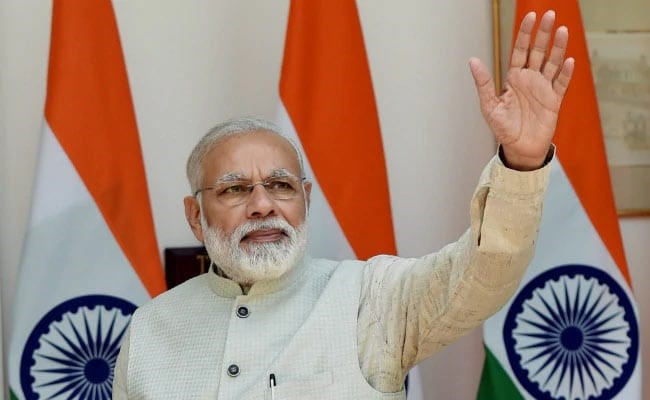
NEW YORK: Prime Minister Narendra Modi recently addressed tens of thousands of Indian-Americans in a grand community event at the Nassau Coliseum in Long Island. The chants of “Modi, Modi” filled the stadium as the prime minister walked on stage to address people of Indian origin.
The Prime Minister started his speech with the chants of “Bharat Mata ki Jai!”. He began by saying that even the ‘Namaste’ has gone from being local to global, and credited the Indians settled overseas for it.
A series of cultural performances entertained the people gathered at the stadium, who were enthused as they waited for the Prime Minister’s arrival.
During his speech, Prime Minister fondly recalled his previous community events in the United States – 2014 at the Madison Square Garden, 2016 in San Jose, California, 2018 in Houston, Texas, 2023 in Washington and now in Long Island.
He credited the Indians settled in the United States. He said that they have been the bridge between the two nations and have helped strengthen the India-US relationship. He said “you all have come seven seas apart, but nothing can ever take the love of India away from your hearts and souls.”
He said that people from different parts of India may have settled overseas – here in the US too and have become US citizens, but “the sentiment that brings us all together is, ‘Bharat Mata ki…(Jai! chanted the spectators)’.”
“This sentiment is what keeps us united, and this is our biggest strength, no matter where we go in the world,” he said, adding that “It is this sentiment that helps us be peaceful, law abiding global citizens – what makes India proud of its children – and makes the world realise that India is the world’s ‘Vishwa-Bandhu’.”
Calling the Indians settled in the United States ‘Rashtradoot’ (Ambassadors), the prime minister thanked the Indian community in the United States for the respect India has earned in that country, adding that “It is our Indian values and culture that makes us One.”
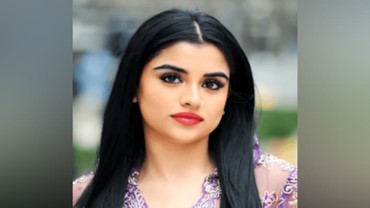
WASHINGTON: Dhruvi Patel, a Computer Information System student from the USA, has been declared the winner of Miss India Worldwide 2024, the longest running Indian pageant outside of India.
Dhruvi aspires to be a Bollywood actor and UNICEF Ambassador.
“Winning Miss India Worldwide is such an incredible honour. It’s more than a crown – it represents my heritage, my values, and the opportunity to inspire others on a global scale,” Dhruvi said after her crowning in Edison, New Jersey.
Lisa Abdoelhak from Suriname was declared the first runner-up, while Malvika Sharma from the Netherlands was adjudged the second runner-up in the same race.
In the Mrs category, SuAnn Mouttet from Trinidad and Tobago was the winner, with Sneha Nambiar the first and Pawandip Kaur from the United Kingdom the second-runner up.
In the Teen category, Sierra Suret from Guadeloupe was crowned Miss Teen India Worldwide.
Shreya Singh from the Netherlands and Shradha Tedjoe from Suriname were declared the first and second runners-up.
The beauty pageant is organised by New York-based India Festival Committee and is headed by Indian-Americans Neelam and Dharmatma Saran.
The crown is celebrating its 31st anniversary this year.

MELBOURNE: Fourth India-Australia 2+2 Secretary-level Consultations

TORONTO: India’s response to diplomatic communication from Canada

NGERULMUD: Shri Harsh Kumar Jain concurrently accredited as the next Ambassador of India to the Republic of Palau

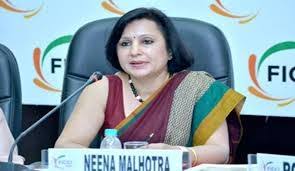
STOCKHOLM: Dr. Neena Malhotra appointed as the next Ambassador of India to the Kingdom of Sweden
2020 will be remembered as time of the pandemic. The fallout will be felt for years

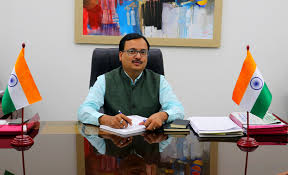
KINGSTON: Shri Subhash Prasad Gupta concurrently accredited as the next High Commissioner of India to St.Vincent and the Grenadines
-
 Diplomatic News2 years ago
STOCKHOLM: Dr. Neena Malhotra appointed as the next Ambassador of India to the Kingdom of Sweden
-
Opinions5 years ago
2020 will be remembered as time of the pandemic. The fallout will be felt for years
-
 Diplomatic News2 years ago
KINGSTON: Shri Subhash Prasad Gupta concurrently accredited as the next High Commissioner of India to St.Vincent and the Grenadines
-
 Politcs2 years ago
LONDON: Indian-Origin Candidate On How He Plans To Win London Mayoral Polls
-
 Technology2 years ago
MARYLAND: All About Pavan Davuluri, New Head Of Microsoft Windows
-

 Sports2 years ago
DODOMA: Milind Soman At “Friendship” Marathon Organised By India, Tanzania
-
 Business2 years ago
LONDON: UK Court Allows Sale Of Nirav Modi’s Luxury London Apartment
-
 Politcs2 years ago
LONDON: Run For Modi” Event In London To Drum Up Support For PM Modi