
Technology
LONDON : The Technology Helping Keep Women Safe On The Streets

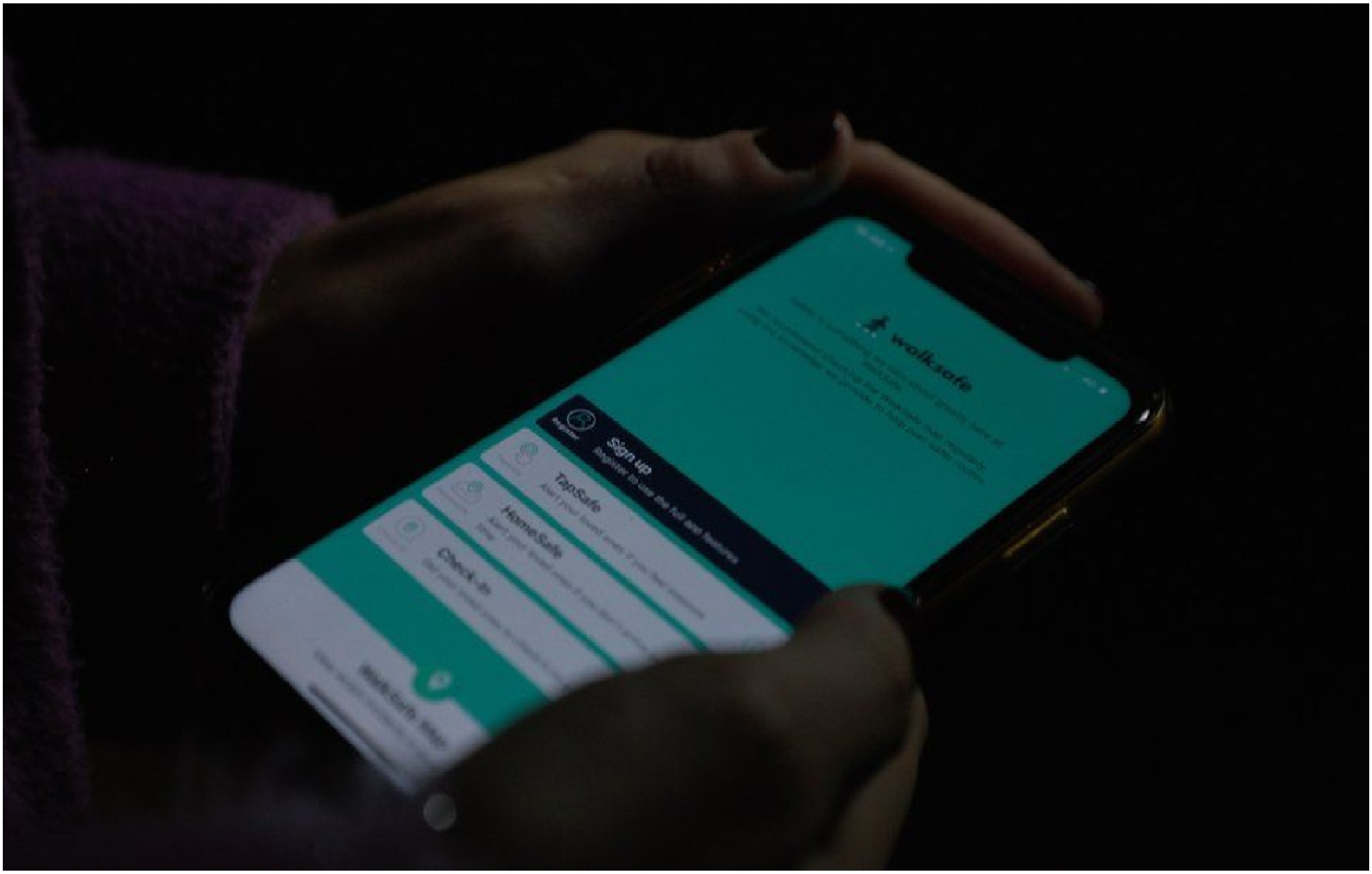
LONDON : Half of all women have felt unsafe at some point walking alone in the dark, according to recent figures from the Office for National Statistics.
They might call a friend, share their location on WhatsApp, or have their keys to hand – all strategies to stay secure.
Sexual harassment against females has been under the spotlight for most of this year, with women across the UK turning to their own methods to feel better when they are out at night.
So could technology play a role in making women feel safer on our streets?

Since the murders of Sarah Everard and Sabina Nessa, the WalkSafe app has had a surge in popularity, and is now the fastest-growing safety app in the UK.
Founder Emma Kaye came up with the concept after experiencing harassment, groping and flashing.
“Our app is really bitter-sweet because, of course, we love that we’re busy. However, we really wish it didn’t have to exist. No-one wants to live in a world where we need a safety app, but sadly there is a place for it,” she said.
WalkSafe will have a new sat-nav feature coming early next year, which will include a live map where your family and friends will be able to track your journey and chat with you in real time. For now its unique selling point is a map which allows people to plan their safest route home, by looking at recent crime data.
Ms Kaye said: “Our app encourages people to have precautionary measures to avoid crime, rather than reactionary measures when in an unfortunate situation.
“We have senior ex-Metropolitan Police detectives and crime analysts comb through this data, and categorise it into areas the user would want to know about. By looking at the crime patterns, users can identify crime hotspots so they can plan safer routes.”
Since launching in March this year, the app has had more than 560,000 downloads.
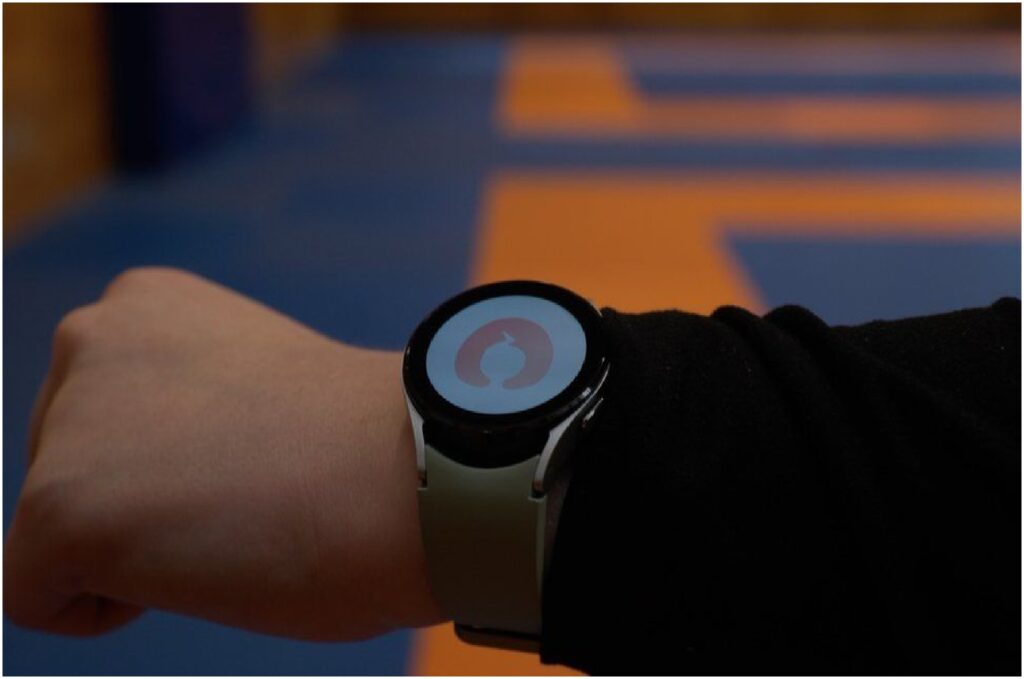
At the University of Bath, researchers are trying to solve the problem of safety products which are difficult to physically activate. They are developing a women’s smartwatch app called Epowar which would automatically send alerts if it senses the user is in distress – by monitoring heart rate and body motion.
Co-founder, student E-J Roodt, said the idea came to her while jogging in a badly-lit park, and worrying about the risk of an attack.
“When I saw that smartwatches were being used to detect heart attacks I thought, well, maybe that technology could be applied to women’s safety,” she said.
Although the sample size is small, the app uses artificial intelligence to recognise distress, and responds if a user is attacked when walking or running alone.
Ms Roodt said: “It occurred to us that a smartwatch with this app may be a way to alert others if a woman is restrained or struggling.
“The key is that it would all happen automatically, and an assailant would have little or no time to prevent this – which is not always possible with conventional panic buttons, rape alarms or your mobile phone.”

Prosecutions
Founder of the bSafe app for smartphones, Rich Larsen, believes his technology could help bring about prosecutions.
It has an emergency alarm feature which is voice-activated. It then automatically starts live-streaming video and audio to chosen contacts, and records everything that is happening.
Mr Larsen said: “These recordings could be used in evidence in court cases – like rape – which are often hard to prove.”
The features of the app are based on the experience of his daughter, Charlen, who was raped. Charlen – who’s waived her right to anonymity in order to speak out on the issue – thinks if she had had bSafe, she wouldn’t have had to struggle as much with the guilt and shame she felt.
Crown Prosecution Service data for 2020 shows that of the 58,845 rapes recorded, only 2,102 were prosecuted, with 1,439 resulting in convictions.
bSafe has also been of interest to other app companies. Mr Larsen said: “We are currently developing a API-platform so we can easily implement these features in other apps.”
Government priority
In July the Home Office launched a £5 million fund to help improve the safety of women in public spaces at night. Some of the successful bids include initiatives involving technology.
For example, police in Bristol are using new kits to test whether drinks have been spiked in nightclubs.
Cheshire police are improving current call handling technology to provide an instant visible and reassuring response to a female calling for support.
West Yorkshire Combined Authority is promoting access to an online link with safety information for women on public transport, such as bus tracking, so there is no longer a need to stand alone at a bus stop.

Technology can also be misused by those seeking to harm or frighten people. So, for instance, the same technology that allows you to find your lost smartphone can be used by someone wanting to track or stalk someone.
Paladin, the national anti-stalking advocacy service, says tech firms need to do more to protect victims if tech is misused.
Rachel Horman-Brown, chairwoman of the charity, said: “Many victims are tracked and monitored through their phones or tablets by spyware.
“So actually stalkers don’t even need to physically get a tracking device on the victim to be able to monitor them.
“Spyware is concerning as it can enable a stalker to switch on the camera on a victim’s mobile phone, so that they can see and hear what is happening. They can also read and send text messages from the victim’s phone, as well as tracking their whereabouts.”

The proliferation of tracking devices, like Apple AirTags or The Tile, which help you find your wallet, keys or luggage, has also led to an increase in fears of stalking.
“These small inexpensive tags can potentially make it very easy for a stalker to hide one in the victim’s car or personal possessions, and then be able to track their victim’s whereabouts,” said Ms Horman-Brown.
Bigger issue
Farah Nazeer, chief executive at Women’s Aid, believes the issue of safety cannot be solved by tech alone: “Whilst technology – such as safety apps on phones and smartwatches – can play a role in helping women feel safer on the streets, these interventions are temporary sticking plasters, which ignore the real cause of male violence against women.
“Women feel unsafe on our streets, not because of a lack of street lighting or safety apps, but because of the culture of sexism and misogyny, which makes violence against women and girls all too common. It must not be tolerated any longer.
“Far too many women continue to tell us that their experiences at the hands of violent men are belittled, disbelieved and dismissed by police and the criminal justice system – the very services that are supposed to protect us.
“We must focus on challenging the sexist attitudes that are deeply rooted in these services and systems, so that women can walk home feeling confident that they are safe and protected.”










Technology
CAIRO: Indian-Origin Teen, Son Of IIT-JEE Topper, Wins Gold At World’s Toughest Programming Contest
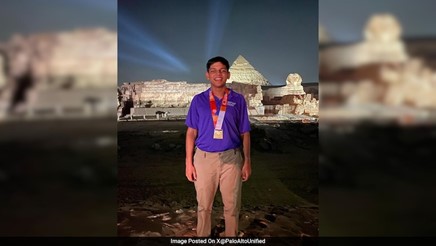
CAIRO: Agastya Goel, a 17-year-old Indian-origin student from California, has won his second gold medal at the 36th International Olympiad in Informatics (IOI), which took place in Egypt. Agastya, son of Stanford professor Ashish Goel, secured the fourth overall rank at the prestigious contest, also dubbed as the world’s toughest programming competition for high school students.
Agastya scored 438.97 out of 600, while Kangyang Zhou of China topped the event with a perfect score of 600. A total of 34 students were awarded gold medals this year, including fellow Indian participant Kshitij Sodani, who ranked 21st.
This marks the 17-year-old’s second gold at the IOI. His father, Ashish Goel, made waves in 1990 by topping the IIT-JEE exam before going on to build a distinguished career at companies like Twitter and Stripe.
Who is Agastya Goel?
Agastya Goel, a junior at Henry M Gunn High School in Palo Alto, California, loves physics, computer science, and music. His hobbies include tennis, hiking, stargazing, and playing the guitar and piano.
Agastya’s interest in physics began at a young age, with his father introducing him to the subject during car rides and hikes. One memorable experience was learning about projectile motion while playing Angry Birds. This sparked a fascination with physics that has only grown stronger over the years.
Agastya’s competitive spirit was ignited through the USACO competition series, which he started preparing for in 6th grade. His hard work earned him a spot at the USACO training camp in his freshman year, followed by selection for the US IOI team.
Initially, Agastya considered majoring in computer science, but after exploring physics, he discovered a new passion. He spent 14 days intensively studying physics over winter break and was hooked.
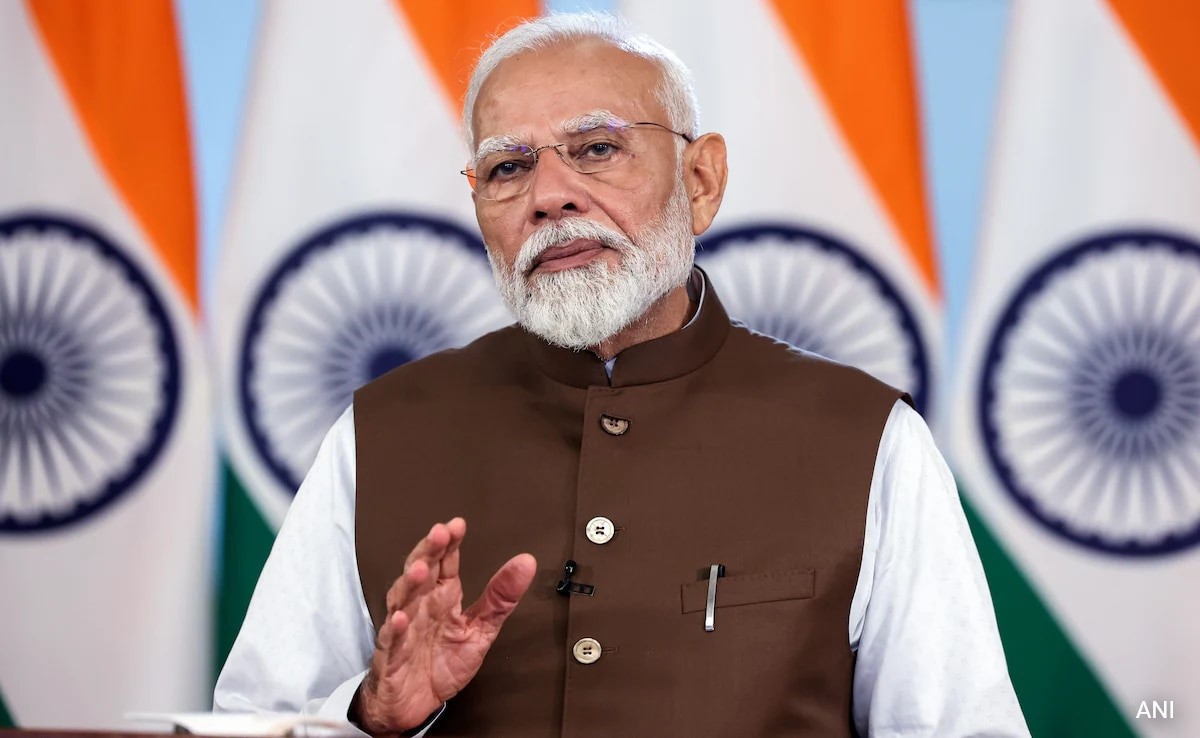
CALIFORNIA: Indian-origin business leaders from the IT industry lauded Prime Minister Narendra Modi’s leadership for putting India on the global map as a “credible innovator and leader” for all nations to invest in and grow.
Speaking at the Indiaspora AI Summit 2024 on ‘Can Artificial intelligence be good force for future or not’ at the University of Stanford on April 26, Informatica CEO Amit Walia said, “India is perceived very differently in the global space. It’s a space of innovation. It’s a space of human capital. It’s a space of progress and innovation. And as we look forward, what Modi has been able to do is put India into the global map as a credible innovator, leader for all countries to invest in and grow.”
Speaking at the same event, Elastic CEO Ashutosh Kulkarni said that PM Modi and the government have been doing amazing work.
Mr Kulkarni said, “The Prime Minister and the government has been doing some amazing work and their focus on being open to innovation, their focus on industry, their focus on bringing the population, India is now one of the, it is the largest, most populous country in the world and bringing that population towards progress, the way they have tapped into the potential of this country has just been fantastic.”
Calling PM Modi’s era “amazing,” Mayfield Fund Managing Partner Navin Chaddha praised PM Modi’s leadership for ties between India and the US and his ability to connect the Indian diaspora which he stressed is doing extremely well in the tech industry. He noted that India is making progress in using technology and improving its infrastructure.
Navin Chaddha said, “The Modi era has been amazing, the kind of relationship they’ve been able to build with the United States. And to be able to connect the Indian diaspora, which is doing extremely well in the tech industry, hats off to them. And also the progress India is making in using technology, improving the infrastructure is just amazing. So, Mr Modi, keep doing what you’re doing.”
Rohit Jain, Speaker and Moderator – CIO, Harvard Business School, called on PM Modi to increase his guarantee, as he has always delivered. The event on Artificial Intelligence was organised to deliberate and discuss artificial intelligence.
He said, “Mr Modi needs to increase his guarantee because he’s always been delivering. So, I think his promises have been 100 per cent true. So, he now needs to promise 110 per cent and then again he’ll deliver on that. Mr Modi, thank you for what you have done, not only for India, but for the world.”
Priya Rajan, Managing Director, National Venture Coverage and Business Development, MUFG lauded PM Modi’s leadership in the entrepreneurial ecosystem. He stated that a number of VCs across the globe want to invest in India.
She said, “I see the Modi magic play is in the entrepreneurial ecosystem, which is an adventure ecosystem. So you can see the number of VCs now wanting to invest, not just where in India, investing in India, but world investors around the world wanting to do things. And you’re seeing kind of US, a ton of US global investors now setting up shops in India. I think that’s all coming back to what Modi magic has created.”
At the event, prominent Indian diaspora, along with the esteemed corporate leaders from the US shared their insights on the topic “Can Artificial Intelligence be a force for future or not.”
Rajya Sabha MP Satnam Singh Sandhu participated in the event. Notably, PM Modi has been advocating that artificial intelligence can provide a great support to help humanity’s development in the 21st century.
Taking to X, Satnam Singh Sandhu stated, “Indiaspora AI Summit, Stanford University, USA: Delighted to be a part of the summit where we had @ericgarcetti, US Ambassador to India, Indian Diaspora and business leaders from IT sectors who reiterated how PM @narendramodi Ji is leveraging AI to shape nation’s future strategy to build Viksit Bharat by 2047.”
“They highlighted PM Modi’s tech-savvy approach and his efforts to promote AI applications in various sectors like agriculture, health-care, and education for social development and inclusive growth. They also condemned the Western bias against India to rank them lower in parameters like Ease of doing business, and cite the irregularities while computing such rankings,” he added.
Earlier in December, PM Narendra Modi said that artificial intelligence is a dynamic issue and that India is working on creating a global framework for AI. He made the remarks while interacting with the participants of the Grand Finale of the Smart India Hackathon.
Speaking to the participants via video conferencing, the Prime Minister said, “AI (Artificial Intelligence) is a very dynamic issue. If one solution is brought in, the mischievous people will find another way. We have to be very alert to any new technology. It can be very useful if used within rules, but if it is used in the wrong way, it can create a lot of problems.”
“We all are aware of the generative AI-created deep fake videos that look completely real. Hence we need to be more alert before believing any photo or video. India is working on creating a global framework for AI,” said PM Modi.
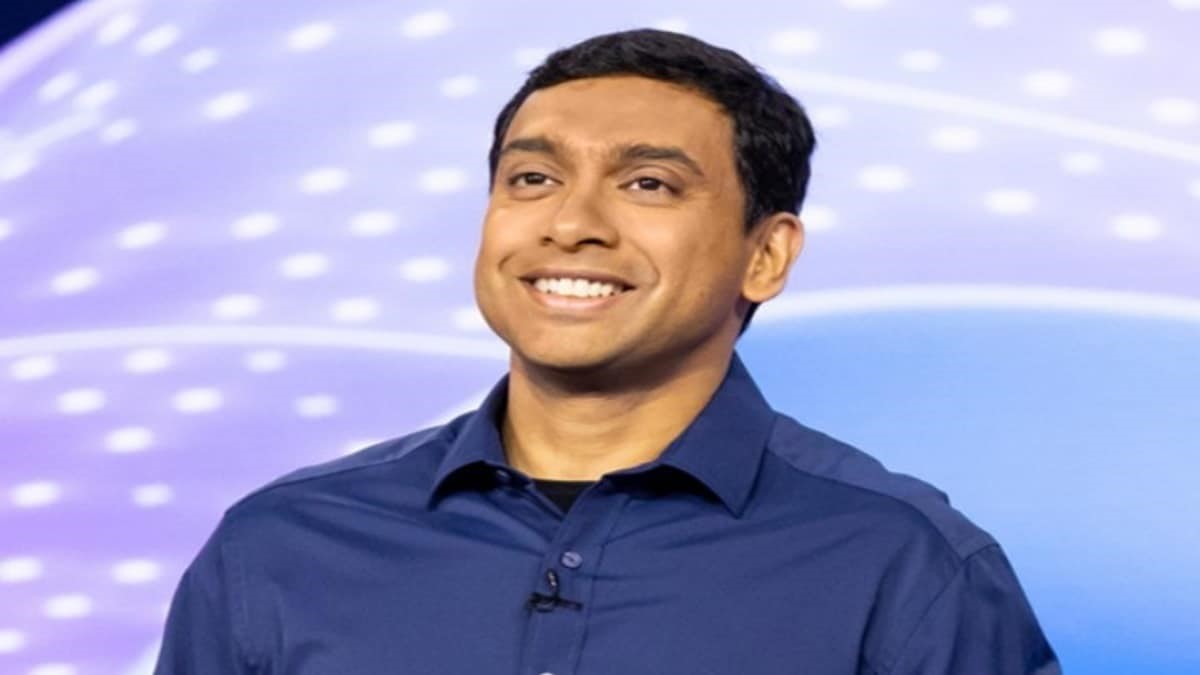
SILICON VALLEY: Pavan Davuluri, an IIT Madras graduate, has been appointed the new head of Microsoft Windows and Surface. He succeeds Panos Panay, who left for Amazon last year. Mr Davuluri previously oversaw the Surface group and now leads both Windows and Surface departments.
Rajesh Jha, Microsoft’s head of experiences and devices, said, “As part of this change, we are bringing together the Windows Experiences and Windows + Devices teams as a core part of the Experiences + Devices (E+D) division. This will enable us to take a holistic approach to building silicon, systems, experiences, and devices that span Windows client and cloud for this AI era.”
“Pavan Davuluri will lead this team and continue to report to me. Shilpa Ranganathan and Jeff Johnson and their teams will report directly to Pavan. The Windows team will continue to work closely with the Microsoft AI team on AI, silicon, and experiences,” he said.
Who is Pavan Davuluri?
- Pavan Kumar Davuluri is an IIT Madras graduate. He completed his post-graduation from the University of Maryland, according to his LinkedIn
- Mr Davuluri began his career at Microsoft as a Reliability Component Manager in 2001.
- Mr Davuluri has held various leadership positions over his 23-year tenure at Microsoft, working across PC and Xbox hardware, Surface, and Windows.
- Pavan Davuluri took on the role of corporate vice president for Windows and Silicon & Systems Integration in 2021, overseeing efforts to optimise Windows for Arm-based devices.
- Mr Davuluri was recently assigned to lead Windows engineering alongside his existing responsibilities in Microsoft’s hardware endeavours. He will lead a dedicated team developing silicon systems for Microsoft’s Windows and Surface products.

MELBOURNE: Fourth India-Australia 2+2 Secretary-level Consultations

TORONTO: India’s response to diplomatic communication from Canada

NGERULMUD: Shri Harsh Kumar Jain concurrently accredited as the next Ambassador of India to the Republic of Palau

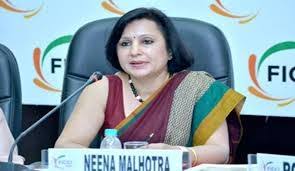
STOCKHOLM: Dr. Neena Malhotra appointed as the next Ambassador of India to the Kingdom of Sweden
2020 will be remembered as time of the pandemic. The fallout will be felt for years

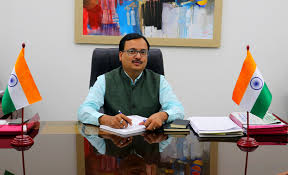
KINGSTON: Shri Subhash Prasad Gupta concurrently accredited as the next High Commissioner of India to St.Vincent and the Grenadines
-
 Diplomatic News2 years ago
STOCKHOLM: Dr. Neena Malhotra appointed as the next Ambassador of India to the Kingdom of Sweden
-
Opinions5 years ago
2020 will be remembered as time of the pandemic. The fallout will be felt for years
-
 Diplomatic News2 years ago
KINGSTON: Shri Subhash Prasad Gupta concurrently accredited as the next High Commissioner of India to St.Vincent and the Grenadines
-
 Politcs2 years ago
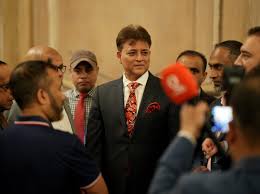
LONDON: Indian-Origin Candidate On How He Plans To Win London Mayoral Polls
-

 Technology2 years ago
MARYLAND: All About Pavan Davuluri, New Head Of Microsoft Windows
-

 Sports2 years ago
DODOMA: Milind Soman At “Friendship” Marathon Organised By India, Tanzania
-
 Business2 years ago
LONDON: UK Court Allows Sale Of Nirav Modi’s Luxury London Apartment
-
 Science2 years ago
WASHINGTON: Who Is Aroh Barjatya, Indian-Origin Researcher Who Led Recent NASA Mission