
Politcs
NEW DELHI: ‘Happy to see economic recovery’: FM Nirmala Sitharaman

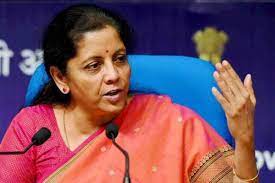
NEW DELHI: Days after announcing the mechanics of the bad bank that will remove ₹2 lakh crore of bad debt from the books of banks, and weeks after announcing a framework that will make more people eligible for loans and scrapping the retrograde retrospective tax, finance minister Nirmala Sitharaman discussed these, and the state of the economy, in an extensive interview. Edited excerpts:
You announced on Thursday that the government will provide ₹30,600 crore in guarantees to the National Asset Reconstruction Company Ltd to buy ₹2 lakh crore of bad loans from banks. This will be in a 15:85 split, with NARCL offering banks cash for 15% of the value of the assets and issuing security receipts for the rest (partly guaranteed by the government), which the banks can sell in the market. Do you think there will be appetite for these securities?
Yes. That these assets have been sitting without resolution need not give us the impression that they have no value. The resolution formula is the one that will be given priority. Not liquidation. When you look at resolution – there is an implicit message being given that these are workable assets, and that with some doing they will be valuable.
There will definitely be interest in the market.I lay a lot of emphasis on the professionals (managing the assets), which is why, along with NARCL, we have set up India Debt Resolution Company Ltd. It will have panels of experts; panels because the assets belong to various categories. These panels will deal with assets in domains in which they have expertise. With that kind of specialised application of mind on each of these assets, we think they will be made up in such a way, and valued in such a way, that the market will find it interesting. Bank officials do not have that kind of specialisation.
IDRCL is key to this, right?
IDRCL is 49% owned by the banks themselves; the Indian Banks Association will have to drive the process as these assets belong to the banks; IBA will have greater oversight on this. It is in their interest to have these run efficiently.There’s also a fee (against the guarantee) that NARCL will have to pay (to the government); the fee becomes higher with time; so the sooner you sell an asset, the better it is.
Are you confident this will work?
Yes, because this entire mechanism was driven by the banks; many of these big-ticket exposures are through consortia; unless all banks agree, no resolution is possible. Now because it’s through IBA, it’s for them to constantly keep moving towards better resolution, towards consensus.
So something we have all been talking about for ages — a bad bank — is finally here.
In a slightly different formation which will be a lot more transparent and owned by the banks themselves. In a country like the US, 99% of the banks are private. In India you have the public sector holding a big share.
Is this a transient mechanism?
At this stage, we are not describing what happens after five years. ₹2 lakh crore will have to be cleared in five years. Beyond that I envisage that the banks themselves will be professional enough to figure out how they are going to handle their non-performing assets. If at that time — small asset reconstruction companies are not able to handle assets over ₹500 crore, and that is why we said this mechanism is for assets of ₹500 crore and above — there is a need to continue with this for larger assets, they will continue.
The misuse of a section of the Insolvency and Bankruptcy Code (IBC), where creditors agree to take huge haircuts, sometimes in excess of 90% on even good underlying assets, has resulted in demands for strengthening the law. Do you agree?
Yes and no. Where the haircuts are so significant, I think some banks have also been sitting up and saying we can’t accept this. In one recent case that resulted in a 98% haircut, I was glad that two banks voiced dissent, and they also probably went to the court and sought a stay. Such course corrections highlight that the weakness is not IBC itself but in the way the issues are being resolved. So I would look for a solution to that rather than tinkering with the act itself. Where amendments are required to strengthen the act, I am in favour of them. But in practice, if there are ways in which people are either gaming it or conveniently giving an inference that is, in spirit, not in line with the law, I think other ways of legal redressal are required. It is not a weakness in IBC but in how people are gaming it. So we will have to see both – I am happy to strengthen IBC because it is one of the better ways of resolving; it focuses on resolution of a going concern rather than liquidation.
India recently announced the launch of Account Aggregators (AAs allow individuals and enterprises to share credit and financial information relating to their accounts or transactions with one financial or service entity with others, with their explicit permission, so as to prove their credit worthiness) which could broaden the credit base even as it makes it easier for financial institutions to lend. How do you see the acceptance of these?
The small and medium enterprises and the middle class will benefit from this. We are all worried about data privacy, and while there is a data privacy law that will come, taking this avenue to provide comfort to borrowers has been received well. I think the fact that people have grasped the details of AA shows that people are willing to see how it helps optimise the system.
Are nudges required? AAs will become stronger only if more organisations with which people have dealings, telecom companies for instance, become part of the network.
Nudges are required for many things the government is doing – even small digital adaptations that people have to do. A lot of small nudges have been happening in the past year, and that is evident in the way UPI (United Payments Interface) has been growing – we are extending it to overseas Indians now. The AA framework also needs a nudge. This is a great leap forward.
But like you said, a privacy law and a data protection framework are needed.
Necessary consultations will have to happen. They can’t be bypassed. If the stakeholders are brought on board; [if] their inputs are used to strengthen the law – then there is greater acceptability when it is passed. I don’t think there will be a delay; the more the consultation, the better it is. That process will be done.
India has been ahead of the curve on many things – UPI, for instance, and AAs, but seems to be lagging behind on adopting cryptocurrencies.
It may not be the best example, but take El Salvador. The way in which they went ahead to accept it (Bitcoin) as a currency. You’d think common people don’t care about digital currency; but the public took to the streets against the move. It’s not a question of literacy or understanding – it’s also a question of to what extent this is a transparent currency; is it going to be a currency available for everyone? El Savador may be an exceptional place where they tried some experimentation. There are other countries that are talking about the central bank having a legitimate cryptocurrency. That could be a possibility.
A lot of consultation took place; RBI’s views were also taken; now we have to formulate this in the form of a Cabinet note on the balance we can strike. This is not an era where you can say I don’t care about what’s happening, or we don’t want to do anything. At the same time, are we yet ready to go the El Salvador way? We have to be sure that a futuristic thing can’t be shut out.
I remember one edit writer for Mint suggesting four-five years ago that we should have our own Bharatcoin.
We have to evolve something suitable for our systems. India has the strength of the technology; fintech gives us the command over the instrumentalities with which you can play; our economy is full of possibilities. So we have to be cautious; but we have to think it through.
You recently scrapped the controversial retrospective tax and also offered a resolution for companies slapped with this tax. What has been the response, especially from companies such as Cairn and Vodafone?
It’s been positive. We have had a round of discussions and haven’t heard any voices of discord. One of them had paid, and the government will have to pay them back but that should close the chapter, we shall not pay interest, etc. And they should end all litigation. Those details are being worked out.
Vodafone is also a shareholder in Vodafone Idea, which is a beneficiary of the telecom package your government announced recently. Do you think enough has been done for the sector?
Definitely. The way in which the package has come – it also brings in reforms. It removes a lot of anomalies, and constraints. Business has been given space to breathe. Government wants that sector to be run in a free manner and also have more than two or three players. For free and fair competition, markets should be given play; and customers will benefit.
But with companies being allowed to pay some of the amounts being deferred under a moratorium through equity, the government could end up owing chunks of Indian telecom.
I think it will be a special undertaking (a company set up for that purpose), not the government.
Are you happy with the pace of economic recovery?
I’m happy to see recovery; at this stage we want to have very positive signs from all segments so that mutually they create this thing called sentiment. If sentiment becomes positive, it creates a multiplier effect.
What is your take on the growth vs inflation debate?
I don’t think they are mutually exclusive. It is possible to have some level of inflation without affecting consumers. And growth need not be curbed because of inflation. Our push for growth will continue.
At last week’s GST Council meeting, it was decided the timing for moving fuel under GST was not appropriate. When will it be?
To a large extent, that depends on states feeling comfortable. States feel that they have very few items on which they can have a consideration to increase or decrease tax. Tax on fuel, liquor are in their hands. They feel that at this time they need to have revenues, and reach a level where they can let it go. I wouldn’t want to push states at a time like this. A post-Corona situation is not the kind of circumstance in which any state will have a comfort level (with doing this). At this stage, I am also not holding back any money that is due to them; and we are also ensuring they can borrow more.
You have extended the cess but states have been asking for an extension on compensation, which under the GST Act ends next year.
In the 43rd council meeting in October 2020 it was decided that the borrowing undertaken to meet the compensation can only be paid from cess, so it needs to be extended. Those amounts borrowed last year, and the amount we have to borrow this year despite higher revenues and paying up the dues — just to pay back the borrowed amount, we need to continue cess till March 2026. By law, compensation can be paid from cess at 14% for five years. This is being duly complied with. Beyond 2022, compensation need not be given, but cess has already been extended for paying the loan already taken till 2026. Where is the possibility of extending compensation?
So, there will be a shortfall in compensation this year also?
There will be a little shortfall in compensation, and this year also we will have to borrow.
Will you follow the same formula as last year?
Yes, we will.
Coming to the issue of excise on fuel, would the government consider cutting excise to bring down prices?
The only very strong case for me to put forward – excise levied by the Centre is not value added; it is fixed. If it were value added, each time the price increases, it goes up. And prices are going up. So, I have to balance this with what’s happening in the states (Editor’s Note: Tax on fuel levied by the state is value added). It’s also a question of time. I won’t be able to comment on it beyond that.
Do you worry about a possible taper tantrum and money exiting Indian markets if interest rates overseas are raised?
There’s no point worrying; it’s more for the government and RBI to keep watch and smoothen any impact here; you can sense it in time if you keep a watch. There is a conscious effort to do this by RBI and the government. We are keeping a watch.
There’s been a push by some countries to have India agree to net zero commitment on emissions. This could have an economic impact. What are your thoughts on this issue?
The principle that the defaulter should pay holds good. The legacy units we may have are still not of that volume as that, which ages ago, the developed world benefited from; today, they can say these are environmentally unfriendly. If countries like us have to meet our development requirements, you’d still have to have some thermal units; coal dependence will be there to some extent. We are committed to closing legacy thermal units that are inefficient, coal guzzlers which have poor productivity levels, but completely removing thermal is impossible. Our economy has different regions at differing levels of development. We still have active mines. India speaking on this should be taken seriously because the PM has invested and is committed in renewable energy. Till now, what we have achieved in terms of our commitment in COP 21 have all been achieved with India’s own funds. That $100 billion supposed to be given to developing countries (by developed countries) has not even materialised. We have completely fulfilled our commitment in COP 21 but I don’t think we can rush into net zero.
Last question. Are you satisfied with where India is now?
I feel reassured. Indians have faced it all (because of Covid), have suffered, and have shown grit to come out of it. How much ever you do — and our government tried doing as much as it could – will not be enough. This is the kind of pandemic the world has not seen before, so I am willing to hear everything people say of what we could have done [better] and so on. But I am immensely grateful to the people of India. And looking at the way the vaccination drive is progressing, I feel we will come through it.





Politcs
TORONTO: India strongly protests ‘Khalistan’ slogans at a public event attended by Canadian leaders
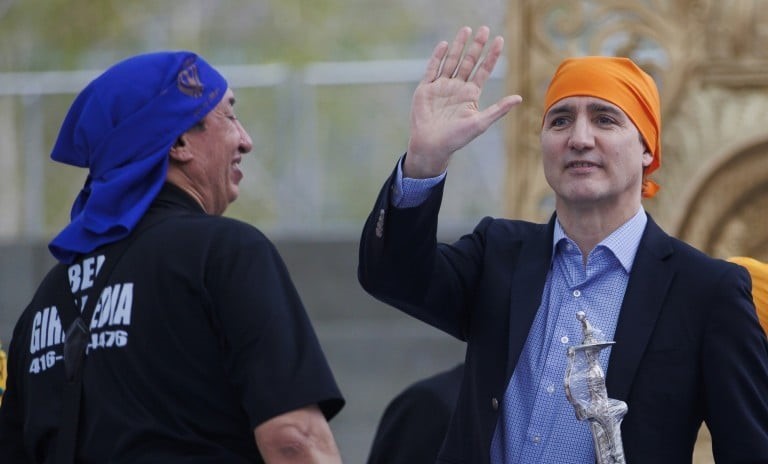
TORONTO: The Canadian Deputy High Commissioner was today summoned to the Ministry of External Affairs with regard to the raising of separatist slogans on ‘Khalistan’ at an event which was being personally addressed by the Prime Minister of Canada.
The Government of India’s deep concern and strong protest was conveyed at such disturbing actions being allowed to continue unchecked at the event. This illustrates once again the political space that has been given in Canada to separatism, extremism and violence.
Their continued expressions not only impact India-Canada relations but also encourage a climate of violence and criminality in Canada to the detriment of its own citizens.
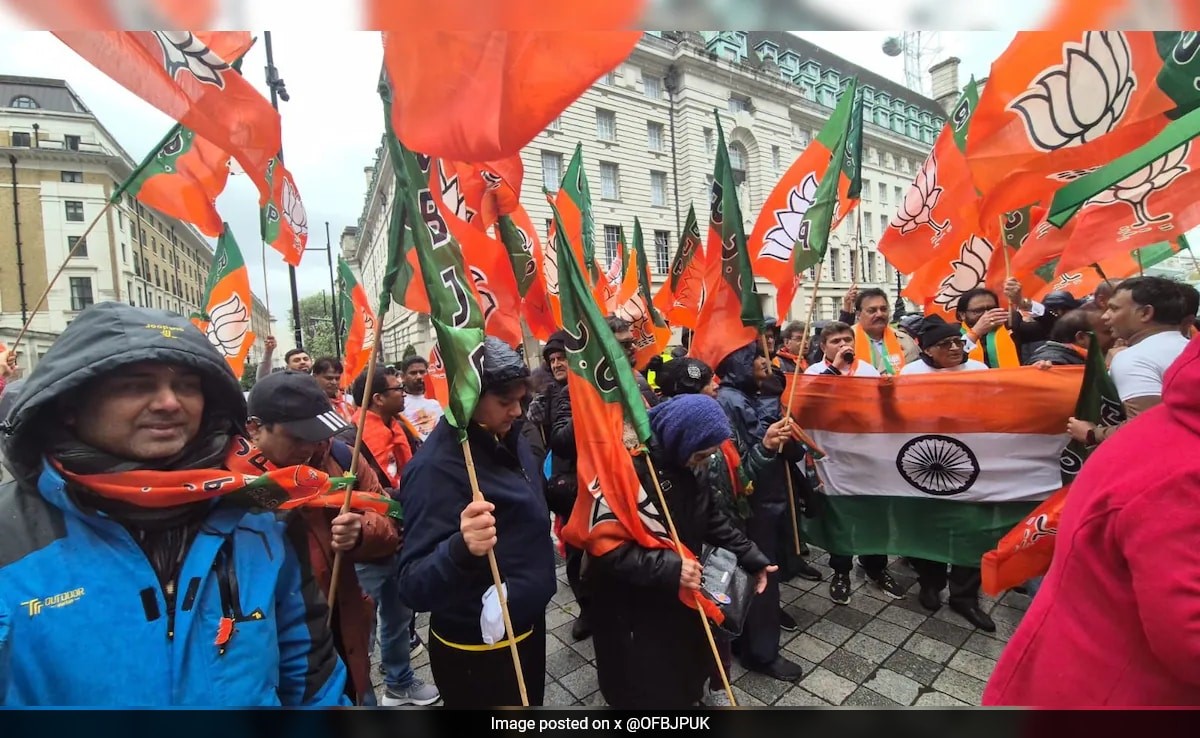
LONDON: Overseas Friends of BJP UK (UP Chapter) orchestrated a magnificent “Run for Modi” event on Sunday, in the vibrant city of London.
Despite being tagged as a “Run for Modi,” the event took the form of a leisurely walk, symbolising solidarity and support for Prime Minister Narendra Modi’s re-election campaign. The Indian community in the UK showcased unwavering support for the BJP and Prime Minister Modi, turning the event into a resounding success, according to a release by the organising committee.
Despite the drizzling weather, the event witnessed an overwhelming turnout, with more than 500 enthusiastic participants joining in the walk. The scenic route commenced from Westminster Pier, traversing through the heart of London and culminating at the iconic Tower Bridge. Participants, adorned in vibrant hues, radiated positivity and fervour as they marched in unison, echoing their endorsement for Prime Minister Modi, the release added.
The highlight of the event was a captivating flash mob that unfolded against the backdrop of the majestic London Bridge, captivating bystanders and participants alike. The vibrant and energetic display encapsulated the spirit of unity and camaraderie among the Indian community in the UK, underscoring their unwavering support for the BJP and PM Modi, it also said.
Speaking about the event, Anand Arya (Vice President of OFBJP UK) expressed profound gratitude towards the Indian community for their overwhelming participation and fervent support. Suresh Mangalgiri (GS OFBJP UK) remarked, “The ‘Run for Modi’ event exemplifies the deep-rooted admiration and allegiance of the Indian community towards Prime Minister Narendra Modi and the BJP.
“Despite the adverse weather conditions, the enthusiasm and spirit displayed by the participants were truly commendable,” said Darshan Grewal, Vice President of OFBJP UK, the release added.
The event garnered widespread attention and acclaim across various media platforms, further amplifying the message of unity and solidarity among the Indian community in the UK. The resounding success of the “Run for Modi” event serves as a testament to the unwavering support and fervour of the Indian community towards Prime Minister Modi’s vision for a prosperous and progressive India.
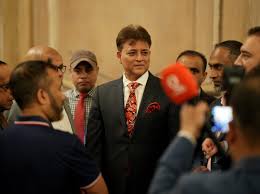
LONDON: Social service is down. Health service is down. Security is down. That’s the London assessment by Tarun Ghulati, the Indian-origin candidate in the race to challenge Pak-origin Sadiq Khan from winning a third term as Mayor of London. The polls are scheduled for May 2.
The 63-year-old, standing as an Independent candidate among 13 contestants, wants to bring the smile and mojo back for London.
“The current incumbent, Sadiq Khan, has brought London to a standstill. Crime has never been worse. It’s the most congested city in the world, the slowest city in the world, and you’ll be surprised. 21 teenagers lost their lives last year and over 1,000 murders under his watch over the last eight years. And you know there’s a need for a levelling up agenda,” Mr Ghulati told NDTV in an exclusive interview, slamming his opponent, who has been London Mayor since 2016.
Safety on the streets of the city is among his major priorities, with visible community policing and more officers.
“I come as a voice for the people. I am an independent candidate for mayor. I was mugged on my own high street, so that’s how bad crime is,” he said.
Asked about how he plans to win, pat came the reply: “I will win this election if everybody comes out to vote”. Mr Ghulati, who has a shadow cabinet in place, underlined that his family has been involved in public service over the last three centuries, adding he has been doing the same for 35-odd years.
“I’m going to bring in advisers from different communities so that they have all the answers. Because I’ve been going around the boroughs and I get to see new problems, different areas, different communities. I’ll bring in those advisors which I’ve already formed a list of. They will again come in. Then I’m going to tackle crime with a fervour never seen before,” he said elaborating his plans for London.
“We have got to make sure we bring the mojo back for London and the smile is back on the face of everyone. So I’m going to tackle like a good seasoned CEO. I have a dashboard. I’m going to look at it in a holistic basis,” he said.
The businessman, who has been on the board of various companies, said his multicultural experience will prove to be an advantage for him.
“It’s a great advantage, but none of the other candidates have that advantage. They make gaps. They don’t understand cultural advances. I’ve lived across continents. I’ve lived in India where people thrive in harmony and live together. I’ve lived all over the world. That gives me a strength. It gives me knowledge. It gives me a know how, and it gives me the people to people interaction because that moment of truth is lost when you can’t interact with people. The current politicians in the fray lack that,” said the businessman, who also speaks many languages, adding that he will create funds and will not be limited by the 21 billion sterling budget.
“I’ve been a banker, a chairman. I’ve sat on several boards. I advise a lot of entities, including dealing with law enforcement. So I’m a strategic advisor to the global cyber life. So none of these people would talk of policing, understand policing like I do. So, as a chairman, I will bring in money. They make excuses to the people. The government is not giving us money. I want to. I view London as a global bank with different cultures and entities and communities. Come here and they thrive. This is one of the greatest financial centres in the world. And that’s where I come from. I have the most experience of any one of them. They haven’t seen budgets like this, most of them none of the independents, none of the political candidates. They’re just playing with the sentiments of people,” he said.
Asked if he has drawn from his Delhi experience to bring about changes here, he said: “I’ve taken a leaf out of Delhi’s books, certainly, and India, where I grew up for the first 35 years, which has taught me to take all the religions and all cultures and all genders along.”
The winning mayoral candidate will be responsible for all local issues affecting Londoners, from transport and policing to housing and the environment.
“I’m a person of Indian origin. I take a lot of pride in that all over the world. But I am a man of the world, having lived all over the world. So I’m a proud Londoner batting for London and I’ll be the next mayor of London for the Londoners,” said the businessman.

MELBOURNE: Fourth India-Australia 2+2 Secretary-level Consultations

TORONTO: India’s response to diplomatic communication from Canada

NGERULMUD: Shri Harsh Kumar Jain concurrently accredited as the next Ambassador of India to the Republic of Palau

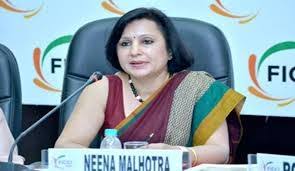
STOCKHOLM: Dr. Neena Malhotra appointed as the next Ambassador of India to the Kingdom of Sweden
2020 will be remembered as time of the pandemic. The fallout will be felt for years

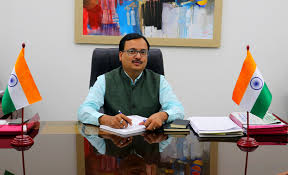
KINGSTON: Shri Subhash Prasad Gupta concurrently accredited as the next High Commissioner of India to St.Vincent and the Grenadines
-
 Diplomatic News2 years ago
STOCKHOLM: Dr. Neena Malhotra appointed as the next Ambassador of India to the Kingdom of Sweden
-
Opinions5 years ago
2020 will be remembered as time of the pandemic. The fallout will be felt for years
-
 Diplomatic News2 years ago
KINGSTON: Shri Subhash Prasad Gupta concurrently accredited as the next High Commissioner of India to St.Vincent and the Grenadines
-
 Politcs2 years ago
LONDON: Indian-Origin Candidate On How He Plans To Win London Mayoral Polls
-
 Technology2 years ago
MARYLAND: All About Pavan Davuluri, New Head Of Microsoft Windows
-

 Sports2 years ago
DODOMA: Milind Soman At “Friendship” Marathon Organised By India, Tanzania
-
 Science2 years ago
WASHINGTON: Who Is Aroh Barjatya, Indian-Origin Researcher Who Led Recent NASA Mission
-
 Business2 years ago
LONDON: UK Court Allows Sale Of Nirav Modi’s Luxury London Apartment